









































































Why Do Cutting Tool Edges Dull Quickly When Cutting Composite Panels?

📑 Table of contents (Click to open)
Practical notes for CNC router, automation and industrial motion systems.
Understanding Rapid Tool Wear in Composite Panel Machining
In industrial automation and manufacturing, particularly in sectors like aerospace, automotive, wind energy, and marine, the use of composite panels is rapidly increasing due to their advantages in lightweight design and high strength. However, processing these materials presents unique and challenging engineering problems compared to traditional metals. The question, “Why do cutting tool edges dull quickly when cutting composite panels?” is critical, directly impacting production costs and efficiency. The fundamental reasons stem from the inherent structure of composite materials, cutting dynamics, and the tool-material interaction.
Composite materials are typically formed by combining high-strength fiber reinforcements (such as carbon, glass, or aramid) with a matrix resin (like epoxy, polyester, or vinylester). These fibers, especially carbon fibers and glass fibers, are naturally highly abrasive. During the cutting process, the tool’s cutting edge is in constant contact with these hard, abrasive fibers. This interaction accelerates mechanical wear, causing the tool to lose its sharpness very quickly. Furthermore, the low thermal conductivity of composites leads to the buildup of intense heat in the cutting zone. This thermal effect can reduce the hardness of the tool material and accelerate chemical reactions, further exacerbating wear. The heterogeneous and layered structure of the material also contributes to uneven distribution of cutting forces, leading to surface defects like delamination and inducing micro-fractures on the tool’s cutting edge. The combination of these factors significantly shortens tool life, necessitating frequent tool changes in production processes.
Working Principles and Technical Data
Understanding the wear mechanisms of cutting tools in composite panel machining is vital for determining optimal cutting strategies. The cutting process fundamentally relies on the tool’s cutting edge moving through the material at a specific speed and feed rate. However, in composites, this process is complex. While metal cutting often involves plastic deformation to remove material, cutting composites involves the fracture, tearing, and abrasion of fibers and the matrix. Materials like Carbon Fiber Reinforced Polymers (CFRP) and Glass Fiber Reinforced Polymers (GFRP) have fibers with high tensile strength but are weak against forces perpendicular to their orientation, making them prone to fracture. This fracture generates micro-notches and abrasive particles on the tool’s cutting edge, leading to rapid wear. For such applications, tools made from hard, wear-resistant materials like Polycrystalline Diamond (PCD) or carbide are preferred, though their lifespan is still limited.
The heat generated during cutting is one of the biggest adversaries in composite machining. Due to the low thermal conductivity of composites, heat produced in the cutting zone cannot dissipate quickly and accumulates. High temperatures reduce the hardness of the tool material, increasing wear, and can cause thermal damage to the workpiece (matrix burning, fiber pull-out). In thermoplastic matrix composites, the matrix can melt and adhere to the tool, leading to tool loading and reduced cutting performance. To mitigate this, cooling methods like coolant application or air blasting can be used, though dry cutting is often preferred, and cooling strategies must be carefully selected.
Tool geometry is also a critical factor. Sharp cutting edges and optimal helix angles help in cleanly severing the fibers and reducing the risk of delamination. However, sharp edges can be more prone to rapid wear. Therefore, balancing tool life and cut quality is essential. Specially designed diamond-veined tools or multi-edge tools have been developed to provide longer tool life. Cutting parameters such as cutting speed, feed rate, and depth of cut directly impact tool life. High cutting speeds can provide better surface finish but also generate more heat and accelerate tool wear. Low feed rates can mean longer cutting times and increased friction. Thus, determining the optimal cutting parameters for each composite material and application requires experimental studies and experience.
| Parameter | Value/Description |
|---|---|
| Tool Material | PCD (Polycrystalline Diamond), CVD Diamond Coating, Carbide (Micro-grain) |
| Composite Type | CFRP (Carbon Fiber), GFRP (Glass Fiber), Aramid Fiber Reinforced Polymers |
| Abrasiveness Factor | High (especially carbon and glass fibers), directly impacts tool wear. |
| Thermal Conductivity | Low (in composites), leads to heat buildup in the cutting zone. |
| Cutting Speed (Vc) | Typically high (100-800 m/min), but excessive speed increases heat generation. |
| Feed Rate (Vf) | Medium-High (0.01-0.2 mm/tooth), affects chip thickness and tool load. |
| Cooling/Lubrication | Often air blast, minimum lubrication, sometimes specialized cutting fluids. |
| Tool Geometry | Sharp edges, positive helix angles, generous flutes for chip evacuation. |
Key Considerations for Practical Application
- Correct Tool Material and Coating Selection: The most fundamental step to extend tool life in composite cutting is selecting the right tool material. PCD (Polycrystalline Diamond) tools are ideal for abrasive materials like CFRP and GFRP due to their high hardness and wear resistance, though they are costly. As more affordable alternatives, CVD (Chemical Vapor Deposition) diamond-coated carbide tools or micro-grain carbide tools can be considered. The optimal combination of tool material and coating should be chosen based on application requirements (material type, cutting volume, budget).
- Optimizing Cutting Parameters: Parameters such as cutting speed (Vc), feed rate (Vf), and depth of cut (ap) directly influence tool life and cut quality. While high cutting speeds may offer better surface finish, they can lead to excessive heat generation and tool wear. Low feed rates can extend cutting time and increase friction. Balancing parameters should be determined based on manufacturer recommendations and experimental data for each composite material and tool combination. Generally, high cutting speeds and medium to high feed rates are preferred for clean fiber cutting and reduced heat buildup.
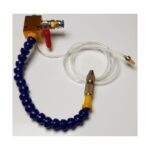
- Effective Chip Evacuation and Cooling Strategies: Chips generated during composite cutting, especially fiber particles, can accumulate in the cutting zone and be re-cut, accelerating tool wear. Therefore, effective chip evacuation should be ensured using tools with generous flutes and high-pressure air blasting or vacuum systems. Cooling strategies should also be implemented to prevent heat buildup in the cutting zone. While dry cutting is common, minimum quantity lubrication (MQL) or specially formulated cutting fluids may be used in some cases. However, the potential negative impact of cutting fluids on the composite material must be carefully evaluated.
- Tool Geometry and Sharpness: The cutting edge geometry of the tool is critical in preventing issues like delamination and fiber pull-out during composite cutting. Tools with sharp edges and appropriate geometries, such as those with positive rake angles and optimized flute designs for chip evacuation, are essential. Regular inspection and maintenance of tool sharpness are crucial. Replacing dull or damaged tools promptly prevents further damage to the workpiece and reduces machine downtime.
By understanding these factors and implementing appropriate strategies, manufacturers can significantly extend the life of their cutting tools when machining composite panels, leading to improved efficiency and reduced operational costs. For solutions tailored to your specific composite machining needs, including high-performance CNC router machines equipped with powerful spindle motors and precise servo drives, contact Mermak CNC.
Ready to optimize your composite material processing? Request a quote on WhatsApp for advanced CNC solutions from Mermak.
Related product categories: Genel · Mekanik · Kesim Uçları
