


















































































How to Measure Tool Runout in CNC Machining

📑 Table of contents (Click to open)
Tool runout in CNC machines is a critical parameter affecting machining precision, tool life, and surface quality. This article explains how to measure runout using a dial indicator, its causes, and acceptable limits for industrial applications. Essential knowledge for optimizing your CNC operations.
Practical notes for CNC router, automation and industrial motion systems.
Understanding Tool Runout in CNC Machining
In Computer Numerical Control (CNC) machines, tool runout is a fundamental factor that profoundly impacts machining quality and efficiency. Tool runout refers to the deviation of a tool from its ideal axis of rotation when spinning in the spindle or tool holder. This deviation is typically measured in microns (µm) and comprises two main components: radial runout (the tool’s deviation in the circumferential direction) and axial runout (the tool’s deviation along the Z-axis). Both types of runout can have detrimental effects on machining outcomes.
Low runout values signify high-precision machining, extended tool life, superior surface finish, and reduced vibration. Conversely, excessive runout can lead to:
- Reduced Machining Accuracy: The tool may deviate from the intended diameter or position, resulting in parts that are out of tolerance.
- Shortened Tool Life: Uneven load distribution on the tool accelerates edge wear, leading to premature tool failure.
- Degraded Surface Finish: The tool’s unstable movement can create waviness, marks, and poor surface roughness on the machined surface.
- Increased Vibration and Noise: High runout can cause excessive vibration and noise during machining, potentially damaging machine components and reducing operator comfort.
- Workpiece Damage: Extreme runout can lead to damage or complete scrap of the workpiece.
Therefore, regularly measuring and maintaining tool runout within acceptable limits is an indispensable quality control step for modern manufacturing facilities.
How to Measure Tool Runout: Principles and Technical Data
Tool runout is typically measured using a precision dial indicator (also known as a dial gauge) or more advanced laser-based systems. The dial indicator method is the most common and practical approach. Here’s a step-by-step guide to its working principle and technical details:
Required Equipment:
- Precision Dial Indicator: Can be digital or analog. Indicators with a resolution of 1 µm (0.001 mm) or 0.5 µm are preferred.
- Magnetic Base Stand: Used to securely mount the dial indicator onto the CNC machine’s table or another stable surface.
- Tool Holder: The holder compatible with the spindle (e.g., BT, CAT, HSK, SK) into which the tool to be measured will be inserted.
- Cleaning Cloths and Air Gun: For cleaning the tool holder tapers and tool shanks.
- Cutting Tool: The tool to be measured (e.g., end mill, drill, reamer).

Measurement Steps:
- Preparation and Cleaning:
- Thoroughly clean the CNC spindle taper, the tool holder taper, and the tool shank using compressed air and a clean cloth to remove all dust, chips, oil, and contaminants. Even microscopic debris can significantly affect runout measurements.
- Ensure the tool holder is correctly and securely seated in the spindle. If applicable, use a torque wrench to tighten according to manufacturer specifications.
- Insert the tool into the tool holder to the correct depth and with the appropriate clamping force. For collet chucks, ensure the collet and nut are clean and tightened to the specified torque.
- Setting Up the Dial Indicator:
- Position the magnetic base stand on a stable surface near the spindle, such as the machine table.
- Adjust the dial indicator so its probe contacts the surface of the tool to be measured, perpendicular to it.
- For radial runout, the probe should touch the tool’s peripheral surface (side). It’s recommended to measure at two points: near the cutting edge and further up the tool body.
- For axial runout, the probe should contact the tool’s end face (tip). This is particularly important for tools like drills and reamers.
- Zeroing and Measurement:
- With the dial indicator probe lightly touching the tool, zero the indicator.
- Carefully rotate the CNC spindle 360 degrees by hand or using the machine’s low-speed jog mode. Ensure the probe slides along the tool surface without pushing it.
- Note the highest (maximum) and lowest (minimum) readings on the dial indicator during rotation.
- Repeat this process a few times for more reliable results.
- Calculating Runout:
- Total Indicated Runout (TIR): This is the difference between the maximum and minimum values read on the dial indicator. For example, if the maximum reading is +5 µm and the minimum is -3 µm, the total runout is 5 – (-3) = 8 µm. This value represents the total deviation of the tool from its axis of rotation.
- In some contexts, half of the TIR value might be considered the actual deviation, but TIR is the commonly used reference in industry.
Acceptable Runout Values:
Acceptable runout values vary depending on the type of machining, required precision, and tool diameter. Generally:
- High-Precision Machining (Molds, Medical, Aerospace): Runout values below 5 µm (0.005 mm), ideally below 3 µm, are targeted.
- General Purpose Machining: Values between 10-15 µm (0.010-0.015 mm) are often considered acceptable.
- Large Diameter Tools or Rough Machining: Runout up to 20 µm may be tolerated, but this can negatively impact tool life and surface finish.
These values should also be compared against the specifications provided by the tool and tool holder manufacturers. It’s important to remember that spindle runout is also a factor; therefore, checking the spindle’s own runout before measuring tool runout is recommended.
| Parameter | Value/Description |
|---|---|
| Measuring Instrument | Digital/Analog Dial Indicator, Laser Measurement Systems |
| Measurement Accuracy | Typically 0.001 mm (1 micron) or 0.0005 mm (0.5 micron) |
| Acceptable Runout (High Precision) | Below 5 µm (0.005 mm) (preferably below 3 µm) |
| Acceptable Runout (General Machining) | 10-15 µm (0.010-0.015 mm) |
| Measurement Points | Tool tip, tool body (near cutting edge and further up) |
| Sources of Runout | Contaminated taper, damaged tool holder, bent tool, improper clamping, spindle runout |
| Measurement Principle | Detection of maximum deviation from the rotational axis (TIR) |
Important Considerations in Practice:
- Absolute Cleanliness: One of the most critical factors in measuring tool runout is cleanliness. The spindle taper, tool holder taper, collet, collet nut, and tool shank surfaces must be free from even the slightest trace of chips, dust, oil, or dirt. Particles invisible to the eye can elevate runout values to unacceptable levels. Clean with compressed air and a lint-free cloth before every measurement.
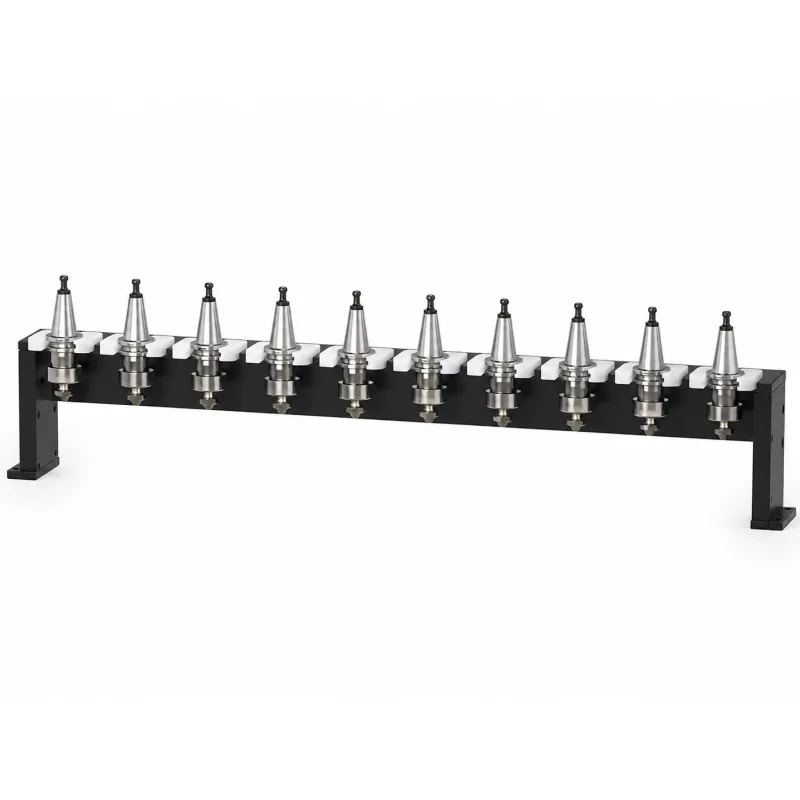
- Proper Tool Holder Selection and Quality: The quality, precision, and balancing of the tool holder directly influence runout measurements. Inexpensive or low-quality tool holders may have manufacturing tolerances that lead to high runout. Furthermore, the correct type of tool holder for the specific application and spindle interface is crucial. For instance, using a collet chuck with the appropriate collet for the tool shank diameter is essential for achieving minimal runout.
- Tool Condition: Ensure the cutting tool itself is not bent, chipped, or excessively worn. A damaged tool will inherently exhibit high runout regardless of the holder or spindle quality. Inspect tools before use and replace them if any damage is evident.
- Correct Clamping: Improper clamping is a frequent cause of runout. Ensure the tool is seated correctly in the holder and that the clamping mechanism (e.g., collet nut, set screw) is tightened to the specified torque. Over-tightening or under-tightening can both introduce runout.
- Spindle Health: The spindle’s own runout is a significant contributor to the overall tool runout. If the spindle bearings are worn or damaged, or if the spindle taper is compromised, it will manifest as high tool runout. Regular spindle maintenance and periodic checks of spindle runout are vital.
- Balancing: For high-speed CNC operations, tool holders and tools should be balanced to prevent centrifugal forces from exacerbating runout and causing vibrations. Unbalanced components can lead to premature wear on the spindle bearings and the tool itself.
By diligently following these measurement procedures and paying close attention to the influencing factors, you can ensure high-precision machining, extend the life of your cutting tools and CNC machine components, and achieve superior surface finishes. For optimal results, always consult the specifications provided by your tool and machine manufacturers.
If you are looking for high-quality tool holders and related accessories to minimize runout and maximize your CNC machine’s performance, explore our range of solutions. Mermak CNC offers a variety of products designed for precision industrial applications. Request a quote on WhatsApp today to discuss your specific needs!
Related product categories: Genel · Magazin Takım Tutucu Çatalları
