










































































































How to Measure CNC Tool Runout: A Comprehensive Guide

📑 Table of contents (Click to open)
Understand and measure CNC tool runout to ensure precision machining. Learn about mechanical and laser measurement methods and their importance for tool life and surface finish. Contact us on WhatsApp for expert advice.
Practical notes for CNC router, automation and industrial motion systems.
Understanding CNC Tool Runout
CNC tool runout refers to the deviation of a cutting tool’s tip or a specific point from its nominal axis of rotation when a CNC machine’s spindle is turning. This deviation can stem from imperfections in the tool holder, the tool itself, the spindle, or their assembly. Measured in microns (µm), controlling runout within acceptable tolerances is crucial for high-precision machining operations. Excessive runout degrades machining quality, shortens tool life, increases surface roughness, compromises dimensional accuracy, and can even lead to tool breakage. Therefore, regular tool runout measurement is a fundamental practice in modern CNC workshops.
Methods for Measuring CNC Tool Runout
The principle behind measuring CNC tool runout involves determining the difference between the highest and lowest points of the tool as it rotates. Two primary methods are employed: mechanical dial indicators and laser optical measurement systems.
Mechanical Dial Indicator Measurement
This is a common and accessible method. A dial indicator is mounted securely, often with a magnetic base, to a fixed point on the machine table or spindle housing. The indicator’s probe is brought into contact with the cylindrical surface or cutting edge of the tool to be measured. The spindle is then rotated slowly, either manually or via the machine controller. As the tool rotates, the dial indicator’s needle moves according to the runout. The difference between the highest and lowest readings on the indicator represents the total runout. This method typically offers precision in the range of 1-5 microns and is cost-effective. However, accuracy can be influenced by operator error, probe pressure on the tool surface, and vibrations. Measurements are usually taken at points near the tool’s shank and close to the cutting edge.

Laser Optical Measurement Systems
For applications demanding higher precision and automation, laser optical measurement systems are preferred. These systems perform non-contact measurements, eliminating any deformation caused by probe contact. Laser sensors analyze the light reflected from the rotating tool’s surface, detecting deviations in the tool’s geometry with sub-micron accuracy (0.1-1 micron). These systems can be integrated into the machine or used as external units. Laser measurement systems can also assess dynamic runout, which is the runout occurring at specific operating speeds, critical for evaluating the performance of high-speed spindles.
Measurement Process and Key Considerations:
- Cleanliness: Ensure the tool holder, tool shank, and spindle taper are meticulously clean. Even the smallest particle can lead to inaccurate measurements.
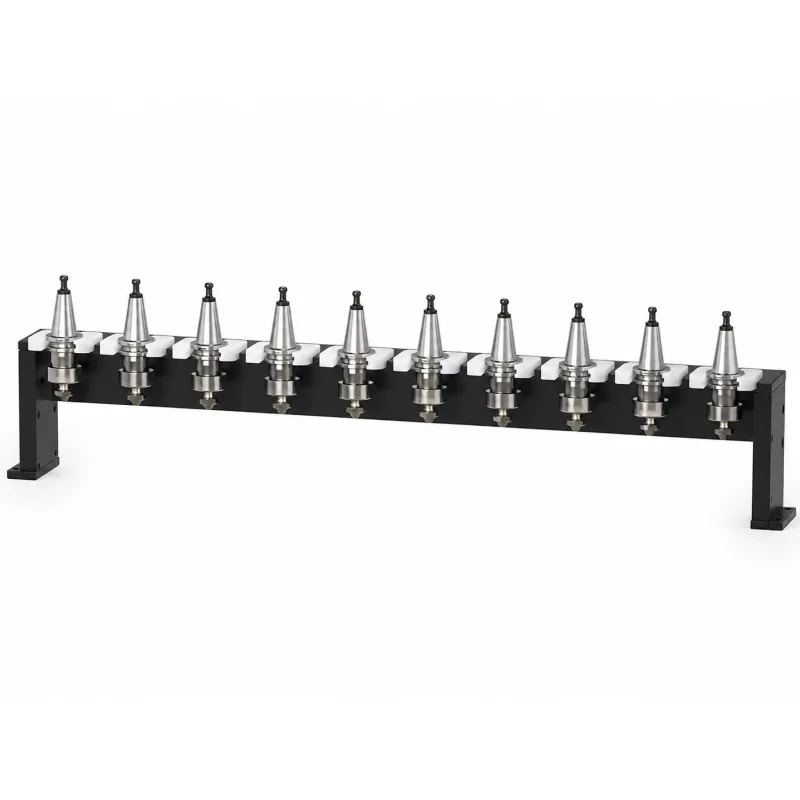
- Tool Holder Quality: Use high-quality, balanced tool holders with precise tolerances. Worn or damaged holders increase runout.
- Tool Mounting: Mount the tool correctly with the specified torque and ensure it is seated axially. Improper mounting is a common cause of runout.
- Spindle Condition: Regularly inspect spindle bearings, taper, and clamping mechanism. Spindle play or damage directly impacts tool runout.
- Temperature: Perform measurements at or near the machine’s operating temperature, as thermal expansion can affect results.
- Repeatability: Repeat measurements and consider averaging values. Measuring from different angles can provide a more comprehensive understanding.
| Parameter | Value/Description |
|---|---|
| Measurement Methods | Mechanical Dial Indicator, Laser Optical Measurement Systems |
| Typical Precision (Dial Indicator) | ±1 – ±5 microns (µm) |
| Typical Precision (Laser) | ±0.1 – ±1 microns (µm) |
| Acceptable Runout Tolerance | Typically 3 – 10 microns (varies by application) |
| Influencing Factors | Tool holder quality, spindle condition, tool mounting, cleanliness, tool itself |
| Measurement Points | Points near the tool shank and cutting edge |
| Consequences of High Runout | Poor surface finish, reduced tool life, dimensional inaccuracies, tool breakage, increased vibration |
Field Considerations for Accurate Measurement
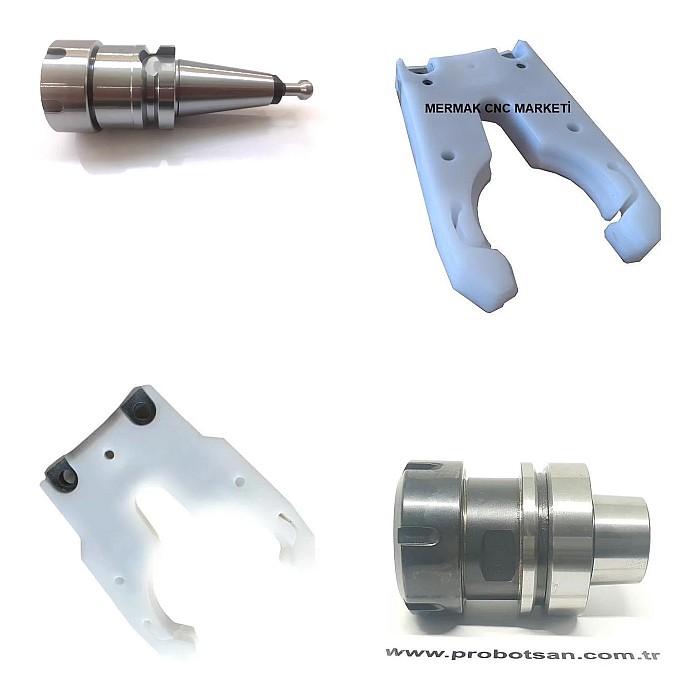
- Spindle and Tool Holder Taper Cleaning: This is often overlooked but critically important. Any debris or oil film between the tool holder and spindle taper prevents proper seating, leading to significant runout. Thoroughly cleaning these surfaces with appropriate cleaners and lint-free cloths before each tool change is essential for accurate measurements and stable machining.
- Correct Tool Mounting and Torque: Proper seating of the tool within the tool holder and adherence to manufacturer-specified torque values are vital. For collet chucks, correct collet placement, proper wrench torque (not too tight, not too loose), and appropriate tool insertion depth directly influence runout. Incorrect torque can cause tool slippage or collet deformation, increasing runout and reducing tool life.
- Spindle Health and Maintenance: The spindle is directly responsible for tool runout. Worn bearings, excessive play, imbalance, or damage to the spindle taper can result in unacceptable runout. Regular spindle maintenance, bearing checks, lubrication system inspections, and potential spindle reconditioning are necessary for achieving consistent runout values over time. Even minor spindle vibrations can translate into significant runout at the tool tip.
- Tool and Tool Holder Quality: Always use high-quality, certified, and well-balanced tool holders and cutting tools. Inferior or low-cost components may have inherent runout due to manufacturing tolerances. Tool holders also have a service life; worn or deformed holders will increase runout over time. Regularly inspect tool holders and replace them when they reach their specified lifespan.
- Temperature and Dynamic Effects: Thermal expansion and contraction of materials can affect runout readings, especially in precision measurements. Allowing the machine and tool to reach operating temperature before measuring provides more realistic results. Furthermore, static runout can differ from dynamic runout at high speeds. For critical applications, consider laser systems capable of measuring dynamic runout.
By diligently measuring and managing tool runout, you can significantly enhance the precision, efficiency, and longevity of your CNC machining operations. For expert consultation on selecting the right measurement tools or optimizing your machining processes, request a quote on WhatsApp.
Related product categories: Genel · Takım Tutucu Kovanlar · Magazin Takım Tutucu Çatalları
