







































































How to Control Part Runout in CNC Lathes

📑 Table of contents (Click to open)
- Understanding and Controlling Part Runout in CNC Lathes
- The Principles of Runout Control
- Workpiece Clamping Systems: Chucks and Collets
- Tailstock Usage and Alignment
- Steady Rests and Follower Rests
- Tool Selection and Cutting Parameters
- Machine Condition and Maintenance
- Technical Data and Tolerances
- Key Considerations for Precision Machining
- Common Issues and Solutions
- Conclusion: Achieving Precision with Mermak CNC
Part runout in CNC lathes is a critical quality issue. This guide explains how to control it by ensuring workpiece clamping accuracy, optimizing cutting parameters, and maintaining machine integrity. Learn practical steps to achieve precise results.
Practical notes for CNC router, automation and industrial motion systems.
Understanding and Controlling Part Runout in CNC Lathes
Part runout in CNC lathes refers to the deviation of a workpiece from its intended axis of rotation, essentially meaning it spins eccentrically. This phenomenon is a significant concern in precision manufacturing, leading to a cascade of quality issues. Unacceptable levels of runout can cause finished parts to exceed dimensional tolerances, degrade surface finish, shorten tool life, and even damage the CNC machine itself. For industrial automation and CNC turning operations, effective runout control is paramount for production efficiency and part quality. This involves meticulous preparation, precise setup, and continuous monitoring during the machining process.
The Principles of Runout Control
Controlling part runout is a multi-faceted approach centered on the accurate and stable mounting of the workpiece. Key principles and technical considerations include:
Workpiece Clamping Systems: Chucks and Collets
Chucks and Collets are the primary methods for securing workpieces. Three-jaw chucks offer quick clamping, while four-jaw chucks provide higher precision and the ability to grip irregularly shaped parts or deliberately introduce eccentricity. Collets are ideal for cylindrical parts, offering superior concentricity and gripping force. Ensuring the chuck jaws or collet surfaces are clean, free from wear, and tightened to the correct torque is vital. Contamination or wear can prevent the part from seating correctly, leading to runout. High-speed operations can exacerbate runout due to centrifugal forces acting on an improperly balanced or secured workpiece.
Tailstock Usage and Alignment
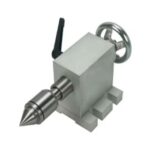
For machining long and slender parts, the tailstock is essential to support the free end of the workpiece, preventing bending and vibration. Live (rotating) centers reduce friction, allowing for higher spindle speeds, while dead (stationary) centers are suitable for lower speeds and situations requiring high rigidity. Proper alignment of the tailstock with the spindle axis and applying adequate, but not excessive, pressure are crucial for minimizing runout.

Steady Rests and Follower Rests
When machining very long or thin components, steady rests or follower rests are employed to counteract the workpiece’s tendency to bend or vibrate under its own weight or cutting forces. Steady rests provide external support at a fixed point, while follower rests move with the cutting tool, offering continuous support. Correct adjustment, clean contact surfaces, and proper lubrication of these rests play a critical role in reducing runout.

Tool Selection and Cutting Parameters
The sharpness, geometry, and overhang of the cutting tool significantly impact runout. Dull or improperly selected tools can generate excessive cutting forces, deflecting the workpiece. Cutting speed, feed rate, and depth of cut must be optimized for the workpiece material and rigidity. Appropriate use of cutting fluids also helps manage heat and reduce vibration, thereby minimizing runout.

Machine Condition and Maintenance
The overall condition of the lathe is fundamental. Spindle bearings must be in excellent condition, machine ways (linear guide rails) must be precise and aligned, and the spindle and tailstock axes must be perfectly concentric. Regular calibration and preventive maintenance are key to preventing machine-induced runout issues. For CNC machines, the precision of servo drives and motion control systems is also critical.

Technical Data and Tolerances
| Parameter | Value/Description |
|---|---|
| Max Runout Tolerance | Typically 0.005 mm – 0.02 mm (varies by material and application) |
| Chuck Clamping Torque | Manufacturer recommended, uniform, and sufficient (over-tightening can cause deformation) |
| Tailstock Pressure | Optimal force to prevent part bending without damaging bearings |
| Tool Nose Radius | Affects surface finish and cutting forces; typically 0.4 – 0.8 mm |
| Spindle Speed Impact | Higher speeds can increase imbalance; lower speeds may reduce vibration risk |
| Steady Rest Adjustment | Support part axially, minimize friction |
| Spindle Bearing Clearance | Checked at micron level; wear increases runout |
Key Considerations for Precision Machining
- Regular Machine Calibration and Maintenance: Periodically inspect and calibrate the lathe’s spindle bearings, linear guide rails, and tailstock alignment. Worn components or misalignment directly cause runout. For CNC lathes, maintaining the precision of servo drives and motion control systems is crucial. Adhering to a maintenance schedule prevents unexpected failures and quality defects.
- Proper Workpiece Clamping Techniques: Ensure the workpiece seats fully in the chuck, collet, or fixture. Clamping surfaces must be clean, free of chips or debris. Uniform and adequate tightening of chuck jaws or collets ensures the part remains centered. For long parts, tailstock support or the use of steady/follower rests prevents bending and vibration. Verifying runout with a dial indicator after clamping is the most reliable way to detect issues before machining begins.
- Tool Selection, Condition, and Setup: The cutting tool must be appropriate for the material, cutting conditions, and desired surface finish. Dull, worn, or incorrectly shaped tools generate high cutting forces, leading to workpiece deflection and vibration. The tool must be securely mounted in the turret with minimal overhang for rigidity. Cutting parameters (speed, feed, depth of cut) should be optimized for the specific workpiece-tool combination, favoring values that minimize vibration.
Common Issues and Solutions
Runout problems in CNC lathes typically fall into a few categories:
- Excessive Runout: Often caused by improper or dirty chucking, worn chuck jaws, tailstock misalignment, worn spindle bearings, or damaged machine ways.
- Solution: First, inspect and clean chuck jaws or collets, ensuring proper torque. Verify the workpiece seats correctly. Check and adjust tailstock alignment. If the issue persists, investigate spindle and machine way condition for wear and perform necessary maintenance. Using a dial indicator for detailed checks helps pinpoint the source.
- Poor Surface Finish and Chatter Marks: Runout can manifest as surface irregularities, roughness, or visible chatter marks on the machined surface. This is frequently linked to vibration caused by improper clamping, tool issues, or machine instability.
- Solution: Re-evaluate clamping force and workpiece seating. Ensure the cutting tool is sharp, correctly oriented, and has minimal overhang. Optimize cutting parameters to reduce vibration. Check machine rigidity and consider using damping techniques or specialized tooling if necessary.
- Dimensional Inaccuracies: Parts machined with significant runout will inevitably fail dimensional checks, especially on critical features.
- Solution: Address the root cause of the runout as described above. Precise setup, accurate machine calibration, and consistent monitoring are essential for achieving tight tolerances. Ensure the CNC controller and servo drives are functioning correctly.
Conclusion: Achieving Precision with Mermak CNC
Controlling part runout in CNC lathes is a fundamental aspect of precision manufacturing. It requires a holistic approach, encompassing robust workpiece clamping, meticulous machine maintenance, appropriate tooling, and optimized cutting parameters. By understanding the principles and diligently applying these techniques, manufacturers can significantly improve part quality, reduce scrap rates, and enhance overall productivity. For advanced CNC solutions that deliver exceptional precision and reliability, explore the capabilities of Mermak CNC machines. Our industrial CNC routers and lathes are engineered for performance and accuracy.
Ready to elevate your manufacturing precision? Request a quote on WhatsApp for Mermak CNC’s state-of-the-art turning solutions.
Related product categories: Genel · CNC Kontrol Paneli · ER32 Pens Çeşitleri
