
No products in the cart.
Step Motor vs. Servo Motor: Which is Better for Industrial CNC Applications?

Contents
- Introduction and Technical Analysis At the core of industrial automation, motion control systems are vital for the efficiency and precision of modern manufacturing processes. Two fundamental components of these systems are Step Motors and Servo Motors. While both motor types are used to move a specific load to a certain position, control speed, or provide a specific torque, they exhibit significant differences in their operating principles, performance characteristics, and ideal application areas. For an engineer or field technician, a deep understanding of these two motor technologies is critical for project success, cost-effectiveness, and long-term sustainability. The answer to the question “Which is better?” directly depends on the application’s requirements, budget constraints, and expected performance level. This detailed field guide and technical article aim to provide decision-makers, engineers, and technicians in the industrial automation sector with a scientific and practical perspective on the fundamental differences between Step and Servo motors, their technical advantages and disadvantages, critical points in field applications, and solutions to common problems, thereby aiding in the correct motor selection. Operating Principle and Technical Data
- Working Principle of Step Motors
- Working Principle of Servo Motors
- Field Considerations
- Common Problems and Solutions
- Step Motor Problems
- Servo Motor Problems
- Expert Advice
- FAQ
Introduction and Technical Analysis
At the core of industrial automation, motion control systems are vital for the efficiency and precision of modern manufacturing processes. Two fundamental components of these systems are Step Motors and Servo Motors. While both motor types are used to move a specific load to a certain position, control speed, or provide a specific torque, they exhibit significant differences in their operating principles, performance characteristics, and ideal application areas. For an engineer or field technician, a deep understanding of these two motor technologies is critical for project success, cost-effectiveness, and long-term sustainability. The answer to the question “Which is better?” directly depends on the application’s requirements, budget constraints, and expected performance level. This detailed field guide and technical article aim to provide decision-makers, engineers, and technicians in the industrial automation sector with a scientific and practical perspective on the fundamental differences between Step and Servo motors, their technical advantages and disadvantages, critical points in field applications, and solutions to common problems, thereby aiding in the correct motor selection.
Operating Principle and Technical Data
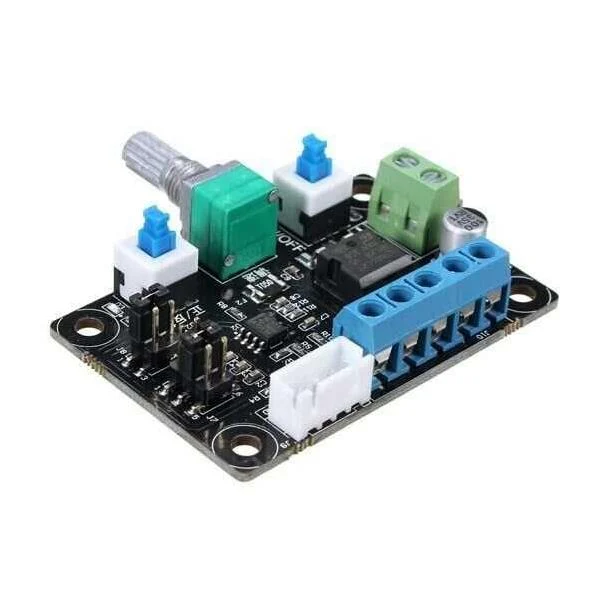
Step and Servo motors used in motion control systems, despite performing similar tasks, differ significantly in their fundamental operating principles and control mechanisms. These differences highlight the unique advantages and disadvantages of each motor type, making them more suitable for specific applications.
Working Principle of Step Motors
Step motors, as their name suggests, are brushless DC motors controlled by electrical pulses, rotating at a specific angle (step angle) with each pulse. A step motor typically consists of multiple sets of windings (phases) and magnetic poles on a rotor. Pulse signals from the controller sequentially energize the motor windings, causing the rotor to align with the magnetic field. This sequential energization causes the rotor to advance step by step. A feedback mechanism is generally not required, making it an open-loop control system. The number of steps the motor takes is directly proportional to the number of pulses sent by the controller. Microstepping technology allows for smoother movement and higher resolution by dividing a full step into smaller parts, although this can sometimes slightly reduce the motor’s torque. Step motors are preferred in applications requiring low speed and moderate torque, where cost is a significant factor, and absolute positional accuracy is not critical. Their holding torque is quite good in terms of their ability to maintain position under load.

Working Principle of Servo Motors
Servo motors are a closed-loop system consisting of a motor, a feedback sensor (typically an encoder), and a driver (servo drive). The motor itself can be a brushless DC (BLDC) or brushed DC motor, but brushless AC servo motors are predominantly used in industrial automation. The servo drive continuously monitors the motor’s current position, speed, and torque via feedback signals from the encoder. This feedback information allows the drive to dynamically adjust the current and voltage necessary to reach the desired target position or speed. This continuous correction mechanism enables servo motors to offer high precision, dynamic response, and accurate positioning without any step loss. PID (Proportional-Integral-Derivative) control algorithms are widely used to optimize the performance of servo drives. Their ability to provide constant torque even at high speeds makes them ideal for dynamic and high-performance applications.
| Parameter | Value/Description |
|---|---|
| Control Type | Step Motor: Open-loop or Optional Closed-loop; Servo Motor: Closed-loop |
| Positioning Accuracy | Step Motor: Depends on step angle, risk of step loss; Servo Motor: High accuracy, depends on encoder resolution, no step loss |
| Speed Range | Step Motor: Low-Medium speeds (typically < 1000 RPM); Servo Motor: Wide speed range, high speeds (up to 5000+ RPM) |
| Torque Characteristic | Step Motor: High torque at low speeds, torque drops as speed increases; Servo Motor: Constant high torque over a wide speed range, dynamic torque generation |
| Cost (Motor + Drive) | Step Motor: Generally lower; Servo Motor: Generally higher |
| Feedback Requirement | Step Motor: Not in basic models (optional); Servo Motor: Encoder (absolutely necessary) |
| Energy Efficiency | Step Motor: Draws continuous current under load, less efficient; Servo Motor: Draws current according to load demand, more efficient |
| System Complexity | Step Motor: Simpler setup and control; Servo Motor: More complex setup, requires PID tuning |
| Overload Capacity | Step Motor: Insufficient, risk of step loss; Servo Motor: Short-term high overload capacity (peak torque) |
| Typical Application Areas | Step Motor: 3D printers, small CNC machines, vending machines, medical devices, positioning; Servo Motor: Robotics, CNC machine tools, packaging machines, printing machines, high-speed automation |

Field Considerations
- Load Matching and Inertia Ratio (Step Motors): Load inertia is a critical factor in step motor selection. The ratio of motor inertia to load inertia should generally be between 1:1 and 1:10. Excessive load inertia can lead to step loss, resonance, and performance degradation. Therefore, the motor’s torque-speed curve should be carefully examined, and a safety margin should be left to meet the application’s worst-case torque requirements. Especially in vertical movements, gravitational effects and friction forces must be considered.
- Resonance and Vibration Management (Step Motors): Step motors can enter resonance frequencies at certain speeds (especially in the mid-speed range), producing high vibration and noise. This can accelerate mechanical wear and negatively affect positioning accuracy. To reduce resonance, it is important to use microstepping, integrate vibration dampers, adjust speed profiles to quickly pass through resonance zones, or opt for electronic resonance suppression features in drives.
- Drive Selection and PID Tuning (Servo Motors): The performance of servo systems is directly related to the quality of the drive and the correct PID (Proportional-Integral-Derivative) parameter settings. Incorrectly tuned PID parameters can cause the system to overshoot, become unstable, or reach the desired position slowly. While modern servo drives offer auto-tuning functions, manual fine-tuning and experience are necessary for precise applications. Mechanical backlash and flexibilities can also complicate PID tuning.
- Mechanical Rigidity and Feedback (Servo Motors): To fully benefit from the high precision of servo systems, the mechanical system must be sufficiently rigid and free of backlash. Backlash in gearboxes, elasticity in belt-pulley systems, or tolerances in couplings can directly affect the positioning accuracy of the servo motor. Proper installation of feedback sensors like encoders, and protecting them from contamination and mechanical damage, are vital for system reliability and accuracy.
- Cabling and EMI/RFI Protection (Both Motor Types): In both Step and Servo motor systems, proper selection and routing of power and signal cables between the motor and drive are critically important. Especially in servo systems, sensitive signal lines like encoder cables should be routed separately from power cables and properly shielded. Electromagnetic interference (EMI) and radio frequency interference (RFI) in industrial environments can corrupt control signals, leading to unstable motor operation or errors. The grounding scheme must also be correctly implemented in this context.
- Thermal Management and Operating Environment (Both Motor Types): The operating life and performance of motors and drives are closely related to ambient temperature and cooling conditions. Step motors, in particular, tend to heat up due to drawing nominal current even when stationary. Although servo motors are more efficient, they can also generate significant heat under high dynamic loads. Ensuring adequate ventilation, using cooling fans, or heat sinks helps keep motors and drives within their specified operating temperatures, preventing failures.

Common Problems and Solutions
Some common problems encountered when working with Step and Servo motors in industrial automation applications and their solutions are detailed below:

Step Motor Problems
- Lost Steps:
- Problem: The motor fails to reach the desired position or loses synchronization. This usually occurs at high speeds or under excessive load.
- Causes: Insufficient motor torque, the applied load exceeding the motor’s dynamic torque capacity, incorrect acceleration/deceleration profiles, insufficient drive current setting, mechanical binding, or friction.
- Solutions:
- Selecting a higher torque motor or optimizing drive current settings to increase the torque of the existing motor.
- Softening acceleration and deceleration ramps.
- Checking and eliminating friction and binding in the mechanical system.
- If necessary, switching to closed-loop step systems (step-servo) with encoder feedback to detect and correct step loss.
- Checking and optimizing the inertia ratio in the system.
- Motor Vibration and Noise:
- Problem: The motor vibrates excessively at certain speeds, produces loud noise, and causes mechanical wear.
- Causes: Operating speeds coinciding with the motor’s natural resonance frequencies, insufficient microstepping, incorrect mounting.
- Solutions:
- Increasing the microstepping ratio (e.g., from 1/8 to 1/16).
- Using a vibration damper.
- Activating the drive’s resonance suppression features (if available).
- Adjusting speed profiles to quickly pass through resonance zones.
- Ensuring the motor and load are properly aligned and secured.
- Overheating:
- Problem: The motor heats up more than normal, leading to performance degradation and reduced lifespan.
- Causes: Drive current set higher than the nominal value, insufficient cooling, continuous operation of the motor at its nominal torque limits, high ambient temperature.
- Solutions:
- Adjusting the drive current according to the motor’s nominal values.
- Providing adequate ventilation, using a cooling fan or heat sink if necessary.
- Replacing the motor with a more efficient model or using a larger motor.
- Utilizing drive features that reduce current when idle (half-current).
Servo Motor Problems
- Positioning Error or Oscillation:
- Problem: The motor fails to reach the target position accurately, oscillates around the target, or moves unstably.
- Causes: Incorrect PID gain settings (especially P and I gains), mechanical backlash, low mechanical rigidity, encoder feedback error.
- Solutions:
- Re-tuning the servo drive’s PID parameters. Using the auto-tuning function and making manual fine adjustments if necessary.
- Checking and eliminating backlash in the mechanical system (gearbox, coupling). Using more rigid mechanical components.
- Checking the integrity and connections of encoder cables, measuring signal quality.
- Checking the load inertia to motor inertia ratio and ensuring it is within the ideal range.
- Motor Not Stopping or Loss of Control:
- Problem: The motor does not stop when commanded, moves uncontrollably, or rotates continuously.
- Causes: Loss or error of encoder feedback signal, drive failure, control signal error (e.g., continuous speed/position command from PLC).
- Solutions:
- Checking encoder cables and connections, replacing damaged cables.
- Examining the drive’s error codes and diagnosing according to manufacturer documentation.
- Monitoring command signals from the controller (PLC, HMI) and verifying their accuracy.
- Resolving grounding issues and reducing EMI/RFI effects.
- Overcurrent or Drive Fault:
- Problem: The servo drive issues an overcurrent fault and stops the motor.
- Causes: Motor operating under excessive load, mechanical binding, motor or cable insulation fault (short circuit), internal drive fault.
- Solutions:
- Checking and eliminating binding or excessive load conditions in the mechanical system.
- Measuring the insulation resistance of the motor and cables, checking for short circuits.
- Reviewing the drive’s fault history and consulting the manufacturer.
- Checking if the motor can meet instantaneous torque demands above its nominal torque capacity (peak torque).
Expert Advice
In the world of industrial automation, there is no single, definitive answer to the question, “Is a Step motor or a Servo motor better?” Both motor technologies offer unique advantages and disadvantages optimized for specific application scenarios. From an expert perspective, the most appropriate motor selection emerges from a comprehensive analysis of the project’s specific requirements, performance expectations, cost constraints, and total cost of ownership (TCO). For low-cost, relatively low-speed, and moderate-precision applications where open-loop control is sufficient, step motors still offer a highly viable and economical solution. Especially in 3D printers, small-scale CNC machines, or simple positioning tasks, the simplicity and holding torque advantage of step motors stand out. However, when high dynamic response, excellent speed control, precise positioning, constant torque at high speeds, and energy efficiency are critical, servo motors are indispensable in high-performance applications such as robotics, advanced CNC machine tools, packaging, and printing machines. While servo systems may have higher initial costs, their long-term benefits in efficiency, increased production speed, and reduced maintenance needs can amortize this cost difference. Field engineers and system integrators should consider not only technical parameters but also factors such as ease of installation, maintenance requirements, fault diagnosis capabilities, and supplier support during the motor selection process. Next-generation technologies like hybrid step-servo systems combine the advantages of both worlds, opening new doors for applications that were previously either too expensive or inadequate. Ultimately, a successful automation project begins with selecting the right motor for the right application, and this choice is shaped by in-depth technical knowledge and field experience.
FAQ
What is the fundamental difference between a step motor and a servo motor?
Step motors operate in an open-loop system, moving in discrete steps based on electrical pulses. They are simpler and more cost-effective. Servo motors, on the other hand, use a closed-loop system with encoder feedback, allowing for continuous monitoring and dynamic adjustment of position, speed, and torque, resulting in higher precision and dynamic response.
When should I choose a step motor over a servo motor for industrial applications?
Step motors are generally better suited for applications requiring low to medium speeds, moderate torque, and where cost-effectiveness is a primary concern, such as 3D printers, small CNC router machines, and basic positioning systems. Servo motors excel in high-performance applications demanding high speed, precise positioning, dynamic torque, and excellent acceleration/deceleration, like industrial CNC machine tools, robotics, and advanced packaging machinery.
What are the common issues with step motors and how can they be resolved?
Common step motor problems include lost steps (due to insufficient torque or excessive load), vibration and noise (due to resonance frequencies), and overheating (due to incorrect current settings or inadequate cooling). Solutions involve optimizing drive current, using microstepping, adding dampers, and ensuring proper thermal management.
What are the common issues with servo motors and how can they be resolved?
Typical servo motor problems include positioning errors or oscillation (due to incorrect PID tuning or mechanical backlash), loss of control (due to encoder feedback issues), and overcurrent faults. Solutions involve precise PID tuning, addressing mechanical rigidity and backlash, checking encoder connections, and ensuring adequate power supply and grounding.
Are servo motors always more expensive than step motors in the long run?
While step motors are generally more affordable upfront, servo motors can offer better long-term cost-effectiveness in high-performance applications due to their higher energy efficiency, faster production speeds, and reduced maintenance requirements. The total cost of ownership (TCO) should be considered, factoring in operational costs and productivity gains.