
No products in the cart.
%25 Discount


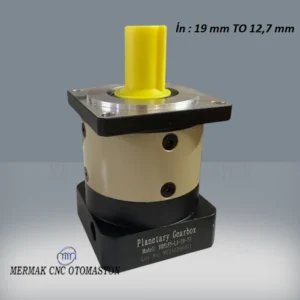
80PLF10 Planetary Gear Reducer 1/10 Ratio
Original price was: 168.00$.126.00$Current price is: 126.00$.
High-performance planetary gear reducer designed for industrial automation, offering precise motion control and high torque transmission.
Only 0 left in stock
🔥 Special for Today Only %25 Discount Opportunity!📦 Category: 1/10 Ratio Planetary Gearbox Varieties🏷️ Output Shaft Diameter: 22 mm🏷️ Flange / Body Size: 80 Frame🏷️ Input Shaft Diameter: 12,7 mm, 14 mm, 19 mm🏷️ NEMA Size: Nema 34🏷️ Dimensions: 12,7, 14, 19, 22
Mermak assuranceFrom factory to end user · importer / main dealer · strong stock
ImporterMain dealer / distributorStrong stockGood priceCorporate invoice
In stock / available to order · 14-day return for standard unused products; conditions may vary for custom size/cut products.
80PLF10 Planetary Gear Reducer 1/10
INDUSTRIAL AUTOMATION PARTS | SUPERIOR PERFORMANCE SERIES
Detailed Product Review
The 80PLF10 Planetary Gear Reducer is a performance-optimized power transmission component specifically designed for applications in industrial automation systems that require precise motion control, high torque transmission, and superior positioning accuracy. This reducer converts the high-speed, low-torque rotational motion from servo and stepper motors into a low-speed, high-torque output with minimal backlash, through its planetary gear mechanism at a 1:10 ratio. This conversion effectively manages motor inertia in applications with dynamic load changes and high acceleration/deceleration requirements, thereby enhancing the overall efficiency and control precision of the system. Despite its compact 80x80mm flange size, the optimized planetary gear arrangement provides high radial and axial load capacity, ensuring reliable and stable performance even under demanding industrial conditions.
The structural integrity of this model is ensured by gears made from high-strength alloy steel that have undergone heat treatment (such as carburizing and nitriding). This process maximizes wear resistance and load-carrying capacity by increasing the hardness of the gear surfaces while maintaining core toughness. The reducer’s housing is manufactured from high-quality aluminum alloy or cast iron, which absorbs vibration and provides thermal stability. Precision bearings (typically tapered roller or deep groove ball bearings) used in the input and output shafts are selected to handle high radial and axial loads, guaranteeing rotational accuracy and rigidity. The 80PLF10 offers broad integration flexibility, providing direct mounting compatibility with NEMA34 standard motors. The Ø19 mm input shaft diameter, along with a reducer bushing included in the package to adapt to Ø14 mm shaft diameters, eliminates the need for additional adapters in systems with different motor shaft sizes, simplifying installation and improving cost-effectiveness. These features allow the reducer to be seamlessly used in a wide range of industrial applications, including CNC machines, robotic systems, automation, and packaging machinery.
80PLF10 Planetary Gear Reducer 1/10 Advantages
High Torque Density and Compact Design: By its nature, the planetary gear system in the 80PLF10 distributes torque from the sun gear to the ring gear through multiple planet gears rotating around the sun gear. This multi-gear contact allows for higher torque capacity and lower stress per gear compared to parallel shaft gearboxes. Consequently, high output torque values, such as 70 Nm nominal and 140 Nm maximum, can be achieved even within a compact flange size of 80x80mm. This high torque density enables maximum power transmission in industrial applications with limited mounting space, such as joints of robotic arms or compact CNC axes, optimizing the overall system dimensions.
Minimized Backlash and Positioning Accuracy: The low backlash value of ≤ 3 arcmin specified for this reducer indicates that the angular clearance between gears is kept to a minimum. This is a critical parameter for applications requiring precise positioning, such as machining accuracy in CNC machines, contour precision in laser cutting machines, and repeatable motion trajectories in industrial robots. Minimal backlash prevents “lost motion” during direction changes, ensuring that motor commands are transmitted to the output shaft instantly and accurately. This reduces vibrations, improves surface finish quality, and offers high repeatability even during prolonged operation.
Broad Motor Integration Flexibility and Modular Structure: The 80PLF10 reducer is designed to be compatible with the industry-standard NEMA34 flange size, ensuring direct and seamless mechanical integration with widely available NEMA34 servo and stepper motors. Additionally, the inclusion of an adapter bushing that accommodates motor shaft diameters of Ø14 mm, in addition to the standard Ø19 mm input shaft diameter, offers significant flexibility to system designers and integrators. This modular approach allows for the use of different motor suppliers or existing motor inventories, reducing project costs and simplifying supply chain management. This enables a single reducer model to adapt to various motor configurations, optimizing spare parts inventory and facilitating system upgrades.
Technical Specifications and Capacity
Feature|Value/Description
Model|80PLF10 (80mm flange size, P series, Low Backlash Planetary Gear Reducer, 1:10 Ratio)
Reduction Ratio|1:10 (10 input shaft revolutions result in 1 output shaft revolution. Nominally increases torque by 10 times, reduces speed by 10 times.)
Flange Size|80×80 mm (Industry standard size ensuring direct mounting compatibility with NEMA34 Servo/Stepper Motors.)
Input Shaft Diameter|Ø19 mm (Standard) / Ø14 mm (With reducer bushing) (Diameter where the motor shaft connects to the reducer. Offers adaptability to different motor shaft diameters for flexibility.)
Backlash|≤ 3 arcmin (Minimum rotational clearance between gears, critical for high-precision applications.)
Nominal Output Torque|70 Nm (The torque value the reducer can safely transmit under continuous operating conditions.)
Efficiency|>%95 (Ratio of output power to input power. High efficiency minimizes energy loss and heat generation.)
Protection Class|IP54 (International Protection Class. Provides protection against dust ingress and water splashes from any direction, suitable for industrial environments.)
Technical Frequently Asked Questions (FAQ)
How does the planetary gear system contribute to the high torque density and efficiency of the 80PLF10 reducer?
Planetary gear systems operate on the principle that multiple planet gears rotating around a sun gear simultaneously engage with an outer ring gear. This configuration allows the load to be distributed among several gear pairs instead of a single pair. This load sharing reduces the stress on each individual gear, enabling a much higher torque transmission capacity compared to conventional parallel shaft gearboxes of the same volume, a characteristic known as “high torque density.” Furthermore, the coaxial input and output shafts of planetary gear systems ensure a linear power flow, minimizing energy loss. The optimized contact geometry between gears and precise machining techniques reduce friction and consequently heat generation, resulting in an efficiency exceeding 95%. This high efficiency reduces energy consumption and enhances the overall thermal stability of the system.
What are the specific impacts of the 80PLF10 reducer’s ≤ 3 arcmin backlash value on precision applications like CNC machining or robotics?
A low backlash value of ≤ 3 arcmin indicates that the angular free play between the input and output shafts of the reducer is extremely limited. In CNC machining centers, this allows for control of the tool’s position on the workpiece with an accuracy of fractions of a millimeter, thereby increasing machined surface quality and geometric accuracy. Since “lost motion” during direction changes is minimized, errors occurring during tool retraction and repositioning are eliminated, leading to sharper corners and smoother contours. In robotic applications, low backlash directly affects the positioning accuracy and repeatability of each joint in the robot arm. This enables robots to operate with millimeter precision in tasks such as assembly, welding, or material handling, ensuring the robot can reach a specific point with the same precision multiple times and minimizing trajectory deviations. Additionally, low backlash reduces system vibrations, offering a more stable and dynamic operating environment.
Can the 80PLF10 reducer be used in environments exposed to significant amounts of dust and moisture, and what are the limitations of the IP54 protection class?
The IP54 protection class of the 80PLF10 reducer is defined according to the International Protection Rating standard. The first digit, ‘5’, indicates that the reducer is “dust protected”; meaning, while it may not completely prevent dust ingress, the amount of dust that enters will not affect the safe operation of the equipment. The second digit, ‘4’, signifies that the reducer is protected against “water splashes from any direction”; this implies it is resistant to light rain or splashes of water encountered in industrial environments. Therefore, the 80PLF10 can be safely used in general industrial environments, dusty workshops, or areas with light moisture. However, the IP54 class does not provide protection against high-pressure water jets, submersion, or continuous heavy water flow. In environments with corrosive chemicals or very fine particulate dust (e.g., nanometer-sized dust), additional protective measures may be necessary. The reducer’s sealing is typically achieved through high-quality lip seals and specialized sealing elements.
How is the stated service life of 20,000 hours related to operational parameters, and what factors extend or shorten this lifespan?
The service life of 20,000 hours is a theoretical value representing the expected average usage duration of the 80PLF10 reducer under standard operating conditions, such as nominal load, nominal input speed, and within the specified operating temperature range (-10°C to +90°C). This value is calculated considering factors like gear fatigue, bearing life, and lubricant degradation. Factors that extend the service life include operating the reducer below its nominal load, regular and correct lubrication maintenance, keeping the operating temperature at the lower end of the range, proper shaft alignment, and a low-vibration mounting environment. Conversely, operating the reducer continuously near its maximum or peak torque values, high input speeds, operating temperatures near the upper limits, inadequate or incorrect lubrication, excessive radial/axial loads, improper mounting, or high vibration levels can significantly shorten the service life. Therefore, ensuring that application conditions comply with manufacturer specifications is critical to optimizing the reducer’s performance and lifespan.
| Output Shaft Diameter | 22 mm |
|---|---|
| Flange / Body Size | 80 Frame |
| Input Shaft Diameter | 12,7 mm, 14 mm, 19 mm |
| NEMA Size | Nema 34 |
| Dimensions | 12,7, 14, 19, 22 |
| Reduction Ratio | 1/10 Ratio |
| Compatible Motor Type | Stepper Motor |
You must be logged in to post a review.
Taksit Tablosu
Related Products
 %42 Discount1/5 Nema 34 Right Angle Planetary GearboxOriginal price was: 351.60$.204.42$Current price is: 204.42$.View
 %42 Discount80PLF5 Planetary Gearbox 1/5 (For Step Motors with 12.7 mm Shaft Diameter)Original price was: 162.00$.94.36$Current price is: 94.36$.View
 %41 Discount60PLF10 Planetary Gearbox Nema23 & Nema24 1/10 RatioOriginal price was: 108.00$.64.20$Current price is: 64.20$.View

Reviews
There are no reviews yet.