
No products in the cart.
%39 Discount


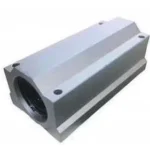
Sce 16 Wuu Long Type Linear Bearing
Original price was: 10.80$.6.65$Current price is: 6.65$.
High-precision linear motion component for industrial automation, offering superior performance and durability.
In stock
🔥 Special for Today Only %39 Discount Opportunity!📦 Category: 16 mm Induction Shafts and Bearings
Mermak assuranceFrom factory to end user · importer / main dealer · strong stock
ImporterMain dealer / distributorStrong stockGood priceCorporate invoice
In stock / available to order · 14-day return for standard unused products; conditions may vary for custom size/cut products.
Sce 16 Wuu Long Type Linear Bearing
INDUSTRIAL AUTOMATION PARTS | SUPERIOR PERFORMANCE SERIES
Detailed Product Review
The Sce 16 Wuu Long Type Linear Bearing is a critical mechanical component designed for high-precision, stable, and repeatable linear motion in industrial automation systems. This linear bearing operates on the principle of rolling instead of sliding on the shaft, minimizing friction and increasing energy efficiency in moving systems. Thanks to its precisely machined ball raceways and optimized ball distribution, it provides positioning accuracy and motion repeatability in the order of thousandths of a millimeter, directly impacting process quality in applications such as CNC machines, robotic arms, and precision measuring instruments. The long type configuration offers a wider bearing surface compared to standard linear bearings, providing higher resistance against dynamic and static moment loads. This ensures effective absorption of lateral forces and tilting moments, especially in systems with long strokes or high inertia, thereby maximizing the overall rigidity and operational stability of the system.
The Sce 16 Wuu series linear bearing is manufactured from specially selected materials such as high carbon chromium alloy steel (GCR15) to ensure durability under demanding industrial conditions. This material, heat-treated to a hardness of 60-62 HRC, significantly enhances surface wear resistance and fatigue strength, guaranteeing the long-term performance continuity and operational life of the bearing. The ‘long type’ architecture of the product widens the contact area of the bearing body on the shaft, allowing the load to be distributed over more ball rows and a larger surface area. This creates a more balanced load distribution on a single bearing, increasing the overall rigidity of the system and reducing localized stress concentrations. Integrated sealing elements prevent dust, dirt, moisture, and other contaminants from entering the bearing, protecting the internal mechanism and extending lubricant life. These structural features offer vibration absorption even at high speeds and low noise operation, providing a comfortable working environment, especially in production areas where the human factor is important. Manufactured according to Mermak CNC engineering standards, this linear bearing is positioned as a reliable and high-performance solution partner in various fields of industrial automation. We proudly supply to markets including the United Kingdom, United States, Canada, Australia, Ireland, and New Zealand, alongside similar countries and international markets.
Advantages of Sce 16 Wuu Long Type Linear Bearing
Superior Positioning Accuracy and Repeatability: The Sce 16 Wuu Linear Bearing offers positioning accuracy at the micron level (thousandths of a millimeter) on linear motion axes, thanks to its micro-tolerance machined ball raceways and high-precision ball elements. This accuracy directly improves the dimensional tolerances and surface quality of the final product, especially in applications where the absolute position of the cutting tool or workpiece is critical, such as in machine tools. Repeatability refers to the system’s ability to return to the same position when the same command set is executed multiple times. This bearing maintains this critical parameter over long operational cycles through optimized ball circulation and its rigid structure, thereby increasing the stability and efficiency of production processes.
Increased Load Capacity and Mechanical Rigidity: The long type design significantly increases the bearing’s contact length on the shaft, thereby substantially enhancing its dynamic and static load capacity. This structural advantage allows for more effective distribution of moment loads and lateral forces, particularly in applications involving heavy workpieces, movement of high-inertia systems, or long strokes. The four rows of ball arrangement enable the load to be spread over a larger area and reduce the stress on each ball element, which increases the bearing’s resistance to deformation and raises the overall mechanical rigidity of the system, providing stable operational performance with minimal deflection even during high-speed movements.
Long Operational Life and Reduced Maintenance Requirement: The Sce 16 Wuu Linear Bearing is manufactured from superior quality materials such as high carbon chromium alloy steel (GCR15) and undergoes special heat treatment processes to achieve a high surface hardness of 60-62 HRC. This hardness enhances the bearing’s wear resistance and fatigue strength, ensuring reliable operation for many years even in demanding industrial environments. Integrated double-lip sealing elements isolate the bearing’s internal mechanism from dust, chips, moisture, and other environmental contaminants, preventing contamination of the ball raceways and lubricant. This protective barrier extends bearing life, dilutes lubrication intervals, and reduces the frequency of planned or unplanned maintenance interventions, optimizing total operating costs.
Technical Specifications and Capacity
Feature | Value/Description
Model | Sce 16 Wuu Long Type Linear Bearing
Shaft Diameter Compatibility | 16 mm (Nominal) – Compatible with precision ground shafts
Dynamic Load Capacity (C) | 980 N (Newton) – Calculated according to ISO 14728 standard, resistance to loads in continuous motion
Static Load Capacity (Co) | 1570 N (Newton) – Resistance to maximum load when stationary, limit of permanent deformation
Total Length | 56 mm – Increased load distribution and rigidity with long type configuration
Material | High Carbon Chromium Alloy Steel (GCR15) – Optimized for industrial bearing applications
Hardness | 60-62 HRC (Rockwell C) – Heat-treated for high wear resistance and fatigue life
Number of Ball Rows | 4 rows – Optimizes load distribution and increases resistance to moment loads
Technical Frequently Asked Questions (FAQ)
What specific contributions does the “Long Type” configuration of the Sce 16 Wuu Linear Bearing make to the mechanical system performance compared to standard linear bearings?
The “Long Type” configuration significantly enhances the Sce 16 Wuu Linear Bearing’s resistance to moment loads (bending and torsion) and lateral forces by increasing the bearing distance on the shaft. While standard short-type bearings are typically optimized for carrying radial loads, the long type, with its increased length, distributes the load over a larger surface area and more ball rows. This reduces stress concentrations on a single bearing and increases the overall rigidity of the system. Especially in long-stroke movements, carrying heavy workpieces, or systems with high inertia, this increased moment capacity minimizes vibration, reduces deflection, and maintains motion accuracy, maximizing operational stability. Furthermore, the more balanced load distribution extends the fatigue life of the bearing elements, increasing system reliability.
What is the fundamental difference between the dynamic and static load capacities (C and Co) of this linear bearing, and what is their importance in application areas?
Dynamic load capacity (C) refers to the maximum radial load a linear bearing can reliably carry over a specified life (typically 50 km or 100 km of travel distance). This value is critical for loads the bearing is subjected to while in continuous motion and is used in calculating the fatigue life of balls and ball raceways. The C value of 980 N for the Sce 16 Wuu determines how long the bearing can operate under a specific speed and load. Static load capacity (Co) indicates the maximum radial load the bearing can withstand when stationary or moving very slowly without causing permanent deformation to the balls and ball raceways. This value determines the bearing’s resistance to sudden impacts, excessive static loads, or loading during assembly. The Co value of 1570 N for the Sce 16 Wuu demonstrates the bearing’s ability to maintain its structural integrity even under overload conditions. In practice, the C value is primarily used for life calculations in continuously operating machines, while the Co value is important in design for stationary loads, shock loads, and safety factors.
How do the GCR15 high carbon chromium alloy steel and the 60-62 HRC hardness value used in the manufacturing of the Sce 16 Wuu Linear Bearing affect its performance?
GCR15 (or 52100) high carbon chromium alloy steel is a high-strength, wear-resistant material commonly used in bearing manufacturing. Its high carbon content increases matrix hardness when heat-treated, while the chromium content enhances hardenability and contributes to corrosion resistance. The 60-62 HRC hardness value of the Sce 16 Wuu is achieved by transforming this material into a martensitic structure and then tempering it. This hardness maximizes the resistance of the balls and ball raceways to rolling fatigue. High hardness increases resistance to deformation under Hertzian stresses at contact surfaces, minimizing pitting and surface wear. This delays the formation of fatigue cracks originating from micro-stresses at the contact points between bearing elements, thereby extending the bearing’s operational life and ensuring performance continuity even under harsh operating conditions.
How is the contribution of the integrated sealing elements (seals) to the long life and low maintenance needs of the Sce 16 Wuu Linear Bearing technically explained?
The integrated double-lip sealing elements in the Sce 16 Wuu Linear Bearing act as a critical barrier, isolating the bearing’s internal mechanism from the external environment. These seals prevent dust, chips, metal particles, moisture, and other contaminants in the working environment from penetrating the ball raceways and ball elements. Contamination can cause micro-abrasions, pitting, and premature fatigue on bearing surfaces, significantly shortening bearing life. Furthermore, the sealing elements prevent the lubricant inside the bearing from leaking out, extending lubrication intervals and increasing the lubricant’s lifespan. Effective retention of lubricant keeps friction at a low level, reduces heat generation, and provides additional protection against corrosion. These technical features combined ensure that the bearing operates smoothly for a longer period, reduce maintenance costs, and increase the overall reliability of the system.
| Dimensions | |
|---|---|
| Dimensions | 16 |
| Compatibility Size |
You must be logged in to post a review.
Taksit Tablosu
Related Products
 %35 DiscountSK 16 Shaft HolderOriginal price was: 1.61$.1.04$Current price is: 1.04$.View
 %49 DiscountSCE 30 WUU Linear Bearing - Long TypeOriginal price was: 31.20$.15.84$Current price is: 15.84$.View
 Sce 50 Wuu Linear Bearing Long Type43.26$View
Reviews
There are no reviews yet.