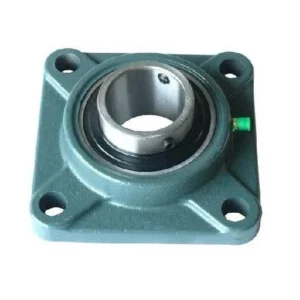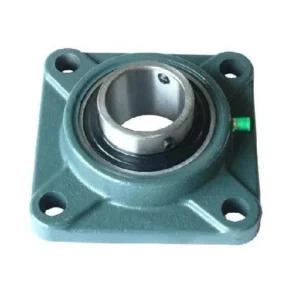




















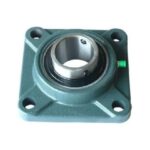
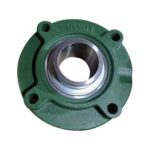




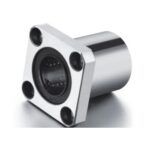








































UCF 206 Pillow Block Bearing Unit
Detailed Product Review
The UCF 206 bearing unit is a 4-bolt square flange cast housing bearing designed to meet the high precision and durability requirements in industrial automation systems and machine manufacturing applications, particularly in the medium shaft diameter category. Engineered for a nominal shaft diameter of 30 mm, this component possesses the ability to dynamically compensate for minor angular misalignments and eccentricities that may arise from the mounting between the shaft and the bearing housing, thanks to the spherical geometry of the outer ring of the inner bearing. This self-aligning feature minimizes edge loading on the bearing elements, preventing stress concentration and optimizing the load distribution between the bearing raceways and rolling elements. Consequently, the operational life of the bearing and the connected mechanical system is significantly extended, unplanned downtime is reduced, and flexibility is provided during installation processes.
The high-strength cast iron housing, ensuring the structural integrity of the product, exhibits superior resistance, especially in industrial environments subjected to high vibration levels and repetitive impact loads. The inherent damping properties of cast iron absorb operational noise and vibration, enhancing the overall stability of the system. The integrated grease nipple mechanism allows for periodic and controlled lubrication of the bearing’s internal components, which reduces the coefficient of friction between the rolling elements and raceways, minimizes heating, delays wear rates, and maximizes the bearing’s service life. The square flange housing design allows the product to be securely and robustly fastened to flat and rigid surfaces with four bolts, offering a stable bearing solution even in applications subjected to high dynamic loads. When proper installation procedures and regular maintenance protocols are followed, the UCF 206 provides uninterrupted and reliable operational performance for many years, directly contributing to the production continuity and efficiency of businesses.
UCF 206 Pillow Block Bearing Unit Advantages
Self-Aligning Spherical Outer Ring Structure: One of the most critical engineering features of the UCF 206 is its spherical outer ring design, which has the capability to automatically compensate for angular misalignments and eccentricities that may occur between the shaft and the bearing housing during installation or operation. This feature eliminates single-sided or edge loading on the rolling elements within the bearing, ensuring an even distribution of load across all rolling surfaces. This prevents premature fatigue and wear of the bearing elements, significantly extends the bearing’s operational life, and enhances the overall durability of the system. Furthermore, it simplifies the installation process and optimizes setup time by reducing the need for precise alignment.
High-Strength Cast Iron Construction: The bearing housing is manufactured from high-strength cast iron material. This material selection provides the UCF 206 with superior mechanical resistance, particularly against vibration and impact conditions. The high compressive strength and natural damping capacity of cast iron effectively absorb vibration energy generated under operational loads, reducing stress levels within the bearing. This feature maintains the structural integrity of the bearing, ensuring long-term and reliable performance even in heavy-duty industrial applications. Additionally, it enhances the bearing’s environmental resistance by showing high resistance to external factors.
Integrated and Controlled Lubrication System: The UCF 206 is equipped with an integrated grease nipple. This feature allows for periodic and controlled lubrication of the bearing’s internal components. Applying the correct type and amount of grease creates a continuous lubricating film between the rolling elements and raceways, preventing metal-to-metal contact and minimizing the coefficient of friction. This reduces operational heating, lowers energy loss, and significantly delays the wear rate of the bearing elements. Regular and proper lubrication maximizes the bearing’s nominal service life while optimizing maintenance costs and preventing unplanned failures, thus contributing to the overall efficiency of the system.
Technical Specifications and Capacity
FeatureValue/Description
Product CodeUCF 206
Bearing TypePillow Block Bearing, 4-Bolt Square Flange
Shaft Diameter (Nominal)30 mm
Housing MaterialHigh-Strength Cast Iron
Bearing Outer Ring StructureSpherical (Self-Aligning)
Lubrication ProvisionIntegrated Grease Nipple Available
Mounting Type4-Bolt Square Flange (Rigid Surface Mounting)
Technical Frequently Asked Questions (FAQ)
What are the critical technical points to consider during the installation of the UCF 206 pillow block bearing?
To ensure the optimal performance and longevity of the UCF 206, several critical technical details must be observed during installation. Firstly, the flatness and rigidity of the mounting surface are vital; any deformation or unevenness on the surface can lead to uneven seating of the flange and induce unwanted stresses in the bearing housing. The four mounting bolts should be tightened gradually using a cross-pattern method and to torque values specified by the manufacturer. This ensures the flange seats evenly against the mounting surface and prevents deformation of the bearing housing. When installing the shaft into the inner bearing ring, appropriate mounting tools should be used to avoid damaging the shaft; never strike the bearing directly with impact tools like a hammer. The cleanliness and smoothness of the shaft surface are also important; burrs or surface imperfections on the shaft can prevent the inner ring from seating properly and cause premature wear. Finally, after installation, check if the bearing rotates freely and observe for any binding or abnormal noise.
What are the main factors affecting bearing life, and how can they be managed specifically for the UCF 206?
Bearing life is typically expressed as fatigue life (L10 or L50) and is influenced by a number of factors, including applied load magnitude and direction, operating temperature, rotational speed, lubrication quality, sealing effectiveness, and environmental contamination. For the UCF 206, integrated solutions are available to manage these factors. The high-strength cast iron housing increases the capacity to tolerate high radial and axial loads, while the spherical outer ring structure optimizes load distribution by minimizing additional stresses caused by shaft misalignment. The integrated grease nipple controls friction and heating through regular and proper lubrication, significantly delaying the wear of bearing elements. The viscosity and additives of the grease to be used should be selected according to operating temperature and load conditions. Furthermore, effective sealing technology prevents dust, moisture, and other abrasive particles from entering the bearing, thus preventing contamination of internal components. Regular lubrication and inspection of sealing elements as part of periodic maintenance programs are critical to maximizing the nominal life of the UCF 206.
To what extent can the self-aligning feature of the UCF 206 tolerate angular misalignments in the system, and how does this provide an advantage under dynamic loads?
The self-aligning feature of the UCF 206, thanks to the spherical outer ring structure of the inner bearing, has the capability to dynamically compensate for a certain range of angular misalignment between the shaft and the bearing housing. This tolerance typically ranges from ±2 to ±3 degrees, varying by bearing type and manufacturer specifications. This feature prevents excessive stress or edge loading on the bearing elements caused by minor axial or angular misalignments during installation. This advantage becomes even more pronounced under dynamic loads, as instantaneous angular changes resulting from system deflections, vibrations, or thermal expansions during operation can be absorbed by the bearing. This ensures that the load distribution within the bearing is continuously optimized, preventing premature fatigue of the rolling elements and raceways. Consequently, the operational stability of the bearing increases, noise and vibration levels decrease, and the overall reliability and life of the system are significantly extended.
What is the mechanism behind the cast iron housing’s resistance to vibration and impact, and how does this affect bearing performance?
The cast iron housing of the UCF 206 has a unique microstructure and mechanical properties that provide high resistance to vibration and impact. Cast iron has a matrix structure containing graphite lamellae; these graphite lamellae act like micro-cracks within the material, enhancing its ability to absorb and dampen vibration energy. The vibration energy is dissipated by these graphite structures and converted into heat, thereby significantly reducing the mechanical stresses transmitted to the bearing housing. Under impact loads, the high compressive strength and rigidity of cast iron allow it to withstand sudden loads without deforming. This mechanism reduces the intensity of shock loads transmitted to the bearing’s internal elements, preventing surface fatigue and cracking of the rolling elements and raceways. As a result, the cast iron housing extends the bearing’s operational life, provides stable performance even in applications subjected to high dynamic loads, and enhances the overall reliability of the system.