

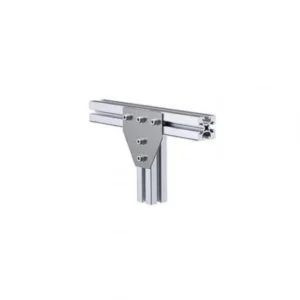
Three-Way Connector Plate 40×80 K8 Zinc
2.74$
High-strength carbon steel plate for connecting 40×80 mm K8 aluminum profiles at three axes, offering superior rigidity and corrosion resistance.
In stock
In stock / available to order · 14-day return for standard unused products; conditions may vary for custom size/cut products.
Three-Way Connector Plate 40×80 K8 Zinc
Detailed Product Review
The Three-Way Connector Plate 40×80 K8 Zinc is a critical structural component used in industrial automation systems to connect 40×80 mm K8 series aluminum profiles along three different axes. This connector is particularly employed in applications requiring high rigidity and dimensional stability, such as machine frames with complex geometries, conveyor systems, robotic cells, and test stands. Its primary function is to create robust and vibration-free joints at corner and intermediate connection points of profile cross-sections, both in-plane and perpendicular axes, thereby enhancing the system’s overall load-bearing capacity and operational precision. Manufactured using precision laser cutting technology, this plate is designed for a perfect fit within the profile channels, offering minimal clearance and maximum contact surface during assembly. This significantly contributes to maintaining structural integrity and damping vibrations, even under dynamic loads, ensuring the system operates reliably and has a long service life.
This specialized connector is made from high-strength carbon steel (equivalent to ST37/S235JR). This material choice provides superior resistance to deformation under heavy industrial loads due to its high tensile strength (minimum 360 N/mm²) and yield strength. The surface of the material is reinforced with an 8-12 micron thick electrolytic zinc plating and passivation treatment. This coating offers effective corrosion resistance against environmental factors commonly encountered in industrial settings, such as moisture, chemical vapors, and abrasive particles, thereby extending the product’s operational life and minimizing maintenance costs. The perfect compatibility with 40×80 mm K8 series aluminum profiles offers flexibility and rapid integration in modular system design. The Ø9 mm mounting holes ensure a seamless connection with standard M8 profile connection bolts, simplifying the assembly process and enhancing repeatability. Dimensional tolerances compliant with DIN ISO 2768-mK standards confirm that each connector plate is manufactured with high precision, ensuring perfect alignment within the system, which is critical for automation applications requiring precise positioning and motion control.
Advantages of the Three-Way Connector Plate 40×80 K8 Zinc
Superior Dimensional Accuracy and Structural Rigidity: This connector plate is manufactured using modern laser cutting technologies and stringent quality control processes, adhering to DIN ISO 2768-mK standards. This precision ensures minimal clearance and maximum surface contact at connection points when combined with 40×80 mm K8 aluminum profiles, significantly increasing the overall rigidity of the assembled structure. This is crucial for applications like robotic arms, CNC machines, and optical measurement systems operating under dynamic loads or where vibration is critical, guaranteeing millimeter-level positioning accuracy and repeatability. Minimizing angular deviations at connection points directly impacts the system’s overall accuracy and long-term operational stability, contributing to the successful achievement of engineering project performance goals.
Enhanced Corrosion Resistance and Longevity: Manufactured from high-strength carbon steel, the connector plate is protected by an 8-12 micron thick electrolytic zinc plating and passivation treatment. This surface treatment creates a superior barrier against corrosive agents commonly found in industrial environments, such as moisture, acidic or alkaline vapors, oils, and mildly abrasive particles. Its performance is validated by ISO 9227 salt spray tests, showing a minimum resistance of 72 hours to white rust and 200 hours to red rust, proving its ability to maintain structural integrity and aesthetic appearance for many years even in harsh operating conditions. This feature directly contributes to reduced maintenance costs and ensures uninterrupted system operation and reliability.
Modular Integration and Design Flexibility: The Three-Way Connector Plate is designed for perfect compatibility with standard 40×80 mm K8 series aluminum profile systems. This universal compatibility allows engineers and designers to create fast and flexible solutions for existing or new projects. Its modular nature enables easy design, assembly, and modification of complex frames, machine skeletons, or automation cells. The Ø9 mm mounting holes are compatible with standard M8 profile connection bolts, allowing for quick and error-free installation without the need for special tools or complex assembly techniques. This ease of integration shortens project development times, reduces engineering effort, and enhances the system’s adaptability throughout its lifecycle.
Technical Specifications and Capacity
Feature
Value/Description
Material
High-Strength Carbon Steel (ST37/S235JR equivalent)
Surface Treatment
Electrolytic Zinc Plating (8-12 micron thickness), Passivated
Profile Compatibility
40×80 mm K8 Series Aluminum Profiles
Connection Type
Three-Way Connection (Corner and Intermediate Connection Combination)
Plate Thickness
4.0 mm (Nominal)
Mounting Holes
Ø9 mm (For profile connection bolts, M8 bolt compatible)
Dimensional Tolerance
Compliant with DIN ISO 2768-mK standards
Tensile Strength
Min. 360 N/mm² (Material dependent)
Corrosion Resistance
Salt Spray Test (ISO 9227): Min. 72 hours white rust, 200 hours red rust resistance
Weight
Approx. 0.18 kg
Operating Temperature
-30°C to +80°C
Product Barcode No
8692024020762
Technical Frequently Asked Questions (FAQ)
What are the engineering reasons for using high-strength carbon steel (ST37/S235JR) in the production of this connector plate, and how does this affect the product’s performance?
The selection of high-strength carbon steel equivalent to ST37/S235JR was meticulously made to meet the high structural integrity and durability requirements expected in industrial automation systems. This material offers a minimum tensile strength of 360 N/mm² and high yield strength, ensuring the connector plate maintains its function under heavy static and dynamic loads without permanent deformation. The high modulus of elasticity of carbon steel minimizes bending and vibration at connection points, contributing to the system’s overall accuracy, especially in applications requiring precise positioning and motion control. Furthermore, the material’s fatigue strength provides long-lasting performance under constantly repeating loads, extending maintenance intervals and reducing operational costs. This choice optimally balances cost-effectiveness with high mechanical performance, offering an ideal solution for industrial applications.
What is the contribution of electrolytic zinc plating (8-12 microns) and passivation to the connector plate’s durability in industrial environments, and how does this coating mechanism work?
Electrolytic zinc plating followed by passivation provides superior corrosion resistance to the connector plate through two primary mechanisms. Firstly, as zinc is a more active metal than carbon steel, it acts as a sacrificial anode in case of galvanic corrosion, protecting the steel surface. Even if the coating is scratched or damaged, the zinc oxidizes, preventing the steel from rusting. Secondly, the 8-12 micron thick zinc layer acts as a physical barrier between the steel surface and environmental factors. The passivation process forms a thin, dense, and stable oxide layer on the zinc coating, which delays the formation of white rust and significantly enhances the overall corrosion resistance of the plating. The minimum resistance of 72 hours to white rust and 200 hours to red rust in ISO 9227 salt spray tests scientifically validates that this coating system provides long-term protection in humid, chemically vaporous, or mildly abrasive industrial environments, maximizing the product’s operational lifespan.
How does the three-way connection capability enhance structural rigidity and assembly flexibility in modular aluminum profile systems, and in which types of applications is it a critical advantage?
The three-way connection capability refers to the ability to create profile joints along three different axes (e.g., X, Y, and Z) using a single connector element in modular aluminum profile systems. This feature offers significant engineering advantages, especially when designing complex 3D frames and closed-loop structures. Compared to traditional two-way connections, three-way connectors distribute applied loads more effectively, minimizing torsional and bending deformations. This increases the overall rigidity and stability of the structure, allowing for the construction of more robust frames with fewer connector elements. This capability is critical in applications such as robotic workstations, high-speed conveyor systems, precision instrument stands, and machine frames subjected to dynamic loads. The three-way connection enhances design flexibility, enabling engineers to create more compact and optimized structures while reducing assembly times and material waste.
How do dimensional tolerances compliant with DIN ISO 2768-mK standards affect the assembly precision and overall accuracy of the system when using this connector plate?
Ensuring dimensional tolerances compliant with DIN ISO 2768-mK standards reinforces the critical role of the Three-Way Connector Plate in industrial automation applications. This standard denotes ‘m’ (medium) for general tolerances and ‘K’ for coarse angular tolerances, indicating high-precision manufacturing. These tolerances guarantee a perfect fit between the connector plate and the 40×80 mm K8 aluminum profiles, minimizing gaps and ensuring optimal contact surface at connection points during assembly. Consequently, cumulative errors in assembled structures are prevented, increasing the overall accuracy and repeatability of the system, especially in long or complex profile constructions. Precise tolerances ensure the connector elements fit snugly into the profile channels, reducing micro-movements and vibrations under external forces. This is a fundamental requirement for precise movements in robotic arms or CNC machines, helping the system maintain high performance throughout its operational life.
| Direction | 3 |
|---|
You must be logged in to post a review.


Reviews
There are no reviews yet.