















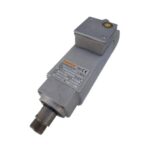














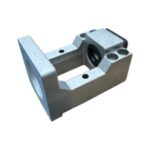












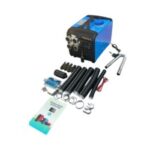































5-Point Oil Distributor
Detailed Product Review
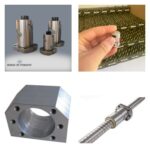
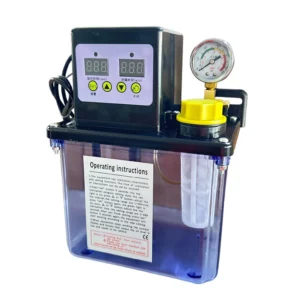
The 5-Point Oil Distributor is a critical hydraulic component designed for industrial automation systems and high-precision CNC machines. It precisely divides lubricant flow from a central lubrication system into five separate points homogeneously and accurately. This distributor takes lubricant from a main inlet port and, through its internal mechanism (typically a piston or proportional flow divider principle), delivers a specific, pre-set volume to each outlet port. This process minimizes friction between machine elements, prevents wear, controls heat generation, and avoids unexpected mechanical failures. Consequently, the operational life of machine components is extended, while the overall efficiency and reliability of the system are enhanced. Ensuring the optimal amount of lubricant reaches each point is vital for components like ball screws, linear guides, gearboxes, and bearings, which require high precision and continuous lubrication. This also helps minimize backlash and maintain machining accuracy.
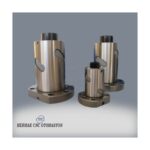
The product’s material structure is a combination of high-strength alloy steel and anodized aluminum, designed for durability in demanding industrial conditions. Alloy steel provides high mechanical strength and pressure resistance, while anodized aluminum offers lightness, corrosion resistance, and a superior protective layer against chemical effects. This material selection guarantees the distributor’s long-lasting and stable performance across a wide operating range, including aggressive lubricants and humid environments. System integration is easily achieved through a standard M8x1 threaded inlet connection and multiple mounting holes (flange type), allowing for quick and leak-proof connection to existing lubrication circuits. Industrial application areas include the moving axes of CNC machining centers and lathes, tool magazine systems, metal forming presses, guillotines, and the bearings and die surfaces of bending machines. This wide range of applications demonstrates the distributor’s capacity to meet critical lubrication needs across various industrial sectors. Mermak has 16 years of experience supplying high-quality industrial components to markets including the United Kingdom, United States, Canada, Australia, Ireland, New Zealand, South Africa, and similar international markets.
Advantages of the 5-Point Oil Distributor
Precise and Equal Lubricant Distribution: Through internally calibrated flow divider elements, this distributor transfers lubricant from the central lubrication system to five independent outlet ports with millimeter precision and equal volumes. This technical feature ensures a uniform lubricant film thickness at the machine’s various lubrication points, thereby minimizing localized friction and heat generation. As a result, each of the machine components is kept at its optimal operating temperature, reducing wear rates and significantly extending the service life of critical parts. This homogeneous distribution directly impacts the overall performance and reliability of the system, especially in high-speed and high-load applications.
High Pressure Resistance and Operational Stability: The 5-Point Oil Distributor is designed to perform stably within a wide operating pressure range of 0-100 bar (approximately 1450 PSI). This high pressure resistance allows the product to be used reliably in both low-pressure grease systems and high-pressure hydraulic lubrication circuits. The internal structure and external body of the distributor have been optimized through engineering calculations to resist dynamic pressure fluctuations and sudden load changes. This feature ensures the system continuously and reliably manages pressurized lubricant flow, thereby maximizing operational continuity and machine protection.
Wide Lubricant Compatibility and Application Flexibility: The product offers full compatibility with lubricants across a wide viscosity range, including mineral oils, synthetic oils, and greases from NLGI classes 000 to 00. This broad compatibility allows the distributor to adapt to the specific lubrication requirements of different industrial applications. The internal seals and flow channels are made from materials selected to be inert to various chemical compositions of lubricants, ensuring long-term chemical resistance and sealing performance. Application flexibility enables businesses to utilize their existing lubricant stocks or select the most suitable lubricant for a specific application, thereby simplifying inventory management and optimizing operational costs.
Technical Specifications and Capacity
Feature
Value/Description
Material Structure
High-Strength Alloy Steel / Anodized Aluminum. Resistant to corrosion, chemical effects, and mechanical wear.
Inlet Connection
M8x1 Threaded Connection (Standard). Leak-proof and secure integration with industrial lubrication pumps and main lines.
Number of Outlets
5 Points (Independent). Capacity for simultaneous and precise lubricant distribution to five different lubrication points.
Operating Pressure
0-100 bar (0-1450 PSI). Wide pressure range, compatibility with various hydraulic and pneumatic systems, and reliable operation.
Fluid Compatibility
Mineral Oils, Synthetic Oils, Greases (NLGI Class 000-00). Optimal performance and flexible use with a wide viscosity range.
IP Protection Class
IP65. Full protection against dust ingress and resistance to low-pressure water jets, ideal for harsh industrial environments.
Operating Temperature
-20°C to +80°C. Ensures stable and reliable operation across a wide temperature range, adapting to different climatic and working conditions.
Technical Frequently Asked Questions (FAQ)
How is the 5-Point Oil Distributor integrated into existing central lubrication systems, and what technical considerations are important for sealing?
The 5-Point Oil Distributor can be directly integrated into the main supply lines of industrial central lubrication pumps via its standard M8x1 threaded inlet connection. During integration, conical or flat seal fittings should be preferred to ensure sealing at the connection point. Especially in high-pressure systems, it is recommended to tighten the connection elements according to torque values and use PTFE tape or anaerobic sealing compounds. The distributor should be mounted to the machine chassis or a suitable mounting surface using its multiple mounting holes (flange type) in a way that absorbs vibration. Before system commissioning, performing a pressure test at all connection points to ensure there are no leaks will enhance operational reliability and prevent lubricant loss.
What are the signs of performance degradation or failure in the distributor, and how can these be diagnosed?
Signs of performance degradation or failure in the 5-Point Oil Distributor typically manifest as increased friction in machine components, overheating, abnormal noises, or unexpected wear patterns. Technically, the first indications of distributor failure can be a complete stoppage of lubricant flow from one or more outlet ports, a decrease in flow rate, or a disruption in homogeneous distribution. These situations can be detected by pressure drops or visible reductions in lubricant quantity at the affected lubrication points. For diagnosis, pressure gauges can be connected individually to each outlet port to check for pressure differences, or the volumes of lubricant collected from each outlet over a specific period can be compared to evaluate flow homogeneity. Additionally, the exterior of the distributor should be visually inspected for any oil leaks or physical damage.
How does the use of different NLGI class greases (e.g., NLGI 000 and NLGI 00) affect the distributor’s flow characteristics and pressure drop?
The NLGI class is a measure of the grease’s penetration value, indicating its consistency; lower NLGI values denote more fluid greases. Using NLGI 000 grease in the 5-Point Oil Distributor means lower viscosity and thus less flow resistance compared to NLGI 00 grease. This allows for lower pressure drops within the distributor’s internal channels and faster filling/emptying cycles. NLGI 00 grease, with its higher viscosity, creates more flow resistance within the distributor, which may require higher inlet pressure to achieve the same flow rate. Furthermore, more viscous greases can lead to slower response times or uneven distribution in the distributor’s precise flow division mechanisms, especially at low temperatures. Therefore, grease selection should consider the system’s operating temperature, pump capacity, and the requirements of the lubrication points.
How does the IP65 protection class technically contribute to the durability of the 5-Point Oil Distributor in industrial environments?
The IP65 protection class is an international standard defining the distributor’s resistance to solid objects and liquids. The digit “6” indicates that the distributor is completely protected against dust ingress, preventing even fine dust particles from penetrating the internal mechanisms and causing blockages or wear in the precise flow dividing elements. The digit “5” signifies resistance to low-pressure water jets, meaning the distributor is protected against water splashes from any direction. This technical feature prevents corrosion or contamination of the distributor’s internal components, especially during operations involving cutting fluids, coolants used in metalworking machines, and general industrial cleaning processes. The IP65 classification is a critical engineering feature that directly supports the distributor’s long-term operational reliability and reduces maintenance requirements in harsh and dirty industrial environments.

Reviews
There are no reviews yet.