










































































CNC Machine Surface Waves: Mechanical or Electronic Issues?
📑 Table of contents (Click to open)
- Understanding Surface Waves in CNC Machining
- The Interplay of Mechanical and Electronic Factors
- Mechanical Factors: The Foundation of Precision
- Electronic Factors: The Brains of the Operation
- Technical Data Considerations for Surface Quality
- Troubleshooting Steps for Surface Waves
- Conclusion: A Holistic Approach to Quality
Surface waves on CNC machined parts can degrade quality and affect functionality. This article explores whether the cause is primarily mechanical (e.g., rigidity, vibration, backlash) or electronic (e.g., servo tuning, encoder errors), providing insights for industrial buyers.
Practical notes for CNC router, automation and industrial motion systems.
Understanding Surface Waves in CNC Machining
Surface waves or undesirable patterns on CNC machined components are a common challenge in industrial manufacturing. These imperfections can significantly compromise the aesthetic appeal, dimensional accuracy, and overall performance of the final product. Identifying whether the root cause lies in the machine’s mechanical systems or its electronic control is crucial for effective troubleshooting and achieving high-quality finishes. Often, the issue is a complex interaction between both, but a systematic approach helps pinpoint the primary culprit.
The Interplay of Mechanical and Electronic Factors
CNC machines operate by precisely following programmed toolpaths. This intricate process relies on the seamless coordination of numerous mechanical and electronic components. Understanding how these systems function individually and collectively is key to diagnosing surface wave issues.
Mechanical Factors: The Foundation of Precision
Mechanical issues often form the bedrock of surface wave problems, stemming from the machine’s physical structure and the integrity of its moving parts. Key mechanical considerations include:
- Machine Rigidity and Structural Integrity: Insufficient rigidity in the machine frame, gantry, or table can lead to flexing under cutting forces. This flexing causes micro-variations in the tool’s position relative to the workpiece, resulting in wavy surfaces, especially during heavy or high-speed cuts.
- Vibration and Resonance: Cutting operations generate forces that can excite the natural frequencies of the machine, tooling, or workpiece. When these frequencies align, resonance occurs, leading to uncontrolled vibrations that severely degrade surface finish. Worn spindle bearings, unbalanced tool holders, or issues with linear guide rails can exacerbate vibration.
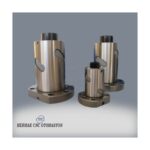
- Backlash: Play or looseness in mechanical components like ball screws or gear drives means the axis may not immediately respond when its direction of motion is reversed. This delay or lost motion can create noticeable waviness, particularly in contouring operations.
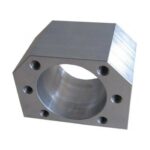
- Component Wear and Damage: Worn linear guides, damaged ball screw nuts, loose spindle bearings, or improperly seated tool holders can all reduce motion accuracy and stability, contributing to surface imperfections.
- Workholding Stability: Inadequate clamping of the workpiece can allow it to vibrate or shift during machining, directly impacting the surface quality.
Electronic Factors: The Brains of the Operation
Electronic factors relate to the machine’s control system, motors, and feedback mechanisms. These elements govern the precision and responsiveness of axis movements:
- Servo Motor Tuning: The performance of servo motors is governed by parameters like PID (Proportional-Integral-Derivative) gains. Incorrect tuning can cause motors to overshoot, oscillate, or react too slowly, leading to the control system failing to accurately follow the programmed path and introducing waviness.
- Encoder Issues: Encoders provide crucial position and velocity feedback to the CNC controller. A dirty, damaged, or misaligned encoder can transmit erroneous data, causing the controller to make incorrect adjustments and resulting in erratic axis movement.
- Drive Amplifiers: Malfunctions or instability within the servo drive units can disrupt the smooth operation of the motors, leading to inconsistent axis performance and surface defects.
- CNC Controller and Software: Software glitches, inadequate interpolation algorithms, or low-resolution motion commands from the CNC controller can contribute to waviness, especially in complex, high-speed toolpaths.
- Electrical Noise: Power supply fluctuations, grounding problems, or electromagnetic interference can affect the sensitive electronic components responsible for motion control, leading to deviations in axis positioning.
Technical Data Considerations for Surface Quality
Maintaining high surface quality requires careful attention to several technical parameters:
| Parameter | Typical Specification/Note |
|---|---|
| Spindle Runout | Ideally below 5 microns (0.005 mm) to minimize vibration. |
| Axis Backlash | Target below 0.01 mm (10 microns). Compensated by CNC, but mechanical limits exist. |
| Servo Gain Settings (PID) | Tuned specifically for machine dynamics; incorrect settings cause overshoot or slow response. |
| Vibration Analysis | Avoid resonance by ensuring cutting frequencies do not match machine natural frequencies. |
| Encoder Resolution | High resolution (e.g., 100,000-1,000,000 pulses/mm) is vital for precise motion control. |
| Machine Rigidity | Low deformation under cutting forces ensures stability and better surface finish. |
| Tool Wear Limits | Excessive tool wear increases cutting forces and vibration. |
Troubleshooting Steps for Surface Waves
A systematic approach is essential for diagnosing and resolving surface wave issues:
- Thorough Mechanical Inspection: Systematically check all moving components for wear, looseness, or damage. Inspect ball screws, linear guides, and bearings. Manually move axes to detect any binding or abnormal noises. Verify spindle condition and balance. Ensure tool holders and tools are securely mounted and balanced. Check the integrity of the vacuum table or workholding system.
- Review Cutting Parameters: Evaluate feed rates, spindle speeds, depth of cut, and tool selection. Sometimes, adjusting these parameters can mitigate issues caused by minor mechanical or electronic imbalances. Ensure the correct cutting tools are used for the material and operation.
- Analyze Servo Performance: Monitor servo drive parameters and encoder feedback. Check for excessive current draw, position errors, or unusual vibration patterns during operation. Fine-tune servo gains if necessary, but proceed cautiously.
- Check for Electrical Noise: Ensure proper grounding and shielding of electrical components. Investigate potential sources of interference.
- Software and Toolpath Verification: Review the generated G-code for any anomalies. Ensure the CAM software settings are appropriate for the machine’s capabilities. Sometimes, simplifying the toolpath or increasing its resolution can help.
Conclusion: A Holistic Approach to Quality
Surface waves on CNC machined parts are rarely attributable to a single cause. They often arise from a combination of factors involving the machine’s mechanical integrity, the precision of its electronic control systems, and the applied cutting parameters. By systematically investigating both mechanical and electronic aspects, manufacturers can accurately diagnose the root cause and implement effective solutions. Regular maintenance, proper setup, and precise tuning of your industrial CNC router are paramount to consistently achieving the high-quality finishes demanded by today’s industrial applications.
Experiencing surface quality issues with your CNC machinery? Contact us today to discuss your specific needs and find the optimal solution for your production challenges.
Ready to optimize your CNC operations? Request a quote on WhatsApp now!
Related product categories: Genel · Turuncu Makine Ayağı · Kesim Uçları
