
No products in the cart.
%47 Discount


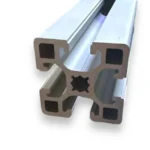
45×45 Sigma Profile 10 Channel Heavy Duty Wholesale
Original price was: 36.72$.19.58$Current price is: 19.58$.
High-strength, 45×45 mm extruded aluminum profile with a 10 mm T-slot, designed for demanding industrial automation and machine building applications.
In stock
🔥 Special for Today Only %47 Discount Opportunity!📦 Category: Sensors and Switches🏷️ Dimensions: 45 mm🏷️ Slot Size: 10 Slots🏷️ Profile Size: 45x45
Mermak assuranceFrom factory to end user · importer / main dealer · strong stock
ImporterMain dealer / distributorStrong stockGood priceCorporate invoice
In stock / available to order · 14-day return for standard unused products; conditions may vary for custom size/cut products.
45×45 Sigma Profile 10 Channel Heavy Duty Wholesale
INDUSTRIAL AUTOMATION PARTS | SUPERIOR PERFORMANCE SERIES
Detailed Product Review
The 45×45 mm cross-section, 10 mm T-channel width Heavy Duty Sigma Profile offered by Mermak CNC is a structural element designed for applications requiring high strength and structural integrity in industrial automation systems and machine manufacturing. Thanks to its optimized internal geometry and increased wall thicknesses, this profile exhibits superior resistance to higher static and dynamic loads compared to standard profiles. It is particularly preferred as a primary load-bearing or frame element in systems where vibration minimization, high torsional and bending rigidity, and precise positioning tolerances need to be maintained. The profile’s cross-sectional design effectively distributes applied forces, reducing stress concentration and thereby extending fatigue life, which offers a critical advantage in industrial environments requiring continuous operation.
The material composition of the product consists of a high-strength extruded aluminum alloy, typically conforming to the EN AW-6063 T6 standard. This alloy offers excellent mechanical properties along with good workability and corrosion resistance. The profile’s surface is coated with an anodizing (anodized) treatment; this process electrochemically thickens the naturally formed oxide layer on the aluminum surface, creating an additional protective layer against abrasion, scratching, and environmental corrosion effects. The wide 10 mm T-channel structure ensures maximum compatibility with M10 bolts and various industrial fasteners, nuts, and accessories, enabling the rapid, flexible, and reliable assembly of modular systems. This feature makes the profile an indispensable component in creating high-performance and long-lasting solutions for a wide range of industrial applications, including conveyor systems, robotic workstations, CNC machine chassis, and test and measurement equipment constructions.
Advantages of 45×45 Sigma Profile 10 Channel Heavy Duty Wholesale
High Mechanical Load Capacity and Rigidity: This heavy-duty profile, with its reinforced cross-section and increased wall thicknesses, offers a significantly higher capacity to withstand static and dynamic loads compared to standard profiles. The high-density aluminum alloy and optimized internal web design increase the profile’s resistance to bending and torsional moments. This guarantees long-term operational reliability by minimizing the risk of structural deformation, especially in applications such as conveyor systems, robotic cells, and large-scale machine chassis that require continuous vibration, impact, or heavy load support. The profile’s high moments of inertia values allow for lower deflection and higher natural frequency values in engineering calculations, directly contributing to the overall stability of the system.
Enhanced Modularity and System Integration: The 10 mm wide T-channel system allows for the easy and secure integration of industrial automation components, sensors, cable trays, pneumatic and hydraulic lines, and various fasteners (T-nuts, corner connectors, hinges, etc.). This wide channel structure permits the use of larger bolt sizes (M10), enabling higher tightening torques at connection points and thus stronger, more vibration-resistant connections. The modular design principle simplifies rapid system prototyping, easy reconfiguration, and adaptation to future changes or expansions, leading to significant time and cost savings in engineering and assembly processes.
Superior Dimensional Stability and Manufacturing Precision: This sigma profile is manufactured through precise extrusion processes, ensuring tight dimensional tolerances. This manufacturing precision guarantees minimal deviation along the length of the profile and across its cross-section. High dimensional stability is critical in applications requiring high precision, such as optical benches, laser cutting machines, and CNC machining centers. It ensures perfect alignment when assembling profiles together or joining them with other mechanical components, minimizing assembly errors and cumulative tolerance errors within the system. The anodized surface treatment increases the profile’s surface hardness, enhancing its resistance to scratches and maintaining its long-term aesthetic and structural integrity even in harsh industrial environments.
Technical Specifications and Capacity
Feature
Value/Description
Profile Size
45×45 mm
Channel Width
10 mm (T-Slot Channel)
Type
Heavy Duty (Enhanced Strength and Rigidity)
Material
High-Strength Extruded Aluminum Alloy (e.g., EN AW-6063 T6)
Cross-Sectional Area (Approx.)
~8.6 cm²
Unit Weight (Approx.)
~2.32 kg/meter
Moment of Inertia (Ix / Iy)
~17.8 cm⁴ / ~17.8 cm⁴ (Axial Symmetry)
Surface Treatment
Anodized (Anodized) – Corrosion resistance, surface hardness, and aesthetic appearance
Standard Length
60 meters (in 10 x 6-meter lengths)
Technical Frequently Asked Questions (FAQ)
What specific differences does the “Heavy Duty” designation offer in terms of the profile’s structural performance?
The “Heavy Duty” designation refers to optimizations in the profile’s cross-sectional geometry and wall thicknesses. This translates to a larger cross-sectional area and, consequently, a greater moment of inertia (Ix/Iy) value compared to standard profiles. A larger moment of inertia directly increases the profile’s resistance to bending and torsion. For instance, under the same load, a “Heavy Duty” profile will exhibit less deflection and a smaller torsional angle than a standard profile. This is critical for minimizing structural deformation and vibration, especially in systems with long spans or subjected to high dynamic loads. Furthermore, increased wall thicknesses reduce localized stress concentrations at connection points, enhancing connection strength and overall fatigue life.
How does the 10 mm T-channel width affect the system’s modularity and connection strength?
The 10 mm T-channel width provides direct compatibility with M10 size bolts and T-nuts, commonly used in industrial automation applications. This allows for the use of larger diameter bolts, enabling higher tightening torques at connection points, resulting in stronger, more rigid, and more vibration-resistant connections. Using smaller bolt sizes in profiles with narrower channel widths can limit connection strength and load-bearing capacity. Additionally, the 10 mm channel allows for the easy integration of a wider range of accessories (e.g., heavy-duty corner connectors, hinges, sensor brackets), offering engineers greater flexibility in system design and reconfiguration. This width also facilitates the convenient placement of auxiliary elements like cable trays and pneumatic hoses within the channel, contributing to an aesthetically pleasing and organized system appearance.
What are the specific long-term benefits of the EN AW-6063 T6 aluminum alloy and anodized surface treatment for industrial use?
The EN AW-6063 T6 aluminum alloy is known for its excellent extrusion properties, good strength-to-weight ratio, corrosion resistance, and weldability. The T6 heat treatment increases the alloy’s tensile strength and yield strength, enhancing the profile’s resistance to deformation under heavy loads. This ensures the profile performs reliably over the long term in industrial environments. The anodizing (anodized) surface treatment significantly enhances the profile’s resistance to environmental factors by thickening and hardening the naturally formed oxide layer on the aluminum surface through a controlled electrochemical process. This treatment increases the profile’s resistance to abrasion and scratching while improving its corrosion resistance against chemicals and moisture. Consequently, the profile maintains its structural integrity and aesthetic appearance for many years, even in harsh industrial environments (e.g., areas with chemical fumes or high humidity), reducing maintenance costs and extending the system’s lifespan.
How are the profile’s moments of inertia (Ix / Iy) values (approx. ~17.8 cm⁴) used in structural design calculations?
The moment of inertia is a geometric property that characterizes a cross-section’s resistance to bending. The Ix and Iy values represent the bending rigidity of the profile around the X and Y axes, respectively. These values are used by structural design engineers as a fundamental parameter in calculating deflection, stress, and buckling of beams or columns. For example, to calculate the maximum deflection of a beam, the moment of inertia (I) and the material’s modulus of elasticity (E) are used together in Euler-Bernoulli beam theory equations (e.g., δ = (PL³)/(48EI)). Higher moments of inertia values mean lower deflection and stress under the same load, indicating a more rigid and durable structural element. The equal Ix and Iy values (~17.8 cm⁴) due to the profile’s axial symmetry indicate that the profile exhibits similar bending behaviors around both principal axes, providing flexibility in design orientation. These values are critical, especially in applications requiring precise positioning and vibration control, such as machine chassis and optical benches.
| Dimensions | 45 mm |
|---|---|
| Slot Size | 10 Slots |
| Profile Size | 45x45 |
You must be logged in to post a review.
Taksit Tablosu
Related Products
 RAY KLEMENS TOPRAK YELLOW/GREEN2.16$View
 %47 Discount90x180 Sigma Profile 10 Channel WholesaleOriginal price was: 235.74$.125.72$Current price is: 125.72$.View
 RAY KLEMENSİ (Linear Rail Clamp)0.92$View
Reviews
There are no reviews yet.