


30×90 Sigma Profile 8 Channel
Original price was: 39.38$.22.38$Current price is: 22.38$.
High-strength aluminum profile for industrial automation and machine construction.
In stock
In stock / available to order · 14-day return for standard unused products; conditions may vary for custom size/cut products.
30×90 Sigma Profile 8 Channel
Detailed Product Review
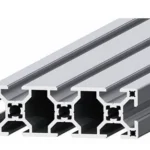
The 30×90 Sigma Profile 8 Channel is a linear structural element designed for applications in industrial automation systems requiring high structural rigidity, modularity, and adaptability. This profile features a rectangular cross-section geometry, measuring 30 mm in width and 90 mm in height. Integrated into the four peripheral surfaces of the profile are a total of 8 channels, each with a standard 8 mm T-slot geometry. These T-slots allow for the positioning and fastening of various mechanical components, sensors, actuators, cable conduits, and other modular accessories along the profile’s axis using M8 T-nuts and other compatible fasteners. This design enables the rapid and precise assembly, reconfiguration, and disassembly of complex machine frames, linear motion systems, robotic cells, and ergonomic workstations. The geometric optimization of the profile aims to maximize resistance to bending and torsional loads by providing high moments of inertia, while simultaneously minimizing the overall system weight.
The product is manufactured from EN AW-6063 T6, a high-strength aluminum alloy. This alloy retains the lightweight advantage of aluminum while exhibiting significant improvements in mechanical properties such as tensile strength, yield strength, and hardness due to the T6 heat treatment. The precise anodizing surface treatment applied creates a micron-level, hard, and dense aluminum oxide layer on the profile’s surface. This layer enhances the profile’s resistance to environmental factors, providing superior protection against corrosion, scratches, abrasion, and certain chemicals. These technical specifications ensure that the profile delivers long-lasting and reliable performance even in demanding industrial environments. Its modular nature supports rapid prototyping processes in engineering projects and offers flexible, reconfigurable solutions in mass production lines, thereby increasing operational efficiency and adaptability. This profile is utilized in a wide range of industrial applications, from the skeletal structures of robotic arms and CNC machine bodies to the supporting structures of test and measurement equipment and safety barriers.
Advantages of the 30×90 Sigma Profile 8 Channel
High Degree of Modular Integration and Structural Flexibility: The 8 T-slots, each 8 mm wide and strategically positioned on the profile’s peripheral surfaces, ensure direct compatibility with a wide range of industrial-standard fasteners and accessories. This structural feature provides design engineers with the ability to quickly create, modify, or expand system configurations. The ability to freely position and fasten components along the profile’s axis accelerates prototyping processes, reduces assembly times, and enhances dynamic adaptability in production lines. Compared to traditional welded or custom-fabricated structures, this modular system allows for engineering revisions and system upgrades with minimal labor and time expenditure.
Optimized Structural Strength and Mass Ratio: Manufactured from EN AW-6063 T6 aluminum alloy, this profile boasts a high strength-to-weight ratio. The T6 heat treatment significantly increases the material’s yield and tensile strength, enabling the profile to withstand high static and dynamic loads. The optimized 30×90 mm cross-section geometry maximizes the profile’s bending and torsional moments of inertia while maintaining a metric weight of approximately 2.204 Kg/Meter. This feature is particularly beneficial in dynamic systems (robotic arms, linear guides) for reducing moving mass, thereby lowering energy consumption and improving the system’s overall response time. High rigidity also enhances vibration damping capabilities, supporting precise positioning in sensitive applications.
Advanced Surface Protection and Long Operational Life: The anodizing applied to the profile’s surface is a process that electrochemically thickens and hardens the natural oxide layer. This artificially created aluminum oxide (Al₂O₃) layer drastically increases the profile’s resistance to environmental factors. It acts as a superior barrier against corrosion, atmospheric effects, UV radiation, and many industrial chemicals. Furthermore, by increasing surface hardness, it optimizes resistance to scratches and abrasion. These properties guarantee that the profile maintains its structural integrity, aesthetic appearance, and performance for many years, even under harsh industrial operating conditions (humidity, dust, chemical vapors), thus minimizing maintenance costs and replacement frequency.
Technical Specifications and Capacity
Feature
Value/Description
Profile Dimensions
30 mm (width) x 90 mm (height)
Channel Type and Quantity
8 Channels, 8 mm T-slot standard (for modular connection)
Material
High-Strength Aluminum Alloy (EN AW-6063 T6)
Weight per Meter (Nominal)
Approx. 2.204 Kg/Meter
Surface Treatment
Anodized Coating, for corrosion and abrasion resistance
Heat Treatment
T6 Hardening (increases mechanical strength)
Technical Frequently Asked Questions (FAQ)
How does the T6 heat treatment specifically improve the mechanical properties of the EN AW-6063 aluminum alloy in this profile?
The T6 heat treatment is a solution heat treatment followed by artificial aging applied to aluminum alloys. For the EN AW-6063 alloy, this process begins by homogenizing the magnesium and silicon elements within the alloy. The alloy, held at a high temperature, is then rapidly cooled (quenched) to keep these elements in a supersaturated solid solution. Subsequently, it is held at a controlled temperature (artificial aging) for a specific period, forming very fine and dispersed precipitates within the alloy matrix. These precipitates impede dislocation movement, significantly increasing the material’s yield strength, tensile strength, and hardness. Consequently, the 30×90 Sigma Profile, thanks to the T6 treatment, possesses a higher load-bearing capacity, better fatigue resistance, and increased resistance to deformation, making it a more reliable structural element for industrial applications.
What are the specific advantages of the anodized coating on this sigma profile in aggressive industrial environments?
Anodizing is a process that electrochemically thickens and hardens the natural oxide layer on an aluminum surface. In aggressive industrial environments, this coating offers several critical advantages for the profile. Firstly, the resulting aluminum oxide (Al₂O₃) layer is much harder than aluminum itself, thereby increasing the profile’s resistance to scratches, abrasion, and impacts. Secondly, this layer significantly enhances corrosion resistance, preventing the aluminum from oxidizing and degrading in environments with humidity, salt, or chemical vapors. Thirdly, the anodized layer is electrically insulating, reducing the profile’s electrical conductivity and potentially preventing unwanted short circuits or electrochemical reactions in certain applications. Finally, its resistance to UV radiation prevents issues like color fading or surface degradation in outdoor or high-light environments, ensuring the profile’s aesthetic and structural integrity are maintained for a long time.
How does the 8 mm T-slot standard support the modularity and reconfigurability of systems built with this profile?
The 8 mm T-slot standard is a widely accepted interface in industrial automation and machine construction. Its use allows the 30×90 Sigma Profile to be fully compatible with a broad ecosystem of M8 T-nuts, corner brackets, hinges, casters, panel mounts, and other accessories. This compatibility fundamentally supports system modularity, as engineers can easily integrate components from different manufacturers and optimize existing designs by selecting from a vast pool of parts. The ability to freely position and fasten components along the T-slots with bolts offers non-destructive assembly and disassembly, eliminating the need for welding or special machining. This feature allows for rapid trial-and-error cycles during prototyping and provides flexibility for quick configuration changes, maintenance, or upgrades in production systems. Thus, the system can be easily adapted and reconfigured according to different requirements throughout its lifespan.
What critical design parameters should be considered when calculating the load-bearing capacity and deflection of a structure built using the 30×90 Sigma Profile?
When determining the load-bearing capacity and deflection of a structure built with the 30×90 Sigma Profile, several critical design parameters must be considered. Firstly, the profile’s cross-sectional moments of inertia (Ix and Iy) are vital as they directly influence bending stiffness and are used in deflection calculations. Secondly, material properties such as the Young’s Modulus (E), yield strength (σy), and ultimate tensile strength (σu) of the EN AW-6063 T6 aluminum alloy are fundamental data for stress and deformation analysis. Thirdly, the load’s application point, direction, and distribution (point load, distributed load), along with the support conditions (fixed, simply supported, cantilever), directly affect deflection and stress distribution. Fourthly, for tall columns, the risk of buckling should be evaluated using Euler or Johnson’s formulas, depending on the cross-sectional dimensions and unsupported length. Fifthly, the strength and rigidity of fasteners (T-nuts, corner connectors) are critical for overall structural integrity, and stress concentrations and potential loosening at connection points should be analyzed. Finally, if dynamic loads or vibrating environments are involved, the material’s fatigue life and the system’s natural frequencies should also be taken into account.
| Dimensions | 30x90 |
|---|---|
| Slot Size | 8 Slots |
| Profile Size | 30x90 |
You must be logged in to post a review.
Reviews
There are no reviews yet.