
No products in the cart.
%47 Discount

60×60 Sigma Profile 10 Channel Wholesale
Original price was: 46.07$.24.56$Current price is: 24.56$.
High-strength aluminum extrusion profile for industrial automation systems, featuring 10mm T-slots for modular construction.
In stock
🔥 Special for Today Only %47 Discount Opportunity!📦 Category: Sensors and Switches🏷️ Dimensions: 60 mm🏷️ Slot Size: 10 Slots🏷️ Profile Size: 60x60
Mermak assuranceFrom factory to end user · importer / main dealer · strong stock
ImporterMain dealer / distributorStrong stockGood priceCorporate invoice
In stock / available to order · 14-day return for standard unused products; conditions may vary for custom size/cut products.
60X60 Sigma Profile 10 Channel Wholesale
INDUSTRIAL AUTOMATION PARTS | SUPERIOR PERFORMANCE SERIES
Detailed Product Review
The 60×60 Sigma Profile is a high-strength aluminum extrusion profile specifically designed for creating structural frameworks in industrial automation systems. This profile is developed to construct rigid and reconfigurable frames that form the basis of modular systems, conveyor lines, robotic cells, precision linear motion systems, and ergonomic workstations. The 10mm wide T-slots provide universal compatibility with industrial standard fasteners (T-nuts, hammer head nuts), allowing components to be freely positioned and secured along the profile. Manufactured through extrusion, these profiles have a homogeneous structure with high resistance to material fatigue and offer consistent, reliable structural integrity even in complex engineering projects due to their high-precision manufacturing tolerances. This design guarantees long-lasting performance with minimal deformation under dynamic and static loads.
The material composition of the product consists of a high-strength aluminum alloy conforming to the EN AW-6063 T6 standard. This alloy offers excellent workability and weldability, in addition to high tensile and yield strength. The surface of the profile is treated with a natural anodized coating, 10-15 microns thick. This coating creates a controlled oxide layer on the aluminum surface, increasing the profile’s wear resistance, providing superior protection against corrosion, and giving it an aesthetic appearance. The anodized layer also offers mild electrical insulation properties. In terms of system integration, the 10mm T-slot allows for quick and secure mounting of sensors, actuators, cable channels, protective panels, and other automation components. This profile is preferred in various industrial applications requiring high rigidity and modularity, such as cleanroom applications, optical benches, test and measurement equipment, heavy-duty safety enclosures, and assembly lines.
Advantages of 60×60 Sigma Profile 10 Channel Wholesale
Flexibility in Modular System Design: The integrated T-slot system of the 60×60 Sigma Profile allows components to be positioned freely and precisely at any point along the profile. This feature enables rapid changes during prototyping, easy adjustment of system configurations, and immediate adaptation to future expansion or modification needs. The assembly principle, which does not require welding or special machining, shortens engineering design cycles, optimizes assembly times, and maximizes the system’s adaptability throughout its lifecycle. This flexibility offers a critical advantage, especially for production lines and R&D laboratories that require frequent reconfigurations.
High Static and Dynamic Load Bearing Capacity: The profile’s 60×60 mm wide cross-section and optimized internal structure provide superior resistance to high static and dynamic loads. A cross-sectional area of approximately 1330 mm² and a moment of inertia (Ix / Iy) of approximately 123 cm⁴ in both axes indicate high rigidity against bending and torsional moments. These mechanical properties guarantee the preservation of structural integrity and long-term operation with minimal deformation in applications such as heavy conveyor systems, chassis for robotic manipulators, and high-precision benches. The profile’s design minimizes stress concentrations, delays material fatigue, and enhances the overall reliability of the system.
Superior Corrosion and Wear Resistance: The natural anodized coating applied to the profile’s surface forms a dense and homogeneous aluminum oxide layer, 10-15 microns thick. This layer significantly enhances aluminum’s natural passivation ability, providing superior protection against oxidation, surface wear, and scratches, even in humid, chemical, and corrosive industrial environments. The anodized coating increases surface hardness, thereby improving wear resistance and acting as a barrier against chemical substances. This feature reduces maintenance costs while ensuring that systems maintain their aesthetic and functional performance for many years, even under harsh operating conditions. Furthermore, the coating enhances the profile’s cleanability, making it suitable for hygienic environments.
Technical Specifications and Capacity
FeatureValue/Description
MaterialHigh-Strength Aluminum Alloy (EN AW-6063 T6 Standard)
Profile Size60 mm x 60 mm (Nominal Cross-section)
Channel Width (T-Slot)10 mm (Compatible with industrial standard fasteners)
Weight per MeterApprox. 3.6 kg/m (Balance of structural strength and easy handling)
Cross-sectional AreaApprox. 1330 mm² (Provides high strength and rigidity)
Moment of Inertia (Ix / Iy)Approx. 123 cm⁴ (Axial bending resistance, critical for structural integrity)
Surface TreatmentNatural Anodized Coating, 10-15 microns (Protection against corrosion and scratches)
Technical Frequently Asked Questions (FAQ)
How are the deformation behaviors of the 60×60 Sigma Profile under static and dynamic loads analyzed, and what do the specific moment of inertia values of this profile mean in this analysis?
To analyze the deformation behavior of the 60×60 Sigma Profile under static and dynamic loads, material properties (Young’s modulus, Poisson’s ratio) and the profile’s geometric characteristics (cross-sectional area, moment of inertia) are primarily used. The moment of inertia (Ix / Iy ≈ 123 cm⁴) is a critical parameter that directly determines the profile’s resistance to bending and torsion; the higher this value, the greater the profile’s resistance to deformation under a given load. Under static loads, stress and deflection calculations are performed using Euler-Bernoulli or Timoshenko beam theories to determine the profile’s maximum load-bearing capacity and allowable deformation limits. Under dynamic loads (e.g., vibration, impact), natural frequency analysis and fatigue life assessments become important. The profile’s high moment of inertia helps reduce the risk of resonance and keep vibration amplitudes under control. These analyses are often supported by Finite Element Analysis (FEA) software to obtain a detailed simulation of the profile’s real-world performance under complex loading scenarios.
What properties does the anodized coating of this profile offer in terms of electrical conductivity and grounding requirements, and how does this affect system design?
The anodized coating on the surface of the 60×60 Sigma Profile is composed of an aluminum oxide (Al₂O₃) layer, which is naturally electrically insulating. Typically, the electrical resistance of an anodized coating is quite high, preventing direct electrical conductivity of the profile. This necessitates special attention in system design regarding grounding and electrostatic discharge (ESD) protection. If the system’s chassis or specific components require electrical grounding, it is essential to ensure direct metal-to-metal contact by mechanically abrading the anodized coating at specific points or by using special conductive fasteners (e.g., threaded bolts or special grounding washers). This ensures grounding continuity and prevents the formation of unwanted electrical potential differences. Otherwise, anodized surfaces can function as a natural insulation barrier in situations where sensitive electronic components need protection.
How does the 10mm T-slot of this profile ensure universal compatibility with fasteners from different manufacturers, and to what extent does this compatibility increase assembly flexibility?
The 10mm T-slot of the 60×60 Sigma Profile is designed in accordance with widely accepted industry standards such as DIN EN ISO 13918 (or similar). This standardization ensures that T-nuts, hammer head nuts, spring nuts, and other T-slot fasteners produced by different manufacturers can be seamlessly integrated with this profile. The geometry of the slot allows the nuts to be inserted into the channel and then rotated to lock, seating firmly against the inner surface of the profile, which provides a secure connection even at high torque values. Universal compatibility allows engineers and designers to choose from a wide range of accessories, enabling them to use standard components instead of developing custom solutions. This significantly increases assembly flexibility, reduces supply chain complexity, lowers costs, and contributes to the rapid installation and commissioning of systems. It also facilitates future modifications or expansions.
What is the thermal expansion coefficient of the 60×60 Sigma Profile, and how should this value be considered in the design of long conveyor lines or systems operating at high temperatures?
The typical thermal expansion coefficient of the EN AW-6063 T6 aluminum alloy used in the construction of the 60×60 Sigma Profile is approximately 23 x 10⁻⁶ mm/(mm·°C) or 23 µm/(m·°C). This value is higher compared to other structural materials like steel. This thermal expansion coefficient is a critical factor in the design of long conveyor lines or systems operating at high temperatures. For instance, if a 10-meter profile is exposed to a 50°C temperature increase, the profile’s length will expand by approximately 10,000 mm * 23 x 10⁻⁶ * 50 = 11.5 mm. This expansion can cause stresses on other components in the system or lead to mechanical jamming. Therefore, when designing long structures, mechanisms that can absorb thermal expansion, such as expansion joints, flexible connectors, or sliding supports, must be integrated. Additionally, in systems where different materials are used together, the expansion coefficient of each material should be considered to prevent stresses arising from differential expansion.
| Dimensions | 60 mm |
|---|---|
| Slot Size | 10 Slots |
| Profile Size | 60x60 |
You must be logged in to post a review.
Taksit Tablosu
Related Products
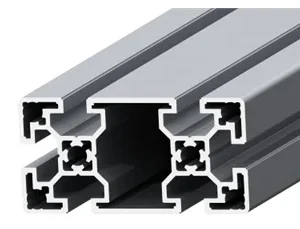 %47 Discount40x80 Sigma Profile 10 Channel Light Duty WholesaleOriginal price was: 37.25$.19.87$Current price is: 19.87$.View
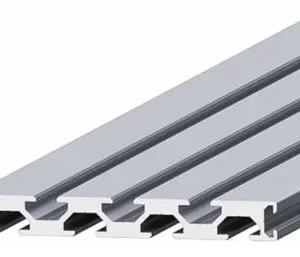 %47 Discount15x120 Surface Coated Sigma Profile 8 Channel WholesaleOriginal price was: 40.61$.21.66$Current price is: 21.66$.View
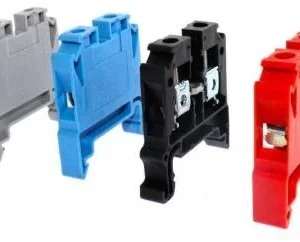 RAY KLEMENSİ (Linear Rail Clamp)0.92$View
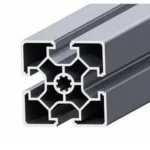
Reviews
There are no reviews yet.