
No products in the cart.
%47 Discount

40×80 Sigma Profile 10 Channel Heavy Duty Wholesale
Original price was: 50.68$.27.02$Current price is: 27.02$.
High-strength aluminum profile for industrial automation, machine frames, and modular structures. Features 10 T-slots for versatile component mounting. Available in wholesale quantities.
In stock
🔥 Special for Today Only %47 Discount Opportunity!📦 Category: Sensors and Switches🏷️ Dimensions: 40 mm🏷️ Slot Size: 10 Slots🏷️ Profile Size: 40x80
Mermak assuranceFrom factory to end user · importer / main dealer · strong stock
ImporterMain dealer / distributorStrong stockGood priceCorporate invoice
In stock / available to order · 14-day return for standard unused products; conditions may vary for custom size/cut products.
40×80 Sigma Profile 10 Channel Heavy Duty Wholesale
INDUSTRIAL AUTOMATION PARTS | SUPERIOR PERFORMANCE SERIES
Detailed Product Review
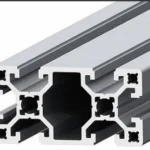
The 40×80 Sigma Profile 10 Channel Heavy Duty is a high-strength structural element designed for industrial automation systems, machine frames, and the construction of modular structures. Manufactured using an extrusion process, this profile has a rectangular cross-section measuring 40 mm in width and 80 mm in height. Its heavy-duty configuration offers thicker wall thicknesses and an optimized internal geometry compared to standard profiles, providing superior rigidity and minimal deformation, especially in applications where high static and dynamic loads, vibration, and torsional moments are expected. The profile features a total of ten integrated T-slot channels on its surfaces; these channels allow for versatile and flexible mounting of various fasteners, sensors, actuators, cable trays, and other automation components. This design forms a critical foundation for rapid prototyping, easy modification, and system expandability in engineering projects.
The material composition of the product typically consists of 6063-T5 or an equivalent high-strength aluminum alloy. This alloy is characterized by high tensile strength, yield strength, and fatigue resistance, while also retaining the lightweight advantage of aluminum. The profile’s surface is finished with an anodized (anodized) coating. This electrochemical process creates a controlled oxide layer on the aluminum surface, significantly enhancing the material’s natural corrosion resistance, improving wear resistance, and increasing surface hardness. Furthermore, the anodized coating boosts the profile’s resistance to chemical agents, ensuring long-lasting performance in demanding industrial environments. The ten-channel T-slot geometry allows for the simultaneous integration of pneumatic lines, electrical cables, optical sensors, and mechanical fasteners on different planes, enabling the construction of complex systems in a compact and organized manner. This profile is used for structural support and component integration in a wide range of industrial applications, including robotic cells, precision measurement and test stands, heavy-duty conveyor systems, safety guarding, and modular workstations.
Advantages of 40×80 Sigma Profile 10 Channel Heavy Duty Wholesale
High Moment of Inertia and Load-Bearing Capacity: The 40×80 heavy-duty sigma profile offers significantly higher moments of inertia (Ix and Iy) compared to standard profiles, thanks to its optimized cross-sectional geometry and increased wall thickness. This enhances the profile’s bending and torsional rigidity, ensuring minimal deflection and deformation under static and dynamic loads. Particularly in applications requiring support for heavy machine components, robotic arms, or high-speed linear motion systems, the profile’s high load-bearing capacity is a critical engineering advantage for maintaining the overall stability and precision of the system. This feature extends fatigue life and increases operational reliability by shifting resonance frequencies to higher values.
Versatile Modularity and Integration Flexibility (10 Channel Design): The ten integrated T-slot channels offer engineers and designers unparalleled modularity and integration flexibility. The presence of multiple channels on each surface allows for the simultaneous mounting of numerous components (e.g., sensors, actuators, cable trays, pneumatic valves, safety barriers, and fixtures) on different planes. This simplifies the design of complex machine frames, multi-axis motion systems, or custom test stands, significantly reducing assembly time. It also provides high adaptability for future modifications or expansions of the system, thereby reducing lifecycle costs and enhancing long-term system sustainability.
Enhanced Surface Hardness and Environmental Resistance (Anodized Coating): The anodized surface treatment of the profile electrochemically enhances aluminum’s natural properties. The resulting oxide layer, several microns thick, significantly increases the profile’s surface hardness (e.g., on the Vickers scale), improving its resistance to scratches, abrasion, and impacts. Chemically, this oxide layer also increases the profile’s resistance to corrosion from chemical agents, moisture, and saline environments, ensuring its structural integrity and aesthetic appearance are maintained for a long time, even in harsh industrial conditions. The anodized coating also improves the profile’s electrical insulation properties, offering an additional layer of safety when mounting electrical components and minimizing maintenance requirements to support operational continuity.
Technical Specifications and Capacity
SpecificationValue/Description
MaterialHigh-Strength Aluminum Alloy (EN AW-6063 T5 or equivalent, min. yield strength 160 MPa)
Cross-Sectional Size40 mm (width) x 80 mm (height), tolerances compliant with EN 12020-2 standard
Channel Type and QuantityT-Slot Channel, 10 Pieces (2 T-slots on each 40mm face, 3 T-slots on each 80mm face, suitable for M8 fasteners)
Profile TypeHeavy Duty (High Moment of Inertia Ix ≈ 12.8 cm⁴, Iy ≈ 3.2 cm⁴; Increased Load-Bearing Capacity)
Surface TreatmentAnodized Coating – 10-15 micron thick oxide layer, for corrosion, abrasion, and electrical insulation resistance
Weight (Nominal)Approx. 3.0 kg/meter (±5% tolerance depending on cross-sectional area and alloy density)
Standard Length6000 mm (6 Meters)
Minimum Order Quantity10 Bars (Total 60 meters)
Cutting ServiceNot Offered (To preserve structural integrity and ensure standard stock management for large projects)
Barcode Number8692024006063
Technical Frequently Asked Questions (FAQ)
How is the structural rigidity and load-bearing capacity of this 40×80 heavy-duty sigma profile characterized in engineering calculations, and how do these values affect the design process?
The structural rigidity and load-bearing capacity of the 40×80 heavy-duty sigma profile are primarily characterized by its cross-sectional moment of inertia and section modulus. The moment of inertia (Ix and Iy) directly determines the profile’s resistance to bending and torsion, while the section modulus is used in calculating maximum stress and deflection. The heavy-duty design offers greater moments of inertia compared to standard profiles, ensuring minimal deflection and vibration amplitude, especially under dynamic loads or over long spans. In the design process, these parameters play a critical role in determining the applied loads (static, dynamic, impact), span distances, and desired deflection limits. For instance, low deflection values are targeted for high-precision optical systems or robotic cells, while the high rigidity of this profile allows for longer spans with fewer supports or the safe carrying of heavier equipment. Additionally, the material’s Young’s modulus (modulus of elasticity) and yield strength are fundamental inputs for stress and deformation analyses.
In what specific ways does the anodizing process improve the mechanical and chemical properties of the profile, and what advantages do these improvements offer in industrial applications?
The anodizing process electrochemically creates a controlled aluminum oxide (Al₂O₃) layer on the profile’s surface. This process significantly enhances the profile’s mechanical properties by increasing surface hardness (e.g., to a Vickers hardness range of 200-400 HV), thereby improving its resistance to abrasion, scratches, and impacts. Chemically, this anodized layer, which is much thicker and denser than aluminum’s natural passive oxide layer, increases the profile’s corrosion resistance. It becomes more durable against chemical attacks, especially in humid, saline, or mildly acidic/alkaline environments. These improvements enable the profile to offer long-lasting, low-maintenance performance in industrial settings (e.g., food processing plants, chemical production areas, or outdoor applications). Furthermore, the anodized layer is electrically insulating, which reduces the risk of short circuits when mounting electrical components and enhances system safety.
What flexibility does the modular structure of the ten-channel sigma profile offer engineers in the design and assembly of complex automation systems, and how does this flexibility impact operational efficiency?
The modular structure of the ten-channel sigma profile provides engineers with significant flexibility when designing and assembling complex automation systems. The presence of multiple T-slot channels on each surface allows components to be mounted independently on different planes and at various angles. This facilitates the integration of various automation components, such as sensors, actuators, pneumatic cylinders, cable management systems, safety sensors, and operator interfaces, with optimal positioning on the same structure. During the design phase, this flexibility accelerates prototyping processes and simplifies design revisions, as component layouts can be easily changed or new components added. In the assembly process, it eliminates the need for pre-drilling, welding, or special machining, thereby reducing assembly time and labor costs. In terms of operational efficiency, this modularity enables rapid adaptation of the system to future production changes or technological upgrades, offering high adaptability and low reconfiguration costs throughout the machine or line’s lifespan.
What technical criteria underpin the compliance of this 40×80 sigma profile with industrial standards and its integration with existing automation components?
The compliance of the 40×80 sigma profile with industrial standards and its integration with existing automation components are primarily based on its T-slot geometry and dimensions. The profile’s T-slot grooves are designed to be compatible with the widely used 8 mm T-slot standard in the industrial automation sector. This ensures the seamless use of M8 T-nuts, hammer head nuts, and other fasteners. This standard compatibility allows the profile to be directly integrated with corner connectors, linear guides, hinges, door latches, and other accessories from various manufacturers. Furthermore, the external cross-sectional dimensions of 40 mm and 80 mm are considered fundamental modular units in many industrial machine and equipment designs, allowing for easy connection to existing systems or other 40-series profiles. These technical criteria enable engineers to combine components sourced from different suppliers to create a consistent and reliable system, thereby reducing design and supply chain complexity and minimizing engineering risks.
| Dimensions | 40 mm |
|---|---|
| Slot Size | 10 Slots |
| Profile Size | 40x80 |
You must be logged in to post a review.
Taksit Tablosu
Related Products
 %47 Discount45x90 Sigma Profile 10 Channel Light Duty WholesaleOriginal price was: 44.40$.23.68$Current price is: 23.68$.View
 %47 Discount30x90 Sigma Profile 8 Channel WholesaleOriginal price was: 39.38$.21.00$Current price is: 21.00$.View
 %47 Discount45x135 Sigma Profile 10 Channel BulkOriginal price was: 86.04$.45.89$Current price is: 45.89$.View
Reviews
There are no reviews yet.