
No products in the cart.
%35 Discount
80×80 Sigma Profile | 10 Channel | Light Duty
Original price was: 56.60$.37.00$Current price is: 37.00$.
High-strength, modular structural element for industrial automation and precision machinery.
In stock
🔥 Special for Today Only %35 Discount Opportunity!📦 Category: 10 Channel Sigma Profiles🏷️ Dimensions: 80x80🏷️ Slot Size: 10 Slots🏷️ Profile Size: 80x80
Mermak assuranceFrom factory to end user · importer / main dealer · strong stock
ImporterMain dealer / distributorStrong stockGood priceCorporate invoice
In stock / available to order · 14-day return for standard unused products; conditions may vary for custom size/cut products.
80×80 Sigma Profile 10 Channel Light Duty
INDUSTRIAL AUTOMATION PARTS | SUPERIOR PERFORMANCE SERIES
Detailed Product Review
The 80×80 Sigma Profile 10 Channel Light Duty is designed as a high-strength, modular structural element for industrial automation systems and precision machinery manufacturing. This profile is optimized for applications where minimizing system weight without compromising structural integrity is essential. The 10 mm channel width ensures full compatibility with NEMA standards, offering mechanical integration possibilities with a wide range of fasteners, nuts, and accessories. Manufactured using CNC machining technology, these profiles guarantee dimension tolerances and surface smoothness with millimeter precision, directly contributing to flawless alignment during assembly and ultimate system stability. The use of heat-treated aluminum alloy enhances the material’s tensile strength and fatigue resistance, ensuring long-lasting and reliable operational performance even under dynamic loads.
The product’s material structure consists of a highly corrosion-resistant aluminum alloy, with an anodized coating applied to its surface to create a superior protective layer against environmental factors. This coating increases the profile’s surface hardness, enhancing its resistance to scratches, abrasion, and chemical effects, while also providing a professional and aesthetic appearance. The modular design philosophy allows engineers and designers to perform rapid prototyping, easily modify existing systems, and upgrade systems according to future requirements. This structural element contributes significantly to energy efficiency in a wide range of applications, including assembly lines, test benches, robotic cells, AGV (Automated Guided Vehicle) chassis, and custom machine frames, by maintaining structural rigidity while reducing overall system mass. The light weight of the profile facilitates handling and assembly processes, while also improving the system’s dynamic response.
80×80 Sigma Profile 10 Channel Light Duty Advantages
Structural Reconfiguration and Adaptation Capability: The modular architecture of this profile significantly shortens design cycles by supporting rapid prototyping processes in engineering projects. Thanks to broad compatibility with accessories and fasteners, system configurations can be easily changed and expanded, increasing the ability to adapt to future operational or technological requirements. This flexibility allows for the reconfiguration of production lines, test setups, or robotic workstations with minimal downtime and cost, thereby optimizing the total system lifecycle cost.
Optimum Strength-to-Weight Ratio and Torsional Resistance: The light-duty design, with an average weight of approximately 3.55 kg/meter, facilitates handling and assembly. However, the 80×80 mm cross-section and 10 mm channel width provide high load-bearing capacity and torsional resistance. This feature ensures the profile maintains its structural integrity even under dynamic loads and vibrations. Particularly in critical areas such as robotic applications and high-speed conveyor systems, the profile’s high moment of inertia and section modulus guarantee maximum stability with minimum deformation, enhancing system performance and precision.
Advanced Surface Engineering and Environmental Resistance: The anodized coating applied to the profile’s surface electrochemically enhances the aluminum alloy’s natural corrosion resistance. This process creates a harder and denser oxide layer on the surface, providing superior protection against scratches, abrasion, and various chemical substances. Furthermore, this coating helps the profile maintain its aesthetic and professional appearance even under prolonged operational conditions. Its resistance to external factors commonly encountered in industrial environments, such as humidity, dust, and mild chemical vapors, minimizes maintenance requirements and extends the system’s operational life.
Technical Specifications and Capacity
Feature
Value/Description
Profile Dimensions (Width x Height)
80 mm x 80 mm
Channel Width
10 mm (NEMA compatible)
Profile Type
Light Duty Sigma Profile
Material
High-Quality Aluminum Alloy (Heat-Treated)
Surface Treatment
Anodized Coating (Corrosion resistance, surface hardness, aesthetic appearance)
Average Weight per Meter
Approx. 3.55 Kg/Meter
Technical Frequently Asked Questions (FAQ)
How should the structural load-bearing capacity and torsional rigidity of the 80×80 Light Duty Sigma Profile be evaluated?
The load-bearing capacity and torsional rigidity of the 80×80 Light Duty Sigma Profile are directly related to its cross-section’s moment of inertia (I) and section modulus (Z) values. Despite being a light-duty profile, thanks to its optimized internal geometry and high-quality heat-treated aluminum alloy, it exhibits high performance in terms of bending and torsional rigidity compared to standard profiles of similar dimensions. Specifically, the 10 mm channel width allows fasteners to contact a wider surface area, reducing stress concentration at connection points and thus increasing the system’s overall torsional resistance. For specific applications, detailed analysis of the profile’s maximum stress and deformation limits should be performed using methods such as Finite Element Analysis (FEA) for dynamic and static load assessments.
What kind of protection does the anodized coating of this profile provide against chemical and environmental effects in industrial settings?
The anodized coating is a protective layer, much thicker and denser than the natural aluminum oxide layer, created through a controlled electrochemical oxidation process on the aluminum surface. This layer significantly enhances the profile’s corrosion resistance, providing long-term durability even in industrial environments with humidity, dust, or mild acidic/basic vapors. Additionally, the high surface hardness of anodizing increases the profile’s resistance to mechanical wear, scratches, and impacts. These properties minimize maintenance requirements while extending the profile’s operational life and preserving the system’s visual integrity, offering a critical advantage particularly in sensitive applications such as food processing, pharmaceuticals, or chemical storage.
What technical advantages does the modular structure of the 80×80 Sigma Profile offer for system integration and future modifications?
The modular structure provides high flexibility in system design and integration. The profile’s standard 10 mm channels allow for easy attachment and detachment of various fasteners, corner brackets, hinges, and other accessories. This enables engineers to perform rapid prototyping, modify system configurations in the field with minimal tools, and easily upgrade the system according to future operational requirements or technological advancements. For instance, when increasing the capacity of an assembly line or adding a new workstation to a robotic cell, modular extensions can be made without the need for extensive disassembly of the existing structure. This adaptability reduces the total cost of ownership and enhances the system’s sustainability throughout its lifecycle.
How does the light-duty design of the profile contribute to energy efficiency in industrial automation systems?
The low weight achieved through the optimized cross-sectional geometry of the 80×80 Light Duty Sigma Profile and the low density of aluminum alloy provides a critical advantage for energy efficiency, especially in moving systems or robotic applications. A lighter structure reduces the inertial forces required for system acceleration and deceleration, thereby placing less load on motors and actuators. Consequently, lower power consumption or smaller-sized motors can be used for the same performance level. This not only reduces operational energy costs but also improves the system’s dynamic response time and overall system efficiency. Furthermore, it provides indirect energy savings by reducing the need for human labor or lifting equipment during transportation and assembly processes.
Mermak has 16 years of experience in providing high-quality industrial automation components. Our products are stocked and prepared from our Ankara Uzay Sanayi factory/warehouse. We ensure up-to-date stock quantities and prices on our website. Stocked items are dispatched directly from the warehouse, eliminating production waiting times. We guarantee careful packaging, meticulous invoice and document follow-up, and reliable logistics partnerships. The Mermak team actively monitors the shipment process. Upon request, we can arrange product videos or factory viewings via WhatsApp or other contact channels. We proudly supply to the United Kingdom, United States, Canada, Australia, Ireland, New Zealand, South Africa, and similar countries and international markets.
| Dimensions | 80x80 |
|---|---|
| Slot Size | 10 Slots |
| Profile Size | 80x80 |
You must be logged in to post a review.
Taksit Tablosu
Related Products
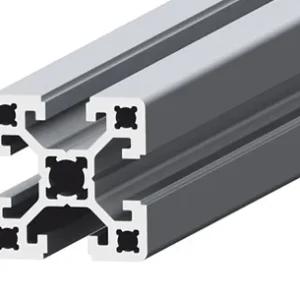 %38 Discount40x40 Sigma Profile 10 Channel Heavy DutyOriginal price was: 30.30$.18.68$Current price is: 18.68$.View
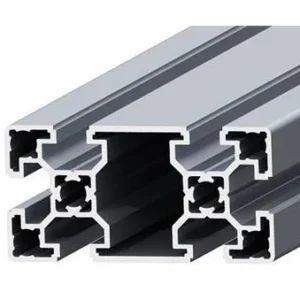 %35 Discount45x90 Sigma Profile 10 Channel Light DutyOriginal price was: 44.40$.29.02$Current price is: 29.02$.View
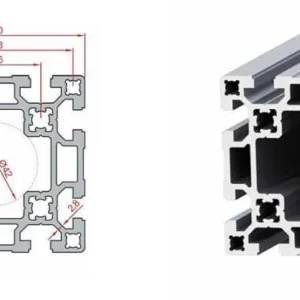 %36 Discount90x90 Sigma Profile | 10 Channel | Heavy DutyOriginal price was: 126.72$.81.26$Current price is: 81.26$.View
Reviews
There are no reviews yet.