
No products in the cart.
%47 Discount


45×135 Sigma Profile 10 Channel Bulk
Original price was: 86.04$.45.89$Current price is: 45.89$.
High-strength aluminum extrusion profile (45mm x 135mm) with 10 integrated T-slots, designed for robust industrial automation systems and machine construction. Optimized for high rigidity, heavy load capacity, and minimal deflection, featuring a 20-micron natural anodized finish for superior corrosion and abrasion resistance.
In stock
🔥 Special for Today Only %47 Discount Opportunity!📦 Category: Sensors and Switches🏷️ Dimensions: 45 mm🏷️ Slot Size: 10 Slots🏷️ Profile Size: 45x135
Mermak assuranceFrom factory to end user · importer / main dealer · strong stock
ImporterMain dealer / distributorStrong stockGood priceCorporate invoice
In stock / available to order · 14-day return for standard unused products; conditions may vary for custom size/cut products.
The 45×135 Sigma Profile 10 Channel is an aluminum extrusion profile engineered for industrial automation systems and machine manufacturing, particularly for structural constructions requiring high rigidity, heavy load-bearing capacity, and minimal deformation. This profile forms the foundation of modular systems, manufactured using the extrusion method from high-strength EN AW-6063 T6 aluminum alloy. Its generous 45mm x 135mm cross-section and optimized internal geometry maximize the profile’s moment of inertia (Ix and Iy), enhancing its resistance to bending and torsion under both static and dynamic loads. This engineering approach ensures systems operate with longevity, precision, and reliability, maintaining structural integrity even in applications integrating high-speed moving parts or heavy components.
The integrated 10mm T-slot system offers full compatibility with a wide range of industrial standard fasteners and accessories. This feature empowers designers and engineers with rapid prototyping and easy assembly capabilities for various applications, including complex machine frames, robotic cells, conveyor systems, test stands, and ergonomic workstations. The 20-micron thick natural anodization applied to the profile’s surface creates an electrochemical passivation layer, significantly increasing its corrosion resistance. This anodized layer also enhances the profile’s resistance to scratches, abrasion, and mild chemical effects, maximizing its operational lifespan and performance in demanding industrial environments. The EN AW-6063 T6 alloy material provides high tensile strength and yield strength, along with good machinability and weldability.
Advantages of 45×135 Sigma Profile 10 Channel Bulk
High Moment of Inertia and Minimal Deflection: The broad 45mm x 135mm cross-section geometry optimizes the profile’s moment of inertia (Ix and Iy) to high values. This directly increases the profile’s resistance to bending and torsional loads. A high moment of inertia minimizes deflection, especially in applications with long spans or heavy components, preserving structural integrity and precision. This technical characteristic is an indispensable performance parameter for critical industrial applications such as large-scale machine frames, precision optical systems, or the supporting structures of robotic manipulators.
Standard Integration and Adaptation Flexibility: The integrated 10mm T-slot system ensures full compatibility with a wide array of standard fasteners for industrial automation components (T-nuts, corner brackets, hinges, covers, linear motion components). This standardization allows for quick and easy system design, assembly, and future adaptation for operational or structural revisions without requiring special machining or welding. Engineers can rapidly integrate sensors, cable trays, pneumatic lines, and other automation equipment thanks to this modular structure, shortening design cycles and simplifying system adaptation.
Enhanced Corrosion and Abrasion Resistance: Manufactured from high-quality EN AW-6063 T6 aluminum alloy and finished with a 20-micron thick natural anodization, the profile’s resistance to environmental factors is increased. Anodization creates a hard, porous, and electrochemically passive aluminum oxide layer on the surface. This layer provides superior resistance to oxidation, galvanic corrosion, and mechanical wear, even in environments exposed to moisture, dust, mild chemical vapors, or abrasive particles. This feature ensures the profile maintains its structural integrity and aesthetic appearance for many years in harsh industrial conditions, reducing maintenance costs and maximizing return on investment.
Technical Specifications and Capacity
Profile Dimensions
45mm x 135mm (Nominal Cross-section)
Channel Type
10 Channel (10mm T-slot system, for heavy-duty connections)
Material
EN AW-6063 T6 Aluminum Alloy (High strength and machinability)
Surface Treatment
Natural Anodization (20 micron thickness, corrosion and scratch resistance)
Weight (Per Meter)
Approx. 4.91 kg/m (Minimum density and high strength ratio)
Moment of Inertia (Ix / Iy)
Optimized high values (Maximizes bending and torsion resistance)
Technical Frequently Asked Questions (FAQ)
How are the deflection calculations for the 45X135 Sigma Profile under static and dynamic loads performed, and which parameters are critically important?
For deflection calculations, the primary parameters are the profile’s moments of inertia (Ix and Iy), the modulus of elasticity (E, approximately 70 GPa for EN AW-6063 T6 aluminum), the magnitude and distribution of the applied load (point, distributed, etc.), and the profile’s support conditions (simply supported, cantilever, fixed, etc.). Especially with an asymmetric cross-section like 45x135mm, selecting the appropriate moment of inertia value (Ix or Iy) based on the load’s direction of application is critical. Under dynamic loads, system natural frequency analysis should be performed to avoid resonance frequencies, considering the relationship between the profile’s mass and stiffness. Finite Element Analysis (FEA) software is preferred for more precise deflection and stress analyses in complex loading scenarios and multi-support points.
What technical criteria should be considered when selecting fasteners compatible with the 10mm T-slot system of this profile?
When selecting fasteners for the 10mm T-slot system, the type (tensile, shear, torsion) and magnitude of the load the connection will bear must be considered first. T-nuts should fit snugly within the channel and have sufficient thread depth for full engagement of the connecting bolt. For heavy-duty applications, high-strength steel T-nuts (e.g., galvanized or stainless steel) are recommended. For corner connections, designs that can be secured with an adequate number of bolts suitable for the profile’s cross-section and enhance torsional resistance should be chosen. Furthermore, the material of the fasteners should be compatible with the profile’s corrosion resistance, avoiding direct contact between dissimilar metals to prevent galvanic corrosion.
What are the mechanical properties of EN AW-6063 T6 aluminum alloy and the effect of 20-micron natural anodization on chemical resistance?
EN AW-6063 T6 aluminum alloy is known for its high strength-to-weight ratio, good extrudability, and corrosion resistance. The T6 heat treatment enhances the alloy’s tensile strength (approx. 205 MPa) and yield strength (approx. 170 MPa), making it suitable for structural applications. The 20-micron thick natural anodization is a hard, porous aluminum oxide (Al2O3) layer formed by an electrochemical reaction on the aluminum surface. This layer strengthens the aluminum’s natural passivation, preventing direct contact with oxygen and moisture, thereby significantly increasing corrosion resistance. In terms of chemical resistance, anodized surfaces remain stable in environments between pH 4.0 and pH 9.0; however, strong acids or bases outside this range can dissolve the anodized layer. This coating also enhances surface abrasion resistance, providing additional protection against mechanical damage.
What specific technical considerations should be taken into account during the processing or assembly of profiles supplied in 6-meter lengths for bulk purchases?
When processing and assembling 6-meter long profiles, specific considerations arise due to their length. High-precision sawing machines should be used for cutting operations, employing appropriate cutting speeds and cooling fluids to minimize burr formation on the cut surfaces. Sufficient support points must be provided during handling and positioning to prevent bending or twisting deformations caused by the profile’s length. During assembly, alignment and parallelism of the profiles should be checked using laser alignment devices or precision measuring tools. Additionally, the coefficient of thermal expansion for aluminum (approx. 23 x 10^-6 /°C) should be considered for 6-meter lengths; expansion gaps or suitable expansion joints may be necessary for systems exposed to significant temperature variations. This prevents structural stresses and ensures the system’s longevity.
Mermak has 16 years of experience in the industrial automation sector. Our products are manufactured in our Ankara Uzay Sanayi factory and warehouse. Current stock quantities and prices are updated on our website. Stocked products are dispatched directly from our warehouse, eliminating production waiting times. We ensure careful packaging, meticulous invoice and document follow-up, and utilize reliable logistics partners. The Mermak team actively monitors the shipment process. Upon request, product videos and factory tours can be arranged via WhatsApp or our contact channels. We proudly supply to the United Kingdom, United States, Canada, Australia, Ireland, New Zealand, South Africa, and similar countries and international markets.
| Dimensions | 45 mm |
|---|---|
| Slot Size | 10 Slots |
| Profile Size | 45x135 |
You must be logged in to post a review.
Taksit Tablosu
Related Products
 %47 Discount45x45 Sigma Profile 10 Channel Heavy Duty WholesaleOriginal price was: 36.72$.19.58$Current price is: 19.58$.View
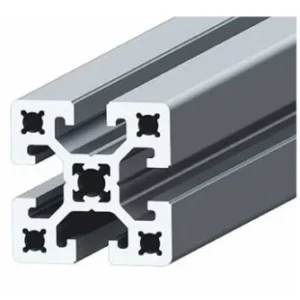 %47 Discount40x40 Sigma Profile 8 Channel Heavy Duty WholesaleOriginal price was: 32.80$.17.48$Current price is: 17.48$.View
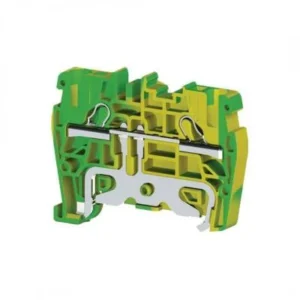 RAY KLEMENS TOPRAK YELLOW/GREEN2.16$View
Reviews
There are no reviews yet.