



























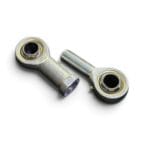







































































































GS 38 Coupling Ø80xL114 mm
Detailed Product Review
The GS 38 Coupling is a critical component in industrial power transmission systems, ensuring torque transfer by mechanically connecting driving and driven shafts. This coupling features an outer diameter (D) of 80 mm and a total length (L) of 114 mm, specifically designed for applications requiring high torque and experiencing dynamic loads. Its primary function is to absorb angular, parallel, and axial misalignments between shafts while efficiently and continuously transmitting power from the drive shaft to the driven shaft. With a torque capacity of up to 325 Nm, the GS 38 reliably performs in systems with high inertia and continuous operation, such as heavy-duty industrial machinery, conveyor belts, gearbox outputs, and large pumps. The coupling’s design minimizes stresses caused by shaft misalignments, extending the bearing and seal life of connected equipment, thereby optimizing the system’s overall operational stability and maintenance intervals.
The structural integrity of the GS 38 Coupling is achieved through its construction from high-alloy aluminum. This material choice provides the coupling with a superior strength-to-weight ratio, reducing inertia at high speeds and improving dynamic response time. Furthermore, thanks to the material’s inherent damping properties and precise balancing techniques, an exceptional alignment accuracy of 0.001 mm has been achieved. This precision minimizes the risk of vibration and resonance, particularly in applications where positioning accuracy is critical, such as servo-motor controlled systems, CNC machines, and robotic applications. The coupling offers flexible integration with various motor and drive units, accommodating a wide shaft diameter range from 12 mm to 45 mm. Its maximum operating speed of 4750 revolutions per minute (RPM) ensures stable and reliable power transmission even in high-speed automation systems, directly impacting production efficiency and product quality. These technical specifications make the GS 38 a suitable and preferred solution for a broad spectrum of industrial applications.
Advantages of the GS 38 Coupling Ø80xL114 mm
High Torque Capacity and Reliable Power Transmission: The GS 38 Coupling is engineered to withstand torques up to 325 Nm. This capacity allows the coupling to provide continuous and reliable power transmission under heavy industrial loads, sudden torque variations, and high-inertia systems without shaft slippage or structural deformation. High torque transfer ensures maximum efficiency for drive systems in demanding sectors like mining, steel production, and cement plants, preventing unexpected failures and production downtime. This feature directly enhances the system’s overall durability and operational lifespan.
Wide Shaft Diameter Compatibility and System Flexibility: The coupling’s ability to accommodate a broad shaft diameter range from 12 mm to 45 mm offers significant flexibility in engineering design and system integration. This wide compatibility allows a standard coupling solution to be used between motors, gearboxes, and driven shafts of different sizes. This simplifies spare parts inventory, increases system modularity, and shortens adaptation processes during design or modifications to existing systems. This technical feature provides cost and time savings, especially in production facilities with diverse machine fleets or during prototype development.
Superior Vibration and Shock Absorption for Equipment Protection: The GS 38 Coupling effectively absorbs system vibrations and shock loads due to the inherent damping properties of high-alloy aluminum and its precise engineering design. This feature minimizes stresses and vibrations caused by angular, parallel, and axial misalignments between the driving and driven shafts. Reducing vibrations significantly extends the wear and fatigue life of connected bearings, seals, gears, and other mechanical components. Furthermore, damping shock loads protects the system against mechanical shocks during sudden load changes or machine start-ups/shutdowns, enhancing operational stability and accuracy in applications requiring precise positioning.
Technical Specifications and Capacity
Feature
Value/Description
Model
GS 38
Outer Diameter (D)
80 mm
Total Length (L)
114 mm
Torque Capacity
Up to 325 Nm (Newton-meters)
Maximum Speed
4750 RPM (Revolutions Per Minute)
Shaft Diameter Compatibility
12 mm to 45 mm
Material
High-Alloy Aluminum
Precision
0.001 mm (Millimeter alignment accuracy)
Features
High Balancing, Shock Absorption, High Torque Capacity
Technical Frequently Asked Questions (FAQ)
How does the high-alloy aluminum material of the GS 38 Coupling affect its thermal and mechanical performance?
The high-alloy aluminum used in the GS 38 Coupling offers significant advantages, particularly in terms of its strength-to-weight ratio. Because this material has a lower density compared to steel, it reduces the coupling’s moment of inertia. This improves the motor’s dynamic response and reduces energy consumption, especially in high-speed and frequent start-stop systems. Mechanically, high-alloy aluminum provides high tensile strength and fatigue resistance, reliably supporting the torque transmission capacity of up to 325 Nm. Thermally, aluminum’s high thermal conductivity helps efficiently dissipate heat generated during operation, reducing thermal stresses on the coupling and connected shafts, thereby extending the system’s overall lifespan. Additionally, aluminum’s corrosion resistance minimizes maintenance needs in industrial environments exposed to moisture or chemical vapors.
What types of shaft misalignments can the GS 38 Coupling tolerate, and what is the impact of this tolerance on system performance?
The GS 38 Coupling is designed to tolerate three main types of shaft misalignments commonly encountered in industrial applications: angular, parallel, and axial misalignments. Angular misalignment occurs when there is a small angular difference between the shafts, while parallel misalignment occurs when the shaft axes are parallel but in different planes. Axial misalignment refers to a gap or compression along the shaft axis. The flexible structure and material properties of the GS 38 dampen the stresses and vibrations caused by these misalignments, preventing excessive loads on connected bearings, seals, and other sensitive components. This tolerance not only facilitates installation but also prevents minor deviations, such as those caused by thermal expansion or foundation settling over time, from negatively impacting system performance. Consequently, equipment lifespan is extended, maintenance costs are reduced, and operational stability is increased.
What operational advantages does the 0.001 mm precision of the GS 38 Coupling offer, especially in high-speed automation and servo systems?
The 0.001 mm alignment precision of the GS 38 Coupling provides critical operational advantages in high-speed automation and servo systems. This high degree of precision ensures the coupling operates with minimal runout, virtually eliminating dynamic imbalance and vibrations even at high speeds (up to 4750 RPM). In servo motor applications, precise positioning and repeatability are essential; a low-runout coupling maintains the accuracy of feedback from the motor’s encoder and allows the control system to reach the desired position faster and more accurately. Minimizing vibrations reduces system noise levels, decreases energy losses, and most importantly, extends the lifespan of connected equipment (motor bearings, gearbox gears, machining tools), reducing maintenance intervals and the total cost of ownership.
As an engineer, what are the key technical parameters I should consider when integrating the GS 38 Coupling into a system?
When integrating the GS 38 Coupling into a system, engineers should consider the following key technical parameters: Firstly, the system’s maximum continuous and peak torque requirements must not exceed the coupling’s 325 Nm torque capacity. Exceeding this limit can lead to deformation or failure. Secondly, the system’s maximum operating speed (RPM) should not exceed the coupling’s limit of 4750 RPM; excessive inertia and vibration issues can arise at higher speeds. Thirdly, the diameters of the driving and driven shafts must fall within the coupling’s compatibility range of 12 mm to 45 mm. Fourthly, ensure that potential shaft misalignments (angular, parallel, axial) in the system are within the coupling’s tolerance values. Fifthly, environmental factors such as operating temperature, humidity, and chemical exposure should be considered, as they can affect the performance of the high-alloy aluminum material. Finally, strictly adhering to the manufacturer’s specified torque values and alignment procedures during installation is critical for long-term, reliable operation.


Reviews
There are no reviews yet.