
No products in the cart.
%47 Discount


90×90 Sigma Profile | 10 Channel | Heavy Duty Wholesale
Original price was: 126.72$.67.58$Current price is: 67.58$.
High-strength aluminum extrusion profile for industrial automation and machine building. Optimized for heavy loads and structural integrity.
In stock
🔥 Special for Today Only %47 Discount Opportunity!📦 Category: Sensors and Switches🏷️ Dimensions: 90 mm🏷️ Slot Size: 10 Slots🏷️ Profile Size: 90x90
Mermak assuranceFrom factory to end user · importer / main dealer · strong stock
ImporterMain dealer / distributorStrong stockGood priceCorporate invoice
In stock / available to order · 14-day return for standard unused products; conditions may vary for custom size/cut products.
90×90 Sigma Profile | 10 Channel | Heavy Duty Wholesale
INDUSTRIAL AUTOMATION PARTS | SUPERIOR PERFORMANCE SERIES
Detailed Product Review
The 90×90 Sigma Profile, 10 Channel, Heavy Duty is an aluminum extrusion profile specifically designed for structural applications in industrial automation and machine manufacturing sectors that require high strength, rigidity, and modularity. The primary function of this profile is to serve as the main load-bearing element for critical infrastructure such as machine chassis, robotic cells, conveyor systems, and test stands, owing to its high load-carrying capacity, resistance to dynamic stresses, and ability to minimize structural deformation. The 90×90 mm cross-section ensures a large surface area and an optimized geometry, guaranteeing high bending and torsional resistance. The “Heavy Duty” designation indicates a thicker wall thickness compared to standard counterparts, offering higher moments of inertia and section moduli. This engineering approach allows the profile to exhibit superior performance under static and dynamic loads, enhance vibration damping capabilities, and ensure long-term operational reliability.
The material composition of the product is EN AW-6063 T6 aluminum alloy, known for its excellent mechanical properties. This alloy is characterized by high tensile strength, yield strength, and fatigue resistance, while also offering good machinability and weldability. The T6 temper ensures the material achieves optimal strength and hardness values. The total of 10 T-channels located on the four surfaces of the profile provide maximum integration flexibility with standard T-nuts and fasteners. These channels allow for quick and precise mounting of sensors, actuators, protective panels, cable trays, and other automation components. The anodized surface treatment enhances the profile’s corrosion resistance, increases surface hardness, improves wear resistance, and provides electrical insulation properties. These technical features ensure the profile delivers long-lasting, maintenance-free performance even in harsh industrial environments, while the modular design concept allows for rapid system assembly, modification, and expansion.
Advantages of 90×90 Sigma Profile | 10 Channel | Heavy Duty Wholesale
High Structural Integrity and Dynamic Load Resistance: The 90×90 Sigma Profile Heavy Duty exhibits superior structural integrity under static and dynamic loads due to its increased wall thickness and optimized cross-sectional geometry compared to standard profiles. This design significantly enhances the profile’s resistance to bending and torsional moments, providing high moments of inertia (Ix, Iy ≈ 110 cm⁴) and section moduli. This offers a stable operating environment with minimal deflection and vibration amplitude, especially crucial for applications like heavy-duty conveyor systems, large-scale robotic platforms, and high-speed moving axes, directly impacting system precision and lifespan. This is a critical engineering advantage.
Superior Modularity and Integration Flexibility: The total of 10 T-channels strategically positioned on the four surfaces of the profile offer unparalleled modularity and integration flexibility. These channels allow for versatile and precise mounting of standard T-nuts, mounting plates, hinges, sensor brackets, and other automation accessories. This structural feature enables design engineers to rapidly prototype systems, easily adapt to existing setups, and respond to future modification or expansion needs with minimal effort. It eliminates the need for additional machining such as welding or drilling, reducing assembly time and preserving structural integrity.
Environmental Resistance and Long-Term Performance: Manufactured from high-quality EN AW-6063 T6 aluminum alloy, this profile possesses inherent good corrosion resistance. Furthermore, the applied anodized surface treatment creates a hard, porous aluminum oxide layer on the profile’s surface. This layer significantly enhances resistance to chemical agents, moisture, abrasion, and scratches. The anodizing also provides electrical insulation, offering an additional layer of protection in environments with sensitive electronic components. The combination of these properties ensures the profile maintains its aesthetic and functional performance for many years, even in demanding industrial conditions (e.g., high humidity, chemical fumes, dusty environments), thereby reducing maintenance costs and optimizing the total cost of ownership. Mermak supplies this product to international markets including the United Kingdom, United States, Canada, Australia, Ireland, and New Zealand, alongside similar countries and international markets.
Technical Specifications and Capacity
SpecificationValue/Description
Profile Dimensions90mm x 90mm (Square Cross-Section)
MaterialEN AW-6063 T6 High-Quality Aluminum Alloy
Channel Type and QuantityT-Channel (T-Slot), Total 10 Channels (2 per face, with additional corner channels)
Profile WeightApprox. 7.50 kg/meter (Heavy Duty Design)
Moment of Inertia (Ix, Iy)Ix ≈ 110 cm⁴, Iy ≈ 110 cm⁴ (High Bending Resistance)
Cross-Sectional AreaApprox. 27.0 cm²
Surface TreatmentAnodized Coating
Technical Frequently Asked Questions (FAQ)
How does the “Heavy Duty” designation of the 90×90 Sigma Profile affect its structural performance and what engineering advantages does it offer?
The “Heavy Duty” designation indicates that this profile has a thicker wall than standard 90×90 mm profiles. This increases the profile’s mass per meter (approx. 7.50 kg/meter) and consequently its cross-sectional area. From an engineering perspective, this means significantly higher moments of inertia (Ix, Iy ≈ 110 cm⁴) and section moduli. High moments of inertia increase the profile’s resistance to bending and torsional stresses, minimizing deflection and deformation under applied loads. This is particularly critical for systems with long spans or subjected to high dynamic loads. Heavy-duty profiles improve vibration damping capacity, enhancing overall system stability and precision, ensuring long-lasting and reliable performance in applications like large-scale machine chassis, robotic carriers, and precision measurement platforms.
What are the technical features of the EN AW-6063 T6 aluminum alloy and anodized surface treatment, and what benefits do they provide for this profile?
EN AW-6063 T6 aluminum alloy belongs to the Aluminum-Magnesium-Silicon series, offering excellent extrudability, good corrosion resistance, and moderate to high strength. The T6 temper, achieved through solution heat treatment and artificial aging, ensures maximum strength and hardness. This guarantees the profile possesses mechanical properties such as high tensile strength (approx. 205 MPa) and yield strength (approx. 170 MPa). The anodized surface treatment electrochemically creates a controlled aluminum oxide layer on the profile’s surface, which is much thicker, harder, and denser than the natural oxide layer. Technical benefits include significantly increased corrosion resistance, improved wear and scratch resistance due to higher surface hardness (e.g., up to 200 HV Vickers), electrical insulation properties, and a uniform aesthetic finish. This combination ensures the profile provides long-lasting, maintenance-free, and reliable performance even in harsh industrial environments.
What technical advantages does the 10-channel T-slot design of the profile offer in terms of system integration and modularity?
The 10-channel T-slot design of the 90×90 Sigma Profile, featuring two main T-slots per face and additional connection points at the corners, provides a much higher connection density and flexibility compared to standard profiles. This configuration allows engineers to mount system components (sensors, motors, linear guides, protective covers, cable trays, etc.) onto any surface of the profile, in multiple orientations, with precise positioning. When used with specially designed T-nuts and fasteners, the T-slots enable quick and secure assembly without the need for time-consuming processes like welding or drilling, which could compromise the profile’s surface integrity. This modular structure speeds up prototyping, allows for easy system reconfiguration, and simplifies adaptation to future modifications or expansions. The multiple channel options also offer an ideal solution for complex cable management and pneumatic line integration, enhancing system organization and functionality.
What are the performance limits or specific design considerations for this heavy-duty sigma profile in industrial applications?
While the 90×90 Heavy Duty Sigma Profile offers high strength and rigidity, like any engineering product, it has performance limits and design considerations. Its high weight (7.50 kg/meter) can be a disadvantage in applications requiring lightness, such as mobile robotic platforms or weight-constrained aerospace applications; lighter profiles or different alloys might be preferred in such scenarios. The design of the connection points is critical to utilizing the profile’s full potential; weak fasteners or inadequate connection methods can limit the profile’s high strength. Therefore, for heavy-load applications, it is recommended to use specially designed, high-strength fasteners and, if necessary, reinforcing corner brackets. Additionally, for very long spans, thermal expansion and contraction effects should be considered, and expansion joints or flexible connectors should be incorporated into the design. Fatigue life under dynamic loads should be optimized through the correct selection of materials and fasteners. In highly vibrating environments, performing modal analysis to ensure the profile’s natural frequencies do not coincide with the system’s operating frequencies can be beneficial.
| Dimensions | 90 mm |
|---|---|
| Slot Size | 10 Slots |
| Profile Size | 90x90 |
You must be logged in to post a review.
Taksit Tablosu
Related Products
 %47 Discount60x60 Sigma Profile 8 Channel WholesaleOriginal price was: 44.30$.23.63$Current price is: 23.63$.View
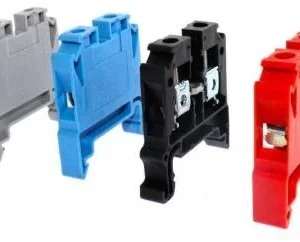 RAY KLEMENSİ (Linear Rail Clamp)0.92$View
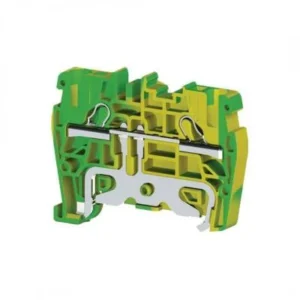 RAY KLEMENS TOPRAK YELLOW/GREEN2.16$View

Reviews
There are no reviews yet.