
No products in the cart.
%55 Discount


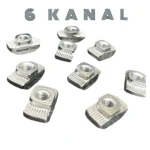
Threaded Nut 20-25 M4 K6
Original price was: 0.05$.0.02$Current price is: 0.02$.
High-strength threaded nut designed for 20 and 25 series aluminum profiles, ensuring secure mechanical locking against vibration and axial slippage.
Only 0 left in stock
🔥 Special for Today Only %55 Discount Opportunity!📦 Category: Channel 6 Knurled Nuts🏷️ Dimensions: 4🏷️ Slot Size: 6 Slots🏷️ Nut Type: Knurled Nut🏷️ Compatible Profile Size: 20-25🏷️ Tooth Size: M4
Mermak assuranceFrom factory to end user · importer / main dealer · strong stock
ImporterMain dealer / distributorStrong stockGood priceCorporate invoice
In stock / available to order · 14-day return for standard unused products; conditions may vary for custom size/cut products.
Threaded Nut 20-25 M4 K6
INDUSTRIAL AUTOMATION PARTS | SUPERIOR PERFORMANCE SERIES
Detailed Product Review
The Threaded Nut 20-25 M4 K6 is a high-strength fastening element designed to be compatible with the channel geometry of industrial aluminum profile systems, particularly the 20 and 25 series sigma profiles. The primary function of this nut is to mechanically interlock with the inner walls of the profile channel when tightened with an M4 bolt. This interlocking is achieved through specially machined threads on its surface, which increase the connection’s resistance to rotational and axial slippage. This interlocking principle minimizes the tendency for loosening that can occur with standard nuts under the influence of dynamic loads, continuous vibration, or environmental factors like thermal expansion/contraction. The increased coefficient of friction and micro-locking effect provided by the threaded structure preserve the integrity of the connection point even under long-term operational conditions, directly contributing to the overall stability and repeatable precision of the system. The Threaded Nut 20-25 M4 K6 is manufactured from a high-strength carbon steel alloy and has undergone a zinc plating surface treatment to enhance its resistance to the corrosive effects commonly encountered in industrial environments. Its integration with M4 bolts offers flexibility in engineering designs by ensuring compatibility with a wide range of standard fasteners. In terms of installation flexibility, the Threaded Nut 20-25 M4 K6 can be inserted into the profile channel either by sliding it in from the open end of the profile or by dropping it in from the top at any point along a closed or partially assembled profile channel. This feature saves time during assembly and maintenance processes while facilitating additions or modifications to existing systems.
Application areas include various engineering projects such as industrial automation systems, modular machine constructions, conveyor belts, robotic workstations, precision assembly benches, and 3D printers, where vibration and connection stability are critical. Mermak has 16 years of experience in supplying high-quality industrial components to markets including the United Kingdom, United States, Canada, Australia, Ireland, and New Zealand, alongside many other international markets. Our products are stocked at our Ankara Uzay Sanayi factory/warehouse, ensuring up-to-date stock quantities and prices on our website. Stocked items are dispatched directly from the warehouse, eliminating production waiting times. We ensure careful packaging, meticulous invoice and document follow-up, and utilize reliable logistics partners. The Mermak team closely monitors the shipment process, and we can provide product videos or factory viewings via WhatsApp or other contact channels upon request.
Advantages of the Threaded Nut 20-25 M4 K6
Enhanced Vibration Damping and Loosening Resistance: The precisely machined threads on the surface of the nut create a micro-level mechanical interlock by firmly contacting the inner surface of the profile channel. This structure provides an additional friction and locking mechanism that prevents the nut from rotating or sliding axially within the profile under dynamic loads and high-frequency vibrations. Compared to the friction-based grip of standard T-nuts, the threaded nut significantly raises the loosening threshold through material deformation and surface roughness interaction, thereby increasing the operational reliability of the system and extending maintenance intervals.
High Tensile and Shear Strength: The threaded geometry of the nut penetrates the inner surface of the profile channel when the bolt is tightened, increasing the contact area and optimizing load distribution. This enhances the connection point’s strength in both tensile (pull-out) and shear directions. The threads create localized deformations on the profile material, acting as a positive locking mechanism that prevents the nut from moving within the profile. This mechanical locking ensures the fastener maintains its position within the profile, especially in systems carrying heavy loads or undergoing continuous movement, thereby strengthening structural integrity and extending the connection’s lifespan.
Versatile Installation and Design Flexibility: The Threaded Nut 20-25 M4 K6 offers significant installation flexibility in engineering projects. In addition to standard installation by sliding into the profile channel from the open end, it features a ‘drop-in’ capability, allowing it to be placed directly onto the upper part of the channel at any point along the profile. This ‘drop-in’ feature enables the integration of additional components or modification of existing connection points in already assembled or partially enclosed profile frames without requiring extensive disassembly of the system. This speeds up iteration during design and prototyping phases while providing a critical operational advantage that minimizes labor costs and downtime during production and maintenance processes.
Technical Specifications and Capacity
Feature
Value/Description
Product Type
Threaded Nut
Compatible Profile Series
20 Series (20×20, 20×40 etc.) and 25 Series (25×25, 25×50 etc.) K6 Sigma Aluminum Profiles
Bolt Compatibility
M4 (Metric 4) Bolts
Material
High-Strength Carbon Steel Alloy
Surface Treatment
Zinc Plating (For Corrosion Resistance and Friction Optimization)
Installation Method
Profile End or Profile Channel Drop-in
Vibration Resistance
High (Mechanical Locking and Anti-loosening Effect due to Threaded Structure)
Technical Frequently Asked Questions (FAQ)
What is the surface treatment type of the Threaded Nut 20-25 M4 K6 and what are its mechanical advantages?
The Threaded Nut 20-25 M4 K6 is zinc-plated using an electro-galvanization process. This surface treatment protects the base carbon steel alloy of the nut from environmental corrosion effects. As zinc is a more active metal than steel, it acts as an anode in case of galvanic corrosion, providing cathodic protection to the steel. Furthermore, the zinc plating optimizes the surface’s coefficient of friction, helping to more efficiently convert the bolt tightening torque into tensile force between the fasteners. This ensures more consistent and reliable preloading during assembly and contributes to the long-term performance of the connection.
How does the ‘K6’ designation relate to the compatibility with 20 and 25 series sigma aluminum profiles, and how does this affect assembly precision?
The ‘K6’ designation refers to the nominal width and tolerance class of the aluminum profile channel with which the nut is compatible. It is generally a standard used for profiles with a 6mm channel width. The 20 and 25 series sigma aluminum profiles are designed to have this K6 channel geometry. The precise manufacturing of the threaded nut to this specific K6 tolerance ensures that the nut fits into the profile channel with minimal clearance. This precise fit restricts unwanted lateral movement of the nut within the profile and creates the necessary preload for the threaded structure to effectively interlock with the profile walls. Consequently, the mechanical stability and assembly precision of the connection are enhanced, optimizing the overall structural rigidity and performance of the system.
What engineering principles provide the threaded nut’s vibration resistance compared to standard T-nuts?
While standard T-nuts typically provide grip based solely on friction, the Threaded Nut 20-25 M4 K6 operates on a principle of mechanical locking in addition to frictional resistance. The threads on the nut’s surface penetrate the softer inner walls of the aluminum profile microscopically when the bolt is tightened, creating a positive interlock. This interlock provides an additional layer of resistance against rotational and axial slippage. Under vibration or dynamic loads, this ’embedding’ effect of the threads into the profile material acts like a ‘toothed’ mechanism that prevents the connection from loosening. This significantly minimizes the loss of preload and subsequent loosening that can occur over time with standard nuts, preserving the connection’s integrity for much longer.
How should the maximum static and dynamic load-bearing capacity of the Threaded Nut 20-25 M4 K6 be evaluated in terms of material properties and connection geometry?
The load-bearing capacity of the Threaded Nut 20-25 M4 K6 is limited by the strength class of the M4 bolt used, the tensile and yield strength of the nut’s carbon steel alloy, and most importantly, the shear strength of the interface created between the threads and the aluminum profile. Under static loads, the ultimate strength of the connection is typically determined by the yield point of the bolt or the nut. Under dynamic loads, fatigue life is a critical factor; the threaded structure enhances fatigue resistance by delaying vibration-induced loosening. However, due to the relatively lower hardness of the aluminum profile, excessive tightening torque or continuous high dynamic loads can lead to localized deformations within the profile channel or wear of the thread imprints. Therefore, for optimal performance, it is engineer-recommended to determine the bolt tightening torque considering the material limits of both the bolt and the profile-nut interface, and to perform periodic checks.
| Dimensions | 4 |
|---|---|
| Slot Size | 6 Slots |
| Nut Type | Knurled Nut |
| Compatible Profile Size | 20-25 |
| Tooth Size | M4 |
You must be logged in to post a review.
Taksit Tablosu
Related Products
 %41 DiscountChannel 6 M4 Serrated Nut (2000 pcs)Original price was: 96.00$.56.44$Current price is: 56.44$.View
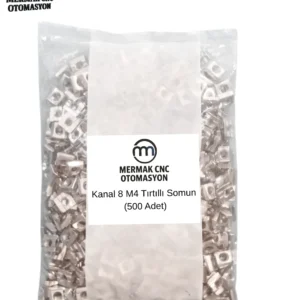 %66 DiscountChannel 8 M4 T-NutOriginal price was: 108.00$.36.19$Current price is: 36.19$.View
 %48 DiscountT-Slot Nut M4 45x45 K10Original price was: 0.30$.0.16$Current price is: 0.16$.View
Reviews
There are no reviews yet.