



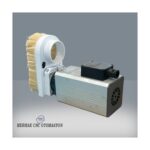










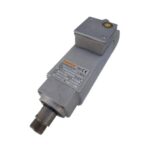























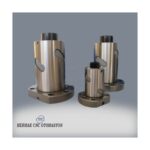

































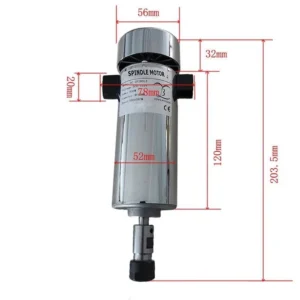
This 2.2 kW water-cooled spindle motor set, with a maximum speed of 24000 RPM, is a high-frequency electric motor designed for cutting, engraving, and machining operations on CNC router systems. Its primary function is to convert electrical energy into mechanical rotational motion, enabling the connected cutting tool to perform material removal on the workpiece at a specific speed and torque. The motor operates on the principle of a rotating magnetic field generated in the stator windings, which induces current in the rotor conductors, creating torque that drives the rotor’s rotation. To achieve high speeds, it is typically a three-phase asynchronous or synchronous motor, with speed controlled by a frequency converter (VFD). The water-cooling system effectively dissipates heat generated during high-speed and continuous load operation, minimizing thermal stress on the windings and bearings, thereby extending motor life and enhancing performance stability.
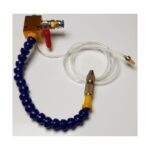
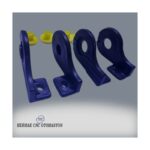
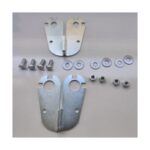
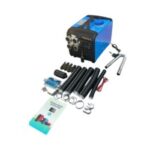
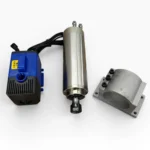
The spindle motor is constructed for stability and precision at high speeds, usually featuring an aluminum alloy or stainless steel body, high-precision ceramic or hybrid bearings, and a dynamically balanced rotor. This set includes one GDZ80-2.2B(4) model spindle motor, a pump for cooling water circulation, and a mounting bracket for secure attachment to the CNC machine chassis. System integration requires connecting the spindle motor to a 220 Volt AC mains supply via a frequency converter (VFD), which is then controlled by the CNC control unit. This allows for precise management of parameters such as speed, acceleration/deceleration ramps, and direction. This spindle motor set is suitable for processing various materials including wood, plastic, composite materials, non-ferrous metals like aluminum, and PCBs, and is particularly favored for engraving and cutting applications requiring high surface quality and fine detail.
Advantages of the 2.2 kW 24000 RPM Water-Cooled Spindle Motor Set 220 Volt
High Power and Speed Combination: The 2.2 kW nominal power of this spindle motor offers effective material removal capacity across a wide range of materials, while the 24000 RPM maximum speed allows for high cutting speeds, especially when working with small diameter tools, leading to superior surface finishes. High RPM enables the cutting edge to engage with the workpiece more frequently per unit of time, contributing to smoother surfaces and, in certain applications, extending tool life. This feature is critical for precision engraving and fine detail machining operations.
Efficient and Stable Water Cooling System: The integrated water-cooling system effectively dissipates thermal energy generated during continuous high-speed and high-load operation through a closed-loop circulation of cooling fluid. This thermal management approach prevents overheating of the motor windings and, particularly, the high-speed bearings, minimizing dimensional changes due to thermal expansion and thus preserving machining accuracy. Compared to air-cooled systems, water cooling offers a quieter operating environment and allows the motor to maintain its nominal performance even during prolonged operation, which is crucial for production continuity and equipment reliability.
Wide Application Range and Easy System Integration: The GDZ80-2.2B(4) model spindle motor set, with its 220 Volt supply voltage and standard collet compatibility, is designed for easy integration into many existing CNC router systems. The included pump and mounting bracket simplify the installation process, allowing users to quickly commission the system. This spindle delivers high performance in various industrial and hobby applications, including woodworking, plastic shaping, composite material cutting, and light machining of aluminum and similar non-ferrous metals. The collet system allows for precise and secure clamping of different diameter cutting tools, enhancing operational flexibility and providing a suitable solution for diverse machining tasks.
Technical Specifications and Capacity
Model Code
GDZ80-2.2B(4)
Rated Power
2.2 kW
Maximum Speed
24000 RPM
Supply Voltage
220 Volt AC (Single Phase or Three Phase via VFD)
Cooling Type
Water-Cooled (Pump and Connections Included)
Collet Type
ER20 (Standard)
Body Diameter
80 mm
Bearing Type
High-Speed Angular Contact Bearings (Typically C7 Class)
Technical Frequently Asked Questions (FAQ)
How to select the appropriate frequency converter (VFD) and set basic parameters for this spindle motor?
For this 2.2 kW spindle motor, a VFD with a nominal output power of at least 2.2 kW and compatible with 220 Volt single-phase or three-phase input should be selected. The VFD’s output frequency range should typically be 0-400 Hz or wider to achieve the spindle’s maximum speed of 24000 RPM (400 Hz corresponds to approximately 24000 RPM for a 4-pole motor). Basic parameter settings include the motor’s rated power (Pn001), rated current (Pn002), rated frequency (Pn003, usually 400 Hz), maximum frequency (Pn004, usually 400 Hz), acceleration time (Pn005), and deceleration time (Pn006). Additionally, the VFD’s motor protection functions (overcurrent, overload, overvoltage) must be configured correctly and synchronized with the spindle’s thermal protection mechanisms. VFD’s vector control mode can provide higher torque stability at low speeds, which may be advantageous in some machining applications.
What type of fluid should be used for the spindle motor’s water cooling system, and what is the maintenance period?
It is recommended to use distilled or deionized water for the water-cooling system. Tap water, due to its mineral and chlorine content, can lead to scaling or corrosion in the cooling channels over time, reducing cooling efficiency and shortening motor life. Antifreeze additives (e.g., automotive antifreeze) should not be used as they may contain chemicals that can damage the motor’s internal seals and materials. Pure water-based cooling fluids specifically formulated for industrial cooling systems, containing anti-corrosion and anti-algae inhibitors, are preferable. The maintenance period for the cooling fluid varies depending on usage intensity but should generally be checked every 3 to 6 months and completely replaced at least once a year. The cooling fluid level should be regularly monitored, and any system leaks or blockages should be addressed promptly.
How do the spindle motor’s collet system and tool holding accuracy affect machining quality?
The spindle motor’s collet system is a critical component that directly impacts machining quality by precisely centering and securely holding the cutting tool’s shank. This spindle set typically uses ER20 collets. High precision in the collet and collet nut minimizes radial runout of the tool. High runout causes the tool to contact the workpiece at different points with each rotation, increasing surface roughness, reducing tool life, and leading to deviations from machining tolerances. Proper collet selection (matching the tool shank diameter), cleanliness of the collet and collet nut, and adherence to manufacturer-recommended tightening torque are vital for maximizing tool holding accuracy and, consequently, machining quality. High-quality collets and nuts ensure stability even at high speeds by maintaining the tool’s dynamic balance.
What is the importance of vibration and dynamic balancing in high-speed spindle motors?
Vibration is a significant factor in high-speed spindle motors that negatively affects machining quality, tool life, and the spindle’s own lifespan. Imbalance in the rotor and the attached tool can cause severe vibrations at resonance frequencies due to centrifugal forces at high speeds. These vibrations can lead to undesirable outcomes such as surface fluctuations, increased roughness on the workpiece, and premature wear or breakage of the tool. Dynamic balancing is the process of optimizing the mass distribution around the rotor’s and tool’s axis of rotation to minimize unbalanced forces during rotation. In high-speed units like this spindle motor, precise dynamic balancing during manufacturing reduces vibration, extends bearing life, enhances machining accuracy, and provides quieter operation. Users also paying attention to dynamic balance during tool selection and mounting, especially ensuring the tool is runout-free and mounted with the correct tightening torque, is critical for optimizing the system’s overall vibration performance.
Mermak has 16 years of experience in industrial automation parts. Our products are stocked and shipped from our Ankara Uzay Sanayi factory/warehouse. Website stock quantities and prices are up-to-date. Stocked products are dispatched directly from our warehouse without production delays. We ensure careful packaging, meticulous invoice and document handling, and utilize reliable logistics partners. The Mermak team monitors the entire shipment process. Upon request, we can arrange video viewings of our products or factory via WhatsApp or other contact channels. We proudly supply customers in the United Kingdom, United States, Canada, Australia, Ireland, New Zealand, South Africa, and similar countries and international markets.


Reviews
There are no reviews yet.