
No products in the cart.
%42 Discount

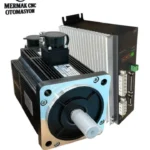
3.8 kW Brake Servo Motor Set 130ST-M15025Z1 T3A-L50F-RABF
Original price was: 1,953.82$.1,131.16$Current price is: 1,131.16$.
3.8 kW Brake Servo Motor Set 130ST-M15025Z1 T3a-L50F-RABF and Technical Details. Product Technical Specifications. Motor Power: 3.8 kW (Continuous Nominal), High efficiency class. Motor Type: 130ST Series, Brushless AC Servo Motor. Model Code
In stock
🔥 Special for Today Only %42 Discount Opportunity!📦 Category: 130 Flange Servo Motors🏷️ Power: 3.8 kW🏷️ Operating Voltage: 220 V AC🏷️ Flange Size: 130 mm🏷️ Brake Configuration: With External Brake🏷️ Maximum Speed: 2500 RPM
Mermak assuranceFrom factory to end user · importer / main dealer · strong stock
ImporterMain dealer / distributorStrong stockGood priceCorporate invoice
In stock / available to order · 14-day return for standard unused products; conditions may vary for custom size/cut products.
3.8 kW Brake Servo Motor Set 130ST-M15025Z1 T3a-L50F-RABF
INDUSTRIAL AUTOMATION PARTS | SUPERIOR PERFORMANCE SERIES
Detailed Product Review
This 3.8 kW brake servo motor set is an integrated drive solution designed to provide high-precision position, speed, and torque control in industrial automation systems. The set consists of a 130ST-M15025Z1 model brushless AC servo motor and a T3a-L50F-RABF model servo drive. The incremental encoder with a resolution of 2500 PPR (Pulses Per Revolution) integrated into the motor shaft generates continuous and high-resolution feedback signals regarding the angular position and speed of the shaft, allowing the drive to precisely process closed-loop control algorithms. This feedback mechanism enables the drive to reach the motor to the desired reference values within milliseconds and maintain these values with micron-level deviation despite external load changes. Especially the 15 Nm continuous nominal torque and 2500 RPM nominal speed capacity are prominent as critical performance parameters in applications requiring dynamic control of medium to high inertia loads and rapid acceleration and deceleration operations. The integrated electromagnetic spring brake, indicated by the Z1 code of the motor, automatically locks the motor shaft in case of power failure or when the axis needs to be fixed, preventing unwanted load movement due to gravity, especially on vertical axes, and maximizing operational safety.
The 130ST series brushless AC servo motor has a high efficiency class and offers high power density despite its compact physical dimensions. The motor’s IP65 protection class provides full protection against dust ingress and resistance to low-pressure water jets, offering long-lasting and reliable operation in harsh industrial environmental conditions (e.g., oily, dusty, or humid production areas). The T3a-L50F-RABF servo drive is designed to optimize the full potential of the motor and is equipped with features such as advanced PID control algorithms, resonance suppression, and vibration elimination functions. These functions minimize oscillations and backlash-induced effects in mechanical systems, improving motion quality, positioning accuracy, and the overall stability of the system. The drive supports common industrial communication protocols such as Modbus RTU and CANopen, offering easy and flexible integration with a wide range of PLCs, CNC controllers, and HMIs. This integrated servo motor set is widely used in various industrial applications such as CNC lathes and milling machines, robotic manipulators, high-speed packaging machines, textile machines, printing machines, automatic assembly lines, and material processing systems that require micron-level positioning accuracy, millisecond response times, and high repeatability.
Advantages of the 3.8 kW Brake Servo Motor Set 130ST-M15025Z1 T3a-L50F-RABF
High Dynamic Torque and Speed Capacity: This servo motor set is characterized by a continuous nominal torque capacity of 15 Nm and can provide a peak torque of up to 45 Nm during sudden load changes. This high torque density enables precise control of heavy loads and dynamic motion capabilities, especially in applications requiring rapid acceleration and deceleration cycles. The nominal speed of 2500 RPM allows for high production speeds and optimization of cycle times, thereby increasing overall system efficiency. This combination of torque and speed directly impacts critical performance parameters such as stable resistance against cutting forces in CNC machining centers, fast and repeatable motion capability in robotic applications, and high-efficiency material feeding and positioning in packaging machines, providing operational superiority.
Increased Safety with Integrated Electromagnetic Spring Brake: The integrated electromagnetic spring brake, indicated by the Z1 code of the motor, offers a “fail-safe” mechanism. This brake automatically locks the motor shaft in case of power failure or when there is no control signal (e.g., during emergency stop or system shutdown), preventing unwanted movement of loads, especially on vertical axes, and ensuring operational safety. This feature is crucial for applications where maintaining position during power interruptions is critical, such as in vertical axis movements on CNC machines or robotic arms.
Mermak has 16 years of experience in the industrial automation sector, operating from our Ankara Uzay Sanayi factory and warehouse. We ensure that website stock quantities and prices are up-to-date. Stocked products are dispatched directly from our warehouse, eliminating production waiting times. We provide careful packaging and meticulous invoice/document follow-up. Through our reliable logistics partners, the shipment process is closely monitored by the Mermak team. We offer product video or factory viewing upon request via WhatsApp or our contact channels. We proudly supply to numerous countries including the United Kingdom, United States, Canada, Australia, Ireland, New Zealand, and South Africa, as well as similar international markets.
| Power | 3.8 kW |
|---|---|
| Operating Voltage | 220 V AC |
| Flange Size | 130 mm |
| Brake Configuration | With External Brake |
| Maximum Speed | 2500 RPM |
| Torque | 15 Nm |
| Encoder Resolution | Incremental 2500 PPR |
You must be logged in to post a review.
Taksit Tablosu
Related Products
 %60 Discount4 kW 380V Motor Drive InverterOriginal price was: 367.56$.147.02$Current price is: 147.02$.View
 %42 Discount2 kW Braked Servo Motor Kit 130ST-M07725Z1 T3A-L30F-RABFOriginal price was: 1,211.63$.701.47$Current price is: 701.47$.View
 %68 Discount4 kW Spindle Motor Drive 380VOriginal price was: 1,093.86$.352.80$Current price is: 352.80$.View
Reviews
There are no reviews yet.