
No products in the cart.
%40 Discount


Step Motor Driver JSS556D
Original price was: 59.27$.35.34$Current price is: 35.34$.
High-performance DSP-based step motor driver with advanced resonance suppression and high current capacity.
Out of stock
🔥 Special for Today Only %40 Discount Opportunity!📦 Category: Stepper Motor Drivers
Mermak assuranceFrom factory to end user · importer / main dealer · strong stock
ImporterMain dealer / distributorStrong stockGood priceCorporate invoice
Contact us for stock information · 14-day return for standard unused products; conditions may vary for custom size/cut products.
Step Motor Driver JSS556D
INDUSTRIAL AUTOMATION PARTS | SUPERIOR PERFORMANCE SERIES
Detailed Product Review
The JSS556D is a digital signal processing (DSP) based step motor driver designed to provide high-precision motion control in industrial automation systems. This driver divides each full step of the step motor into micro-steps, significantly increasing the motor’s angular resolution and thus maximizing positioning accuracy and repeatability. Advanced DSP algorithms dynamically optimize the motor’s torque curve, offering a smooth and stable rotation characteristic even at low speeds. This optimization minimizes vibration and acoustic noise in mechanical systems while also reducing wear on the motor and connected mechanical components, extending system life. The primary function of the driver is to interpret incoming pulse (PUL) and direction (DIR) signals and send precise, timed current pulses to the step motor’s coils, enabling the motor to reach the desired position or speed.
With an output current capacity of up to 5.6 Amperes, the JSS556D exhibits superior quality and performance among similar drivers on the market. Its integrated resonance suppression algorithm detects and actively dampens the natural resonance frequencies of step motors in real-time, minimizing unwanted vibrations and noise levels, especially in the mid-speed range. This technical capability makes the driver an indispensable solution in sectors requiring absolute precision and reliability, such as defense industry, medical devices, optical alignment systems, and advanced robotics. The driver offers broad compatibility with NEMA standard step motors ranging from NEMA 17 to NEMA 34, providing flexible integration for projects with varying torque and size requirements. Its compact dimensions and standard PUL/DIR control interface are designed for easy integration into existing automation infrastructures and PLC systems.
JSS556D Step Motor Driver Advantages
High-Resolution Micro-stepping Capability: The JSS556D offers adjustable micro-stepping resolution from 200 to 51200 steps per revolution, enabling control of the motor’s angular movement in extremely small increments. This feature is critical for applications requiring sub-millimeter positioning accuracy and repeatability, such as optical alignment systems, precision assembly robots, and laser processing machines. High micro-stepping ensures the motor runs smoothly and vibration-free even at low speeds, reducing wear on mechanical systems and extending operational life.
Advanced Resonance Suppression Technology: The driver incorporates an integrated algorithm that dynamically detects and suppresses the natural resonance frequencies exhibited by step motors. This technology minimizes unwanted vibrations and acoustic noise, particularly in the low and mid-speed ranges, which can negatively impact the overall performance of the system. Resonance suppression ensures more stable motor operation, improves processing quality, reduces stress on mechanical components, and enhances operator comfort. Consequently, system reliability and stability are maintained even during long-term, continuous operations.
High Current Capacity and Wide Motor Compatibility: The JSS556D provides a peak output current of up to 5.6 Amperes, offering full compatibility with a wide range of two-phase hybrid step motors, including NEMA 17, NEMA 23, and NEMA 34. This high current capacity allows even larger, high-torque motors to be operated at their full potential. Wide motor compatibility simplifies design and inventory management for engineers, enabling them to use a single driver platform for projects with diverse torque and size requirements. This flexibility offers cost-effective and efficient solutions across various industrial applications.
Technical Specifications and Capacity
Feature
Value/Description
Model
JSS556D
Supply Voltage
24 – 50 VDC
Maximum Output Current
5.6A (Peak)
Micro Step Resolution
200 – 51200 steps/rev (Adjustable)
Control Mode
PUL/DIR (Pulse/Direction)
Compatible Motor Types
NEMA 17, NEMA 23, NEMA 34 Step Motors
Technical Frequently Asked Questions (FAQ)
How does the JSS556D driver’s integrated resonance suppression algorithm work, and what is its contribution to system performance?
The integrated resonance suppression algorithm in the JSS556D driver detects the natural mechanical resonance frequencies of step motors in real-time by analyzing the motor’s back EMF (Electromotive Force) signals or current fluctuations. At these detected resonance frequencies, the driver dynamically adjusts the phase or amplitude of the current pulses sent to the motor coils, actively damping the vibrations caused by resonance. This process minimizes oscillations that occur in the mid-speed range (typically 100-500 RPM), which negatively affect the system’s overall stability, positioning accuracy, and acoustic noise levels. As a result, the motor operates more smoothly and stably, stress on mechanical components is reduced, system lifespan is extended, and processing quality is significantly improved, especially in precision applications.
What advantages does the JSS556D’s wide supply voltage range (24-50 VDC) offer in system design?
The wide supply voltage range of the JSS556D, from 24 VDC to 50 VDC, provides significant flexibility to system designers. Using a higher supply voltage increases the rate of current rise in the motor coils, allowing the motor to produce more torque at higher speeds. High supply voltage is critical, especially in high-speed applications, to prevent current limitations due to the motor’s inductive reactance. Furthermore, this wide range ensures compatibility with various industrial power supplies and battery systems, simplifying integration. The ability to operate stably even at lower voltages also makes it a suitable solution for systems with lower power consumption or those running on batteries. This flexibility allows a single driver model to meet diverse application requirements, simplifying inventory management and increasing cost-effectiveness.
How do the opto-isolated digital inputs and outputs of the JSS556D enhance system reliability in industrial environments?
The opto-isolated digital inputs (4) and outputs (1, Fault/Alarm) on the JSS556D driver provide electrical isolation between the driver and the controller (PLC, microcontroller, etc.). This isolation ensures there is no direct electrical connection between the control circuit and the power circuit. It prevents adverse effects common in industrial environments, such as electrical noise, voltage spikes, ground loops, and electromagnetic interference (EMI), from reaching the control signals or sensitive electronic components. Opto-isolators transmit signals via light, blocking the propagation of electrical noise, thereby preventing false triggers or system failures. This feature enhances the overall stability and reliability of the system, guaranteeing uninterrupted and accurate operation even in harsh industrial conditions, reducing maintenance costs, and minimizing operational downtime.
What are the key technical parameters to consider when selecting a compatible step motor for the JSS556D?
The key technical parameters to consider when selecting a step motor compatible with the JSS556D driver include the motor’s nominal current, inductance, holding torque, and physical size (NEMA standard). The motor’s nominal current should not exceed the driver’s maximum output current of 5.6A (peak); otherwise, the driver may enter overcurrent protection or the motor’s full potential may not be utilized. The motor’s inductance directly affects the driver’s high-speed performance; motors with lower inductance offer better torque characteristics at high speeds. The holding torque required by the application must not be less than the selected motor’s torque value. Since the JSS556D is compatible with NEMA 17, NEMA 23, and NEMA 34 standard motors, mechanical mounting and size constraints must also be considered. Additionally, parameters such as the motor’s phase count (two-phase hybrid step motors) and step angle should be compatible with the driver’s control mode.
Mermak has 16 years of experience in industrial automation. Our Ankara Uzay Sanayi factory/warehouse ensures that website stock quantities and prices are up-to-date. Stocked products are dispatched directly from our warehouse without production delays. We ensure careful packaging, meticulous invoice and document follow-up, and utilize reliable logistics partners. The Mermak team closely monitors the shipment process. Upon request, product videos and factory tours can be arranged via WhatsApp or other contact channels. We proudly supply to the United Kingdom, United States, Canada, Australia, Ireland, New Zealand, and South Africa, as well as similar countries and international markets.
You must be logged in to post a review.
Taksit Tablosu
Related Products
 %31 DiscountStep Motor Driver DM860HOriginal price was: 48.46$.33.48$Current price is: 33.48$.View
 %40 DiscountStep Motor Driver JSS 2DM2280Original price was: 288.54$.172.00$Current price is: 172.00$.View
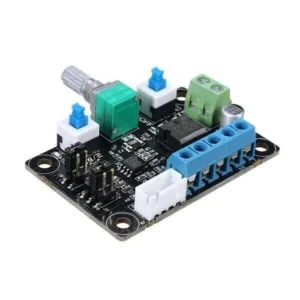 %53 Discount12-24V Step and Servo Motor Speed Controller MKS OSC PWM Pulse Signal GeneratorOriginal price was: 7.52$.3.58$Current price is: 3.58$.View
Reviews
There are no reviews yet.