
No products in the cart.

Protex Ø3.14 mm 30 Degree Engraving and PCB Bits
5.62$
High-performance Tungsten Carbide bits for precision engraving, PCB cutting, and micro-machining applications. Available from Mermak’s extensive stock.
In stock
📦 Category: Engraving & PCB Bits
Mermak assuranceFrom factory to end user · importer / main dealer · strong stock
ImporterMain dealer / distributorStrong stockGood priceCorporate invoice
In stock / available to order · 14-day return for standard unused products; conditions may vary for custom size/cut products.
Protex Ø3.14 mm 30 Degree Engraving and PCB Bits
INDUSTRIAL AUTOMATION PARTS | SUPERIOR PERFORMANCE SERIES
Detailed Product Review
The Protex Ø3.14 mm 30 Degree Engraving and PCB Bits are high-performance cutting tools designed to meet the precise material processing requirements in industrial automation systems. These bits are specifically designed for applications such as micro-machining, fine detail engraving, and printed circuit board (PCB) manufacturing, enabling the creation of desired geometric forms by controlled material removal. The 30-degree conical tip angle is optimized for creating V-shaped cut profiles, achieving sharp-edged and high-resolution engravings, while the Ø3.14 mm nominal diameter offers precise maneuverability in tight spaces and for small-scale details. The cutting process occurs through the synchronization of the tool’s rotational movement and the feed motion on the workpiece; this kinematic interaction allows the tool’s cutting edges to separate material at a micron level, creating paths of the desired depth and width or shaping surfaces. It plays a critical role in PCB production for precisely isolating copper traces and creating component pads, thus meeting the increasing miniaturization and density requirements of modern electronic devices.
These cutting tools are manufactured from high-quality Tungsten Carbide (Solid Carbide) alloys with superior mechanical properties. Tungsten Carbide is known for its high hardness (approximately 90 HRA), wear resistance, high-temperature strength, and compressive strength; these properties ensure the tool’s longevity and maintain its sharpness even under demanding machining conditions. The tool’s 3.175 mm (1/8 inch) industry-standard shank diameter guarantees direct mechanical integration with all commonly used CNC routers, engraving machines, and PCB processing systems. This standard shank diameter allows for easy connection to the spindle systems of machining centers via tool holders and collets, offering minimal setup time and maximum compatibility. Application areas range widely from micro-machining operations such as separating conductive traces on multi-layer PCBs, creating component footprints, and cutting board contours in the electronics sector, to processing small details in mold making, precision modeling in prototyping, jewelry engraving, and detailed engraving and lettering on various materials (metal, plastic, wood, acrylic, composites) for industrial labeling.
Advantages of Protex Ø3.14 mm 30 Degree Engraving and PCB Bits
High Precision and Repeatability: The sharp 30-degree cutting angle and the Ø3.14 mm optimized diameter of Protex bits offer machining capabilities at sub-millimeter accuracy levels. This geometric configuration ensures stable and predictable results in every production cycle, especially for engraving micro-traces on PCB boards and fine detail engraving, thanks to a tight manufacturing tolerance of ±0.01 mm. High precision ensures the flawless maintenance of critical parameters such as conductor line widths and spacing, particularly in high-density circuit designs required by modern electronic devices, directly impacting the electrical performance and reliability of the final product. Repeatability reduces quality control costs and minimizes scrap rates in mass production processes.
Optimum Chip Evacuation and Surface Quality: The specially designed cutting geometry of Protex engraving and PCB bits maximizes the effective removal of chips generated during machining from the cutting zone. This optimized chip evacuation prevents clogging of the tool’s cutting edges, chip buildup, and the risk of re-cutting. Consequently, heat buildup during machining is reduced, the tool’s wear rate slows down, and smooth, burr-free finishes of high aesthetic quality are achieved on the machined surfaces. High surface quality reduces the need for additional post-processing, especially on parts with optical or aesthetic requirements (e.g., mold surfaces, decorative engravings), and enhances the functional performance of the final product (e.g., solderability on PCBs).
Long Tool Life and Cost Efficiency: Manufactured from high-quality Tungsten Carbide material, Protex bits offer exceptional wear resistance and thermal stability. These material properties allow the tool to maintain its sharpness and geometric integrity for extended periods, even at high cutting speeds and feed rates. Wear resistance delays the deformation and dulling of the tool’s cutting edges, while thermal stability allows the material to retain its hardness even at high temperatures. This significantly reduces the frequency of tool changes, minimizing production downtime and increasing operational efficiency. Reduced tool consumption directly lowers consumable costs, while fewer machine downtimes optimize overall production capacity and total cost of ownership.
Technical Specifications and Capacity
FeatureValue/Description
Tool Diameter (Ø)3.14 mm
Engraving Angle30 Degrees (V-Shape Cone)
MaterialHigh-Quality Tungsten Carbide (Solid Carbide)
Shank Diameter (Shank)3.175 mm (1/8 inch – Industry Standard)
Manufacturing Tolerance±0.01 mm (High Precision)
Tool Tip TypeConical / V-Cut (Single Edge)
CompatibilityAll Standard CNC Routers and PCB Processing Machines
Application AreasEngraving, PCB Cutting, Micro Milling, Detail Machining
Technical Frequently Asked Questions (FAQ)
What are the fundamental metallurgical and mechanical justifications for using Tungsten Carbide material in these bits?
The primary metallurgical reason for choosing Tungsten Carbide (WC-Co) alloy in Protex engraving and PCB bits is its unique combination of superior hardness, wear resistance, and high-temperature strength. Tungsten Carbide particles are sintered within a cobalt (Co) binder phase, exhibiting a very high Young’s modulus (approx. 500-700 GPa) and compressive strength (approx. 4-7 GPa). This ensures minimal deformation of the tool under cutting forces and allows it to maintain its sharpness for an extended period. Additionally, its high thermal conductivity helps in effectively dissipating heat generated in the cutting zone, delaying thermal fatigue of the tool. Wear resistance is critical, especially when machining abrasive PCB materials like glass fiber reinforced laminates, as it extends tool life, increases production efficiency, and reduces tool replacement costs. The cobalt binder phase imparts toughness to the carbide particles, reducing the tool’s brittleness and increasing its resistance to sudden impacts, which enhances tool reliability in micro-machining applications.
What is the impact of the 30-degree engraving angle and Ø3.14 mm tool diameter on performance parameters in micro-machining applications?
The 30-degree engraving angle creates a very fine and sharp profile at the tool’s tip, enabling the creation of high-resolution, sharp-edged V-shaped grooves with minimal burr formation on the material surface. This narrow angle is ideal for isolating fine conductive traces on PCBs or defining details in precision engraving. However, as smaller angles tend to reduce the mechanical strength of the tool tip, 30 degrees offers an optimized balance between sharpness and tool durability. The Ø3.14 mm tool diameter allows for machining very narrow channels and following complex geometries while maintaining the overall rigidity of the tool. This diameter increases the tool’s resistance to vibrations while providing the high precision and detail level required in micro-machining applications. While smaller diameters may require operation at higher rotational speeds (RPM), Ø3.14 mm offers a suitable balance point for a wide range of materials and machining parameters, ensuring the tool exhibits optimal performance in terms of both precision and efficiency.
What are the critical operational and mechanical parameters to consider during the integration of these bits into CNC machining centers?
When integrating Protex Ø3.14 mm 30 Degree Engraving and PCB Bits into CNC machining centers, various operational and mechanical parameters must be meticulously adjusted for optimal performance and tool life. Mechanically, high-precision ER collets or similar tool holders compatible with the tool’s 3.175 mm (1/8 inch) shank diameter must be used. The runout value of the collet directly affects the tool’s cutting performance and life, so a runout value below 0.005 mm should be targeted. Operational parameters include spindle speed (RPM), feed rate, depth of cut (DOC), and chip load. Depending on the material type and hardness, high spindle speeds (e.g., 20,000-60,000 RPM) and appropriate feed rates should be selected. Chip load refers to the amount of material removed by each cutting edge of the tool per revolution and should be carefully calculated to prevent overloading the tool or insufficient cutting. Furthermore, chip evacuation strategies such as using cutting fluid or air blowing help keep the cutting zone clean and control heat, extending tool life and improving surface quality. Defining correct toolpath strategies in CAM software is also essential for the efficient and safe operation of the tool.
What parameters need to be optimized to maximize the life of Protex bits in PCB processing applications, and what are the tool wear modes?
To maximize the life of Protex bits in PCB processing applications, optimizing cutting parameters (spindle speed, feed rate, depth of cut) according to the properties of the PCB laminate being processed (e.g., FR-4) is critical. High spindle speeds can increase heat at the tool’s cutting edges, while very low speeds can cause the tool to “scrape” the material, accelerating wear. The feed rate directly affects the chip load; an optimal chip load ensures the tool cuts effectively and prevents excessive friction. The depth of cut determines how much material is removed per pass, and stepped passes can be preferred to prevent overloading the tool. Other factors affecting tool life include proper tool clamping (minimum runout), effective chip evacuation, and regular tool inspection. The main tool wear modes observable in Protex bits include: 1) Flank Wear: Wear occurring on the surface behind the cutting edge due to friction, which increases cutting forces and degrades surface quality. 2) Crater Wear: Indentations on the rake face of the tool caused by chip flow, often associated with chemical reactions at high cutting temperatures. 3) Chipping: The breaking off of small particles from the tool tip, often caused by excessive mechanical loads, vibrations, or hard inclusions in the material. Early detection of these wear modes and adjustment of parameters accordingly can significantly extend tool life.
Mermak has 16 years of experience in the industrial automation sector, operating from our factory and warehouse in Ankara. Our website displays up-to-date stock quantities and prices. Stocked products are dispatched directly from our warehouse, eliminating production waiting times. We ensure careful packaging, meticulous invoice and document follow-up, and utilize reliable logistics partners. The Mermak team actively monitors the shipment process. Upon request, we can arrange video viewings of our products or factory via WhatsApp or other contact channels. We proudly supply to numerous countries including the United Kingdom, United States, Canada, Australia, Ireland, New Zealand, and South Africa, as well as similar countries and international markets.
| Dimensions | 3,14 |
|---|
You must be logged in to post a review.
Taksit Tablosu
Related Products
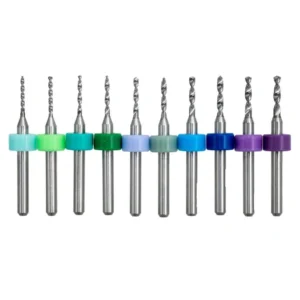 %39 DiscountMicro Drill Bit Set 0.3 - 1.2 mm (10 Pieces)Original price was: 8.16$.4.98$Current price is: 4.98$.View

Reviews
There are no reviews yet.