
No products in the cart.
%43 Discount


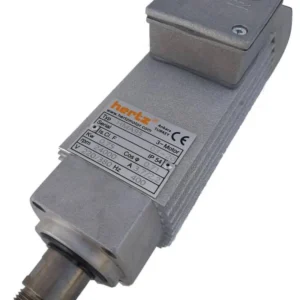
4 kW Hertz Spindle Motor ER25 18,000 RPM 220/380V
Original price was: 546.31$.311.40$Current price is: 311.40$.
High-performance 4 kW Hertz spindle motor with ER25 collet system, capable of 18,000 RPM. Ideal for CNC machining, engraving, and robotic applications. Features ceramic bearings and dual voltage compatibility (220V/380V).
Out of stock
🔥 Special for Today Only %43 Discount Opportunity!📦 Category: Hertz Motors🏷️ Power (kW): 4 Kw🏷️ Collet Standard: ER25🏷️ Connection Voltage: 220/380V
Mermak assuranceFrom factory to end user · importer / main dealer · strong stock
ImporterMain dealer / distributorStrong stockGood priceCorporate invoice
Contact us for stock information · 14-day return for standard unused products; conditions may vary for custom size/cut products.
4 kW Hertz Spindle Motor ER25 18,000 RPM 220/380V
INDUSTRIAL AUTOMATION PARTS | SUPERIOR PERFORMANCE SERIES
Detailed Product Review
This 4 kW Hertz spindle motor is a high-performance drive unit designed for industrial automation systems, particularly for CNC machining centers, engraving machines, and robotic processing platforms. With a maximum speed capability of 18,000 revolutions per minute (RPM), the motor offers superior precision and efficiency for both roughing operations requiring high material removal rates and finishing operations and micro-engraving applications where surface quality is critical. The integrated ER25 collet system supports a wide range of tool diameters from 1mm to 16mm, enhancing operational flexibility. This collet system guarantees secure, vibration-free tool holding with minimal radial runout on the spindle, thanks to its high clamping force. This engineering approach ensures consistent dimensional accuracy, superior surface finish, and a significant increase in tool life during machining processes.
The high-quality ceramic bearings used in the motor’s internal structure offer a lower coefficient of friction, better heat dissipation characteristics, and a longer operational lifespan compared to traditional steel bearings. These features ensure the motor operates stably and reliably even under prolonged high-speed and high-load conditions, while extending maintenance intervals and reducing the total cost of ownership. The optimized air cooling system effectively manages the motor’s thermal performance, preventing overheating and ensuring continuous operation. Dual voltage compatibility (220V/380V) allows this spindle motor to be easily integrated into different industrial electrical infrastructures, offering significant advantages in installation flexibility and project costs. Offered with Mermak CNC assurance, this product is a combination of precision engineering and superior material quality, designed for applications requiring high precision and durability in demanding industrial environments. Mermak has 16 years of experience, operating from our Ankara Uzay Sanayi factory/warehouse, serving clients in the United Kingdom, United States, Canada, Australia, Ireland, New Zealand, South Africa, and similar countries/international markets.
Advantages of the 4 kW Hertz Spindle Motor ER25 18,000 RPM 220/380V
High Power (4 kW) and Continuous Torque Capacity: The 4 kW nominal power of this spindle motor continuously provides the high cutting force and torque required, especially for machining tough materials such as hard alloys, composites, and dense wood. This capacity minimizes speed drops during cutting operations, allowing the tool to advance stably within the material, thus maximizing the Material Removal Rate (MRR). High torque increases the tool’s ability to penetrate the material, shortens machining time, and directly impacts production efficiency.
Wide Speed Range (18,000 RPM) and Surface Quality Optimization: The maximum speed of 18,000 RPM offers operators a broad range of speed control for different material types and machining strategies. This wide range provides optimal cutting conditions for roughing at low speeds and for precision applications like finishing, micro-machining, and engraving at high speeds. Particularly when working with small diameter tools, high RPMs enable higher cutting speeds (Vc), resulting in a smooth surface finish and minimal burr formation. This flexibility allows a single spindle motor to meet various machining requirements.
Superior Tool Holding Precision and Low Spindle Runout with ER25 Collet System: The integrated ER25 collet system has the capacity to securely hold tool diameters ranging from 1mm to 16mm, offering flexibility for working with a wide array of tools. The collet’s high clamping force prevents tool slippage or vibration within the spindle, while a low runout value of ≤ 0.005mm (5 microns) critically enhances machining accuracy. Low runout ensures that all cutting edges of the tool operate under equal load, extending tool life, leaving fewer vibration marks on the workpiece, and significantly improving surface quality. This feature is indispensable, especially in precision mold making and detailed engraving applications.
Technical Specifications and Capacity
Feature | Value/Description
Motor Power | 4 kW (Kilowatt) – High cutting force and torque capacity.
Maximum Speed | 18,000 RPM (Revolutions Per Minute) – Wide speed range for precise and fast machining.
Collet System | ER25 – High holding accuracy system supporting tool diameters from 1mm to 16mm.
Supply Voltage | 220V / 380V (Dual Voltage) – Flexible integration in different industrial installations.
Frequency Range | 0 – 300 Hz (Controllable with external VFD/Drive) – Wide speed control.
Cooling Type | Air Cooled – Effective heat dissipation with integrated fan system.
Bearing Type | High-Speed Ceramic Bearings – Long life, low friction, high-speed durability.
Spindle Runout | ≤ 0.005mm (5 microns) – High-precision machining and smooth surface finish.
Protection Class | IP54 – Partial protection against dust ingress and resistance to splashing water from any direction.
Technical Frequently Asked Questions (FAQ)
What are the contributions of the ceramic bearings used in this spindle motor to industrial performance?
Ceramic bearings offer several critical advantages over traditional steel bearings. Firstly, the lower density of ceramic materials (typically Silicon Nitride – Si3N4) reduces centrifugal forces at high speeds, allowing the bearings to reach higher speeds and last longer. Secondly, the higher hardness and wear resistance of ceramics significantly extend bearing life and minimize maintenance needs. Thirdly, the low coefficient of friction of ceramic bearings means less heat generation, which enhances the motor’s thermal stability and contributes to energy efficiency. Furthermore, since ceramics are electrically insulating, they prevent damage from stray currents that might occur on the spindle, thereby increasing the motor’s overall reliability.
What is the effect of the spindle runout value of ≤ 0.005mm on machining accuracy for this spindle motor?
Spindle runout refers to the deviation of a rotating spindle or tool from its ideal axis of rotation, a critical parameter. The specified value of ≤ 0.005mm (5 microns) for this spindle motor represents an extremely low level of runout and has a direct and significant impact on machining accuracy. Low runout ensures that all cutting edges of the tool make equal and balanced contact with the workpiece. This situation extends tool life because the cutting load is evenly distributed across all edges, preventing overload on any single edge. Additionally, low runout results in smoother surface finishes on the workpiece, minimizes vibration, and enhances consistency in dimensional accuracy. This low runout value is indispensable for achieving final product quality, particularly in applications such as precision mold making, optical part manufacturing, or micro-machining.
What is the significance of the dual voltage (220V/380V) and 3-phase structure of this spindle motor in terms of industrial integration and performance?
The dual voltage compatibility (220V/380V) of the spindle motor offers the ability to easily adapt to existing electrical infrastructures in different geographical regions or industrial facilities. This flexibility reduces installation costs and allows the motor to be used in a wide range of applications. The 3-phase structure is a standard and preferred configuration for industrial motors. 3-phase systems provide more stable, efficient, and balanced power transmission compared to single-phase systems. This contributes to the motor operating with less vibration, producing higher torque, and having a longer lifespan. Furthermore, when used with Variable Frequency Drives (VFDs), 3-phase motors offer precise control over a wide speed range, enabling optimal performance in machining processes and improving energy efficiency.
What does the 0-300 Hz frequency range of the motor and its controllability with an external VFD/drive mean?
The 0-300 Hz frequency range of the spindle motor indicates that the motor’s operating speed can be adjusted across a wide spectrum. The speed of industrial AC motors is directly proportional to the supply frequency. This broad frequency range allows the motor to be precisely controlled from very low speeds (e.g., near 0 Hz) to very high speeds (18,000 RPM at 300 Hz). This control is achieved through an external Variable Frequency Drive (VFD) or inverter. The VFD adjusts the motor’s speed and torque by altering the frequency and amplitude of the mains voltage. This enables the achievement of optimal cutting speeds and feed rates required for different materials and machining operations. VFD usage allows the motor to start and stop smoothly, reducing mechanical stress, optimizing energy consumption, and extending the motor’s lifespan. Additionally, VFDs typically include motor protection functions (overcurrent, overvoltage, overtemperature, etc.), which enhance the overall safety of the system.
| Power (kW) | 4 Kw |
|---|---|
| Collet Standard | ER25 |
| Connection Voltage | 220/380V |
| Maximum Speed |
You must be logged in to post a review.
Taksit Tablosu
Related Products
 %40 Discount1.4 kW Hertz Spindle Motor ER20 18000 RPMOriginal price was: 339.90$.203.94$Current price is: 203.94$.View
 %40 Discount0.75 kW Hertz Spindle Motor ER20 24000 RPM 220VOriginal price was: 226.19$.135.71$Current price is: 135.71$.View
 %40 Discount0.75 kW Hertz Spindle Motor ER16 24000 RPM 220VOriginal price was: 226.19$.135.71$Current price is: 135.71$.View
Reviews
There are no reviews yet.