No products in the cart.
%38 Discount


25 mm Linear Slide Rail Standard
Original price was: 32.11$.20.04$Current price is: 20.04$.
Best Quality, Best Price Guarantee
In stock
🔥 Special for Today Only %38 Discount Opportunity!📦 Category: 25 mm Linear Guides and Bearings
Mermak assuranceFrom factory to end user · importer / main dealer · strong stock
ImporterMain dealer / distributorStrong stockGood priceCorporate invoice
In stock / available to order · 14-day return for standard unused products; conditions may vary for custom size/cut products.
25 mm Linear Slide Rail Standard
INDUSTRIAL AUTOMATION PARTS | SUPERIOR PERFORMANCE SERIES
Detailed Product Review
In industrial automation systems, the precision, stability, and repeatability of linear motion have a direct impact on final product quality and system efficiency. Our 25 mm Linear Slide Rail is a high-performance component designed to meet these critical engineering requirements. This rail system works in conjunction with linear blocks, offering minimal deflection and superior rigidity even under heavy loads. The rail’s surface geometry and machining accuracy ensure optimal contact between the rolling elements (balls or rollers) of the linear blocks, minimizing friction. This increases the system’s energy efficiency while guaranteeing the smoothness of motion and positioning accuracy at the micron level. Thermal expansion and vibration damping properties have been optimized even for high-speed applications, providing a stable operating environment even under dynamic loads.
This standard linear slide rail is manufactured from high-carbon alloy steel, with material selection optimized for high strength and wear resistance. The induction hardening process applied during manufacturing increases the surface hardness of the rail to the HRC 58-62 range, enhancing its resistance to rolling fatigue and ensuring long-lasting performance. Precision grinding processes reduce the surface roughness of the rail to below Ra 0.8 µm, lowering the coefficient of friction at the contact surface with the linear blocks and ensuring smooth motion. With dimensions and mounting hole spacing compliant with industrial standards, it can be easily integrated into existing systems in a wide range of applications such as CNC machining centers, robotic systems, automatic assembly lines, laser cutting, and welding machines. This ease of integration reduces installation time and commissioning costs, while enhancing the overall operational efficiency and production quality of the system. Mermak has 16 years of experience in supplying these high-quality components to markets including the United Kingdom, United States, Canada, Australia, Ireland, and New Zealand, alongside many other international markets.
Advantages of the 25 mm Linear Slide Rail Standard
Micron-Level Positioning Accuracy and Repeatability Guarantee: This linear slide rail is manufactured to the H (High Precision) accuracy class, ensuring micron-level (e.g., ±5 µm/300mm) positioning accuracy and repeatability. This precision is crucial in applications like CNC machining centers, optical alignment systems, and semiconductor manufacturing equipment, where tight machining tolerances directly impact final product quality. The rail’s precisely ground surfaces and optimized geometry ensure consistent positioning of the linear blocks, guaranteeing the same level of accuracy with every repeated operation and thus maximizing production consistency.
High Dynamic and Static Load Carrying Capacity: Thanks to the special alloy steel material selection and induction-hardened surfaces, this 25 mm linear slide rail offers a dynamic load capacity (C) of approximately 15,000 N and a static load capacity (C0) of approximately 25,000 N. These high load capacities are critical for heavy-duty machine tools, large robotic manipulators, and systems subjected to high moment loads. The rail’s wide base design and optimized cross-sectional area increase bending and torsional rigidity, maintaining structural integrity even under high loads and ensuring stable system operation. This feature extends system life while also increasing operational reliability and preventing unexpected failures.
Optimized Coefficient of Friction and Energy Efficiency: The rail’s surface treatment technologies, particularly precision grinding and surface roughness control, have reduced the coefficient of friction with the linear blocks to the range of 0.002 – 0.005. This low coefficient of friction minimizes the driving force required for motion and thus energy consumption. Reduced friction also lowers heat generation within the system, reducing the risk of thermal deformation and extending lubricant life. This increase in energy efficiency directly reduces operating costs while providing smoother, vibration-free motion, optimizing the system’s overall performance and speed. This offers a significant operational advantage, especially for continuous and high-speed applications.
Technical Specifications and Capacity
Feature
Value/Description
Rail Width
25 mm
Rail Type
Standard Linear Slide Rail (Wide Base)
Material
High-Carbon Alloy Steel (Hardened)
Surface Treatment
Induction Hardened and Precision Ground
Accuracy Class
H (High Precision) – Micron-level positioning guarantee
Dynamic Load Capacity (C)
~15,000 N (Newton)
Static Load Capacity (C0)
~25,000 N (Newton)
Coefficient of Friction
Low (0.002 – 0.005 range)
Operating Temperature Range
-20°C to +80°C
Technical Frequently Asked Questions (FAQ)
What are the fundamental differences between various accuracy classes of linear slide rails, and how is the correct class selected for an application?
Linear slide rails are categorized into different accuracy classes based on their manufacturing precision, commonly referred to as Normal (N), High (H), Precision (P), Super Precision (SP), and Ultra Precision (UP). The primary difference lies in the micron-level variations in geometric features such as flatness, parallelism deviation, height, and width tolerances. For instance, an H-class rail has tighter tolerances for flatness and parallelism deviation over a specific length (typically 300 mm) compared to the N class. The selection of the correct class is directly related to the positioning accuracy, repeatability, and machining tolerances required by the application. Applications requiring high precision, such as CNC machining, optical alignment, or semiconductor manufacturing, may necessitate P, SP, or UP classes, while N or H classes might suffice for general conveying or assembly lines. Factors such as cost, ease of installation, and expected system life should also be considered during selection, as higher accuracy classes generally involve higher costs and more demanding installation procedures.
How should lubrication regimens and maintenance procedures be determined for optimal performance and lifespan of linear slide rails?
The correct lubrication regimen and regular maintenance are critical for the optimal performance and long lifespan of linear slide rails. Lubrication minimizes wear by reducing friction between the rolling elements and the rail surface, prevents corrosion, and aids in heat dissipation. The lubrication regimen should be determined considering the application’s load conditions (dynamic/static), speed, acceleration, operating temperature, and environmental factors (dust, moisture). Typically, lithium soap-based greases or synthetic oils are preferred. Lubrication intervals are determined based on the manufacturer’s specifications and the system’s operating cycle; high-speed and heavy-load applications may require more frequent lubrication. Maintenance procedures should include regular visual inspections (detecting wear, corrosion, damage), cleaning of the rail surface, and checking lubrication points. Furthermore, periodically checking the torque values of the linear block mounting bolts is important to maintain system rigidity and accuracy. The condition of sealing elements (wiper seals) should also be regularly inspected to prevent contamination.
What is the engineering difference between dynamic and static load capacities (C and C0), and how are these values used in rail selection?
Dynamic load capacity (C) and static load capacity (C0) are two fundamental engineering parameters that define the load-carrying capabilities of linear slide rails. Static load capacity (C0) refers to the maximum load that the rail and linear block can withstand without causing permanent deformation in the rolling elements. This value is critical for loads occurring when the system is stationary or moving at very low speeds. Dynamic load capacity (C), on the other hand, represents the constant, unidirectional load that a group of rails can carry before the first signs of surface damage (pitting) due to rolling fatigue occur within a specified service life (typically 50 km or 100 km of travel distance), with a 90% probability. In rail selection, the maximum static loads the application will experience should first not exceed the C0 value. Subsequently, the equivalent dynamic load (Pe) is calculated considering the system’s expected service life, speed, and the dynamic loads it will encounter. By comparing the Pe value with the C value, the appropriate rail and block combination is selected to ensure the required life factor and safety margin. Generally, the relationship Pe ≤ C/f_s (where f_s is the safety factor) is used.
How do factors like operating environment temperature and contamination affect the performance and lifespan of a linear slide rail, and what measures can be taken against these effects?
Temperature fluctuations and contamination in the operating environment are environmental factors that significantly affect the performance and lifespan of linear slide rails. Extreme temperatures can cause thermal expansion in the rail material, increasing assembly stresses and distorting the rail’s flatness, which negatively impacts positioning accuracy. Furthermore, high temperatures can reduce lubricant viscosity, leading to thinning of the lubrication film and increased wear. Low temperatures can cause lubricant solidification and impede motion. Contamination (dust, chips, liquid splashes) can penetrate the rail surface and into the linear blocks, causing abrasive effects on the rolling elements, increasing friction, and leading to premature failure. To mitigate these effects, lubricants suitable for the operating temperature range should be used, and appropriate cooling or heating systems should be integrated for the system’s thermal stability. Against contamination, high-performance seals (e.g., double-lip seals) should be used on the linear blocks, protective bellows or telescopic covers should be installed over the rail, and regular cleaning and lubrication procedures must be meticulously followed. Air filtration systems can also be considered to reduce particulate density in the environment. Mermak supplies these robust solutions to clients in countries such as South Africa, the United Kingdom, the United States, Canada, Australia, and Ireland, as well as similar international markets.
| Dimensions |
|---|
You must be logged in to post a review.
Taksit Tablosu
Related Products
 %48 DiscountUP005 Bearing Block Precision Cast Ø25 mmOriginal price was: 4.86$.2.51$Current price is: 2.51$.View
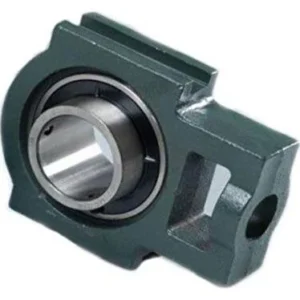 %48 DiscountUCT 205 Take-Up Unit BearingOriginal price was: 6.05$.3.12$Current price is: 3.12$.View
 %48 DiscountUCP 205 Pillow Block Bearing UnitOriginal price was: 4.82$.2.50$Current price is: 2.50$.View
Reviews
There are no reviews yet.