



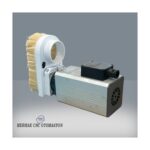










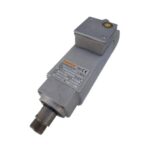
























































2.2 kW 18000 RPM ER25 Arel Motor
Detailed Product Review
This 2.2 kW spindle motor, with a maximum speed capacity of 18000 RPM, is a high-frequency spindle motor specifically designed for Computer Numerical Control (CNC) machines for cutting, engraving, drilling, and milling operations. Its operating principle relies on creating a rotating magnetic field within the stator windings, powered by three-phase alternating current supplied by a Variable Frequency Drive (VFD). This rotating magnetic field induces currents in the rotor bars, generating torque and causing the rotor to spin at a speed slightly below synchronous speed (asynchronous motor principle). Due to the high RPM requirement, the internal structure of the motor, particularly the bearing system, is designed to precisely handle high radial and axial loads at high speeds. Typically, ceramic ball or hybrid angular contact bearings are used to minimize friction and heat generation, while dynamic balancing processes reduce vibration levels to acceptable tolerances. The motor’s speed is adjusted through precise control of the frequency and voltage ratio (V/f ratio) applied by the VFD, enabling the achievement of constant torque or constant power characteristics over a wide speed range.
The motor’s material composition is optimized for long-lasting and reliable performance. The housing is usually made from aluminum alloys with high thermal conductivity and is supported by integrated cooling fins or a liquid cooling jacket for thermal management. The rotor and stator windings consist of enameled copper wires with high-temperature resistance, and the insulation class is F or H. The shaft is manufactured from high-strength, hardened alloy steel, which prevents deformation even under high torque and ensures a precise connection to the ER25 collet system. For system integration, these motors typically feature a standard flange or clamp mounting interface and communicate with the VFD via protocols such as RS485 or 0-10V analog signals for exchanging speed, torque, and status information. Application areas are extensive; it is ideal for operations requiring high speed and precision in machining wood, plastics, composite materials, non-ferrous metals like aluminum and brass, mold making, prototyping, PCB manufacturing, and precision engraving. The ER25 collet system offers operational flexibility by supporting a wide range of tool diameters from 1 mm to 16 mm.
Advantages of the 2.2 kW 18000 RPM ER25 Arel Motor
High Speed Capacity and Material Processing Efficiency: The motor’s high maximum rotational speed of 18000 RPM allows for maximized cutting speed, especially when working with small diameter tools. High peripheral speed enables smoother surface finishes with lower cutting forces and reduces thermal deformation. Particularly in machining materials like aluminum, plastics, and composites, high RPMs can increase the material removal rate while extending tool life and significantly reducing processing time. This is a critical parameter that directly impacts production efficiency and offers an advantage in machining complex geometries with high precision.
Tool Holding Precision and Flexibility with ER25 Collet System: The integrated ER25 collet system, designed according to DIN 6499 standard, offers excellent radial runout values with high clamping force. This collet system provides flexibility for different machining operations by supporting a wide range of tool diameters from 1 mm to 16 mm. The conical structure and multiple slits of ER collets ensure the centering and tight grip of the tool on the spindle, minimizing vibration and tool slippage during machining. Low radial runout is critical, especially when machining fine details and working with small diameter tools, as it reduces tool breakage and improves the quality of the machined surface.
Optimum Power/Torque Characteristics and Thermal Management: The 2.2 kW nominal power output allows the motor to operate stably across a wide load range. This power provides sufficient torque, especially for machining medium-difficulty materials, offering flexibility in cutting depth and feed rate. The motor’s thermal management is designed to prevent performance degradation even under prolonged and intensive operating conditions. Typically supported by an integrated fan or an external cooling system (air or liquid), this motor prevents overheating of the stator windings and bearings, extending the motor’s lifespan and enhancing its continuous operation capability. Thermal stability ensures the motor operates at its nominal power and speed values without deviation.
Technical Specifications and Capacity
Feature
Value/Description
Nominal Power
2.2 kW
Maximum Speed
18000 RPM
Collet Type
ER25 (DIN 6499)
Operating Voltage
3 Phase, 220V (with VFD)
Maximum Operating Frequency
300 Hz
Cooling Type
Air Cooled (Integrated Fan)
Bearing Type
High-Speed Angular Contact Bearings (P4 Class)
Technical Frequently Asked Questions (FAQ)
How to select a suitable Variable Frequency Drive (VFD) for this spindle motor and what are the basic parameter settings?
For this 2.2 kW, 18000 RPM spindle motor, VFD selection should be compatible with the motor’s nominal power (2.2 kW) and maximum operating frequency (300 Hz). The VFD’s output power should be selected to be at least 10-20% higher than the motor’s nominal power to ensure stable performance during sudden load changes and prolonged operation. Additionally, the VFD’s maximum output frequency must be 300 Hz or higher. Basic parameter settings include the motor’s nominal power, nominal current, nominal voltage (typically 220V), maximum frequency (300 Hz), minimum frequency (usually 50-60 Hz), and acceleration/deceleration times. The VFD’s PID control parameters should be adjusted to ensure the motor operates at a stable speed under load. Furthermore, the motor’s pole count (typically 2-pole) and V/f ratio (constant V/f or vector control) must be correctly configured. Incorrect VFD selection or parameter settings can lead to motor overheating, inefficient operation, or damage.
What maintenance procedures should be followed to maintain the precision of the ER25 collet system and extend tool life?
Regular maintenance is critical to maintain the precision and tool-holding performance of the ER25 collet system. After each tool change, the collet, collet nut, and spindle taper surfaces should be cleaned with compressed air to remove chips, dust, and other foreign matter. Even the smallest particle on these surfaces can increase radial runout and shorten tool life. The collet nut should be tightened with a torque wrench to the manufacturer’s specified torque value; overtightening can deform the collet, while under-tightening can lead to tool slippage or vibration. Collets have a specific service life and should be replaced when showing signs of deformation, wear, or reduced clamping force. Additionally, periodic cleaning of collets and nuts with specialized collet cleaners and protecting them with a very thin layer of oil prevents rust and enhances functionality. Using high-quality, balanced tools also reduces the load on the collet system, extending its life.
How is the motor’s thermal management achieved, and what precautions should be taken in case of overheating?
This 2.2 kW spindle motor is cooled by airflow provided by an integrated fan. This fan is located at the rear of the motor and circulates air through fins or internal channels on the motor housing to dissipate heat. To maintain the effectiveness of thermal management, it is vital that the fan’s intake and exhaust channels are free from dust, chips, or other obstructions. Ambient temperature also directly affects the motor’s cooling capacity; the ideal operating ambient temperature is typically between 0°C and 40°C. In case of overheating, the VFD usually detects the signal from the motor’s thermal sensor and puts the motor into protection mode or stops it. In such a situation, the motor load should first be reduced, the cleanliness of the cooling channels should be checked, and the ambient temperature should be assessed. Thermal protection thresholds in the VFD parameters should be set according to the motor’s specifications and checked regularly. Prolonged overheating can lead to degradation of winding insulation and reduced bearing life.
What is the importance of vibration and balance during high-speed machining, and how can these issues be minimized?
During high-speed machining (18000 RPM), vibration and balance have a direct and significant impact on machining quality, tool life, and the overall health of the spindle motor. An unbalanced rotating system, due to centrifugal forces, increases radial runout, which prevents the tool from making a clean cut, degrades surface quality, leads to tool breakage, and overloads the spindle bearings, shortening their lifespan. To minimize these issues, the spindle motor should be dynamically balanced at the factory. On the user’s side, all tools and tool holders (including collets) used must be of high precision and balanced. Balancing the tool holder and tool combination statically, or preferably dynamically, significantly reduces vibration at high speeds. Furthermore, correctly tightening the collet nut and ensuring the collet and tool are clean and properly mounted are critical steps in minimizing system imbalance. Optimizing machining parameters (feed rate, cutting depth) can also help keep vibration under control.


Reviews
There are no reviews yet.