
No products in the cart.
%39 Discount


125 mm Self-Centering Lathe Chuck
Original price was: 130.52$.79.62$Current price is: 79.62$.
High-precision 125 mm self-centering lathe chuck for secure workpiece fixturing in metalworking.
In stock
🔥 Special for Today Only %39 Discount Opportunity!📦 Category: General🏷️ Chuck Jaw Count: 3 Jaws🏷️ Dimensions: 125
Mermak assuranceFrom factory to end user · importer / main dealer · strong stock
ImporterMain dealer / distributorStrong stockGood priceCorporate invoice
In stock / available to order · 14-day return for standard unused products; conditions may vary for custom size/cut products.
125 mm Self-Centering Lathe Chuck
INDUSTRIAL AUTOMATION PARTS | SUPERIOR PERFORMANCE SERIES
Detailed Product Review
The 125 mm Self-Centering Lathe Chuck, offered by Mermak CNC Technology Market, is a mechanical clamping device designed for the precise and repeatable fixation of workpieces on metalworking machines. This chuck features a self-centering three-jaw structure that operates via a scroll plate and its connected jaws. When the scroll plate rotates, the jaws move simultaneously towards or away from the chuck’s center, aligning and securing the workpiece axially. This self-centering capability ensures rapid and accurate workpiece clamping, allowing concentricity and runout tolerances, critical in machining operations, to remain within tight limits. Especially in operations like turning, drilling, reaming, and threading, the axial stability and rotational accuracy of the workpiece directly impact the geometric precision of the final product. This 125 mm chuck offers a centering accuracy of less than 0.05 mm, meeting and exceeding acceptable precision standards for machine tools like ISO 230-1, which is fundamental for applications requiring high-quality surface finishes and tight dimensional tolerances.
The structural integrity of the product is ensured by its body, manufactured from high-strength cast iron or special alloy steel. This material selection minimizes deformation under high clamping forces while effectively damping vibrations generated during machining, thereby improving surface quality and tool life. The jaws are made from alloy steel that has undergone special heat treatments to provide wear resistance and high hardness. This heat treatment enhances the jaws’ durability against repeated clamping and loosening cycles and high contact pressures. For system integration, the chuck features a cylindrical centering connection type, allowing direct and secure mounting to standard lathe chuck flanges. This standardized interface ensures broad compatibility with various brands and models of lathes, offering easy adaptation to existing production infrastructures. The 125 mm lathe chuck can be used in a wide range of applications, from general metalworking shops to small and medium-scale serial production facilities, maintenance and repair workshops, and engineering training institutions. Its clamping range, varying from 3 mm to 120 mm, allows for the machining of both bar and disk-shaped workpieces.
Advantages of the 125 mm Self-Centering Lathe Chuck
High Concentricity and Machining Accuracy: This 125 mm lathe chuck optimizes workpiece axial alignment with its self-centering design. The specified centering accuracy of ≤ 0.05 mm refers to the maximum deviation between the workpiece axis and the chuck’s rotational axis during machining. This low deviation value directly ensures the achievement of critical geometric tolerances (roundness, concentricity, cylindricity), particularly in precision turning, drilling, and milling operations. High precision directly impacts the assemblability and functional performance of the final product, offering the potential to reduce scrap rates and enhance production quality. This demonstrates superior performance in terms of workpiece rotational accuracy under machine tool test conditions as specified in the ISO 230-1 standard.
Superior Material Science and Structural Durability: The chuck’s body is manufactured from high-strength cast iron or special alloy steel. This material selection provides high tensile strength and fatigue resistance, contributing to the preservation of structural integrity even under continuous heavy loads. The inherent vibration-damping capacity of cast iron minimizes resonances generated during machining, extending cutting tool life and improving machined surface quality. The jaws are made from alloy steel subjected to special heat treatments to ensure maximum resistance against wear and impact. This heat treatment increases the surface hardness of the jaws while preserving core toughness, reducing the risk of deformation or fracture during repeated clamping-loosening cycles and high contact pressures. This engineering approach guarantees that the chuck delivers reliable and consistent performance throughout its long service life.
Optimized Integration and Operational Efficiency: The 125 mm lathe chuck is designed for compatibility with standard lathe chuck mounting interfaces, offering quick and error-free installation, especially with its cylindrical centering connection type. This standardization allows for easy interchangeability between different machine models and minimizes the need for adapter plates. The three-jaw self-centering mechanism enables rapid manual or automatic clamping of workpieces, significantly reducing clamping times and minimizing machine idle time. Operational efficiency is supported not only by fast clamping but also by minimized maintenance requirements and long-lasting performance due to high durability. This reduces the total cost of ownership while increasing process continuity and efficiency in production.
Technical Specifications and Capacity
Specification | Value/Description
Chuck Diameter | 125 mm (Determines the maximum outer diameter of the workpiece that can be clamped.)
Number of Jaws | 3 (Self-centering type, providing optimal grip for standard circular or hexagonal workpieces.)
Body Material | High-Strength Cast Iron (Provides vibration damping and high resistance to impact.)
Jaw Material | Heat-Treated Alloy Steel (Specially processed for high wear resistance and long service life.)
Clamping Range (External Jaws) | 30 – 120 mm (Diameter range within which the workpiece can be securely gripped externally.)
Centering Accuracy | ≤ 0.05 mm (Maximum deviation between the chuck axis and the workpiece axis for high machining accuracy.)
Maximum Safe RPM | 3000 RPM (The highest rotational speed at which the chuck can operate safely.)
Chuck Mounting Type | Cylindrical Centering (Designed for easy and secure mounting to standard lathe machine flanges.)
Technical Frequently Asked Questions (FAQ)
How does the centering accuracy (≤ 0.05 mm) of this lathe chuck affect machining tolerances, and what does this value signify according to industrial standards?
The centering accuracy of a lathe chuck refers to the maximum radial deviation between the workpiece’s rotational axis and the machine’s spindle axis. A value of 0.05 mm directly determines how much the workpiece will ‘wobble’ or ‘run out’ during machining. Since industrial machining tolerances are often in the micron range, this deviation directly impacts the roundness, cylindricity, and concentricity of the machined surface. For instance, a runout of 0.05 mm can lead to a dimensional deviation of 0.1 mm (in diameter) on the workpiece. Machine tool test standards like ISO 230-1 define the geometric accuracy of lathes, and chuck runout is a critical component of these standards. An accuracy of ≤ 0.05 mm is considered acceptable for general engineering applications and many medium-precision mass production scenarios, ensuring that parts within this tolerance meet assembly and functional requirements. Lower runout values may require additional calibration or higher precision class chucks for specialized precision machining applications.
What critical impacts do the selection of body and jaw materials have on the product’s lifespan and performance?
The use of high-strength cast iron or special alloy steel for the chuck body directly affects the product’s structural rigidity and vibration-damping capacity. Cast iron, with its high carbon content, possesses excellent vibration-damping properties; this helps absorb dynamic forces and resonances generated during machining, improving surface quality and extending cutting tool life. Furthermore, its high compressive strength ensures the secure clamping of heavy workpieces. The manufacturing of jaws from heat-treated alloy steel is critical for wear resistance and surface hardness. Jaws are the components in direct contact with the workpiece and are subjected to high localized pressures. Heat treatment creates high surface hardness (e.g., 58-62 HRC) on the jaws while maintaining sufficient core toughness. This increases the jaws’ resistance to deformation, notching, and fatigue cracks during repeated clamping-loosening cycles, preventing a decrease in clamping force over time and extending the chuck’s overall lifespan. Material selection is therefore a fundamental engineering decision for both machining accuracy and long-term reliability.
What are the key engineering principles to consider during the installation of the 125 mm lathe chuck, and what are the potential consequences of incorrect installation?
Adherence to specific engineering principles is essential during the mounting of the 125 mm lathe chuck onto the machine flange to ensure machining accuracy and operational safety. Firstly, the contact surfaces between the chuck and the machine flange must be completely clean, free of oil, and free of burrs. Even the smallest particle of dirt or deformation on the surface can prevent the chuck from seating properly on the flange, leading to axial and radial runout. Secondly, tightening the mounting bolts in a crosswise pattern and to the torque values specified by the manufacturer is vital. Uneven tightening can cause the chuck to seat unevenly on the flange and lead to stress concentrations. Potential consequences of incorrect installation include workpiece dimensional and geometric tolerances being exceeded due to high runout during machining, deterioration of surface quality, reduced cutting tool life, and serious safety risks such as the workpiece or chuck being ejected from the machine at high speeds. Additionally, unbalanced mounting can overload the machine spindle, shortening the lifespan of bearings and other precision components.
How should the specified maximum safe RPM (3000 RPM) value be interpreted for different machining operations and material types?
The maximum safe RPM (3000 RPM) indicates the highest rotational speed at which the lathe chuck can operate while maintaining its structural integrity and securely holding the workpiece. This value is determined considering the chuck’s dynamic balance, material strength, and resistance to centrifugal forces. However, this value may not always be the optimal speed applicable to all machining operations and material types. The actual RPM used in machining operations should be adjusted based on the type of material being machined (e.g., higher RPM for aluminum, lower for stainless steel), the diameter and length of the workpiece, the characteristics of the cutting tool, and the desired surface finish. Large-diameter or long workpieces can generate significant centrifugal forces even at lower RPMs, which can reduce the clamping force on the chuck jaws, potentially leading to workpiece ejection. Therefore, while 3000 RPM represents the physical limit of the chuck, the operator must optimize cutting parameters (speed, feed, depth of cut) for each specific application based on machining guidelines and experience. Safe operation always requires staying within the dynamic capacity of the chuck and the workpiece.
| Chuck Jaw Count | 3 Jaws |
|---|---|
| Dimensions | 125 |
You must be logged in to post a review.
Taksit Tablosu
Related Products
 %40 Discount1.4 kW Hertz Spindle Motor ER20 18000 RPMOriginal price was: 339.90$.203.94$Current price is: 203.94$.View
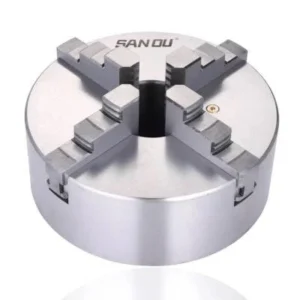 %30 Discount125x4 Sanou 4-Jaw Independent ChuckOriginal price was: 173.14$.121.20$Current price is: 121.20$.View
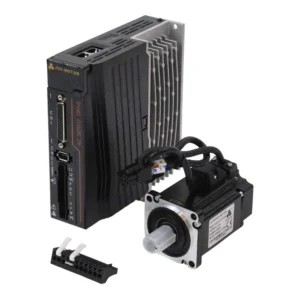 %42 Discount750W Servo Motor Set 80AST-A1C02430 with T3D-L20A-RABF DriverOriginal price was: 382.81$.221.63$Current price is: 221.63$.View

Reviews
There are no reviews yet.