
No products in the cart.
%39 Discount


100 mm Lathe Chuck
Original price was: 97.90$.59.71$Current price is: 59.71$.
High-precision 3-jaw self-centering lathe chuck for secure workpiece clamping in turning, drilling, and threading operations. Robust cast steel body and hardened alloy steel jaws ensure durability and stability.
Out of stock
🔥 Special for Today Only %39 Discount Opportunity!📦 Category: General🏷️ Chuck Jaw Count: 3 Jaws🏷️ Dimensions: 100
Mermak assuranceFrom factory to end user · importer / main dealer · strong stock
ImporterMain dealer / distributorStrong stockGood priceCorporate invoice
Contact us for stock information · 14-day return for standard unused products; conditions may vary for custom size/cut products.
100 mm Lathe Chuck
INDUSTRIAL AUTOMATION PARTS | SUPERIOR PERFORMANCE SERIES
Detailed Product Review
The 100 mm Lathe Chuck, offered by Mermak CNC Technology Market, is a mechanical clamping system designed for precise and repeatable workpiece fixation in machining processes. This self-centering three-jaw chuck ensures axial and radial positioning of the workpiece relative to the lathe’s axis of rotation for operations such as turning, drilling, reaming, and threading. The chuck mechanism consists of a scroll plate and corresponding jaws. Rotating the scroll plate with the provided key simultaneously moves the jaws in or out, enabling quick and accurate workpiece centering. This kinematic design minimizes runout, optimizing dimensional accuracy and surface finish of the final product. The chuck is designed for small to medium-sized workpieces and can absorb vibrations, providing stable clamping force even at high speeds.
Structural integrity is ensured by a body made from high-strength cast steel, offering resistance to deformation under high clamping forces and dynamic loads during cutting. The jaws are manufactured from special alloy steel with excellent wear resistance and hardness, further enhanced by heat treatment. This combination ensures longevity and sustained precision through repeated clamping cycles. The chuck is designed with standard mounting flanges for direct and seamless integration with lathe spindles. Precisely machined mounting surfaces ensure coaxial alignment with the spindle. Applications range from general metalworking shops and precision tool and mold manufacturing to educational laboratories and small to medium-scale production facilities. This chuck provides reliable gripping for various materials including steel, aluminum, brass, plastics, and composites.
100 mm Lathe Chuck Advantages
High Repeatability and Machining Accuracy: This 100 mm lathe chuck, with its self-centering 3-jaw design, offers high repeatability in clamping workpieces without axial deviation. The precision-machined scroll mechanism ensures jaws return to the same center point with each clamping cycle. This minimizes radial runout during machining, enabling superior dimensional accuracy and surface quality, especially for operations requiring tight tolerances (e.g., centering accuracy of 0.05 mm or less). Consistent repeatability in serial production environments reduces part changeover times and guarantees uniform quality.
Structural Integrity for Thermal and Mechanical Stability: The chuck body is made of high-strength cast steel, providing high rigidity and excellent vibration damping. This structural feature helps maintain geometric stability under dynamic loads and thermal expansion at high speeds and heavy cutting conditions. The jaws, made from heat-treated alloy steel, offer high wear resistance, impact strength, and the ability to withstand high clamping forces without deformation. This material engineering ensures long-lasting performance and reliability in demanding industrial environments, minimizing maintenance and operational downtime.
Modular Integration and Operational Efficiency: The 100 mm lathe chuck features a design compatible with standard mounting flanges, allowing quick and seamless integration with various lathe models (manual, CNC, universal). Precisely machined mounting surfaces and standard bolt hole patterns facilitate easy alignment during installation and enhance the connection’s robustness with the machine spindle. The ergonomic key mechanism allows for rapid and secure jaw tightening or loosening, optimizing workpiece changeover times. This modular and user-friendly design boosts operator efficiency and offers flexibility for quick transitions between different machining tasks, improving overall production flow.
Technical Specifications and Capacity
Feature
Value/Description
Chuck Outer Diameter
100 mm
Jaw Type
3-Jaw, Self-Centering
Body Material
High-Strength Cast Steel
Jaw Material
Hardened Alloy Steel
Internal Clamping Capacity (A-A1)
2 – 30 mm
External Clamping Capacity (B-B1)
30 – 90 mm
Centering Accuracy
≤ 0.05 mm
Mounting Connection
3 or 4 Bolt Holes (Standard Flange)
Technical Frequently Asked Questions (FAQ)
How is the self-centering function of this 3-jaw chuck achieved, and how does it affect workpiece concentricity?
The self-centering function of the 100 mm lathe chuck is achieved through an internal scroll plate mechanism. When rotated by the key, the scroll’s threads engage with corresponding threads on the base of the jaws, causing all three jaws to move simultaneously and synchronously towards or away from the center. This mechanism ensures the workpiece is highly concentric (coaxial) with the lathe’s axis of rotation. Concentricity minimizes radial runout during machining, directly impacting the smoothness of machined surfaces and the precision of dimensional tolerances. Low runout (≤ 0.05 mm for this chuck) is critical for operations like precision boring, external turning, and facing.
How do the selected material types for the chuck body and jaws contribute to long-term performance and durability under industrial machining conditions?
The selection of high-strength cast steel for the chuck body optimizes structural rigidity and vibration damping. Cast steel resists deformation under high cutting forces and dynamic loads, effectively absorbing machining vibrations to enhance surface finish. Its thermal stability also minimizes dimensional deviations caused by temperature changes during prolonged operation. The jaws are made from hardened alloy steel, offering high hardness, wear resistance, and impact strength. Heat treatment ensures that the clamping surfaces resist deformation through repeated clamping and unclamping cycles and maintain their integrity against cutting forces. This material combination ensures the chuck operates with high performance and longevity in demanding industrial environments.
What critical considerations should be observed when mounting this 100 mm lathe chuck to a machine spindle for optimal performance and minimal runout?
To achieve optimal performance and minimal runout when mounting the chuck to the machine spindle, several critical points must be observed. First, the machine spindle flange and the chuck’s back mounting surface must be free of chips, dirt, or damage to ensure full and flush contact. Mounting screws should be tightened in a crosswise pattern and incrementally to evenly distribute clamping force and ensure the chuck sits parallel to the flange, preventing mounting-induced stresses or distortions. The final tightening torque should adhere to manufacturer recommendations, avoiding over-tightening. After mounting, check the chuck’s face and radial runout using an indicator gauge. Face runout verifies the perpendicularity of the chuck’s front face to the axis of rotation, while radial runout confirms the concentricity of the chuck’s outer diameter with the axis. These checks confirm mounting accuracy and guarantee machining precision.
What are the technical differences between the internal clamping capacity (2-30 mm) and external clamping capacity (30-90 mm), and in which situations should each be preferred?
Internal clamping capacity (2-30 mm) refers to the situation where the jaws expand outwards against the inner diameter of a workpiece to secure it. This method is typically preferred when machining the outer surfaces of pipes, rings, or hollow cylindrical workpieces. The clamping force is applied radially outwards onto the workpiece’s inner surface. External clamping capacity (30-90 mm) refers to the situation where the jaws close inwards onto the outer diameter of a workpiece. This is commonly used for solid bars or when the internal features of the workpiece must be preserved. The clamping force is applied radially inwards onto the workpiece’s outer surface. Technically, internal clamping often requires lower clamping forces and can increase the risk of deforming thin-walled workpieces, whereas external clamping can provide higher and more stable clamping forces. The workpiece’s geometry, material properties, and the location of the surface to be machined are the primary engineering parameters determining which clamping method is preferred. Both capacities enhance the chuck’s versatility, allowing it to adapt to a wide range of workpieces.
Mermak has 16 years of experience in providing high-quality industrial automation parts. Our products are stocked and prepared from our Ankara Uzay Sanayi factory/warehouse. Current stock quantities and prices are updated on our website. Stocked items are dispatched without production delays. We ensure careful packaging, meticulous invoice and document follow-up, and reliable logistics partners. The Mermak team actively monitors the shipment process. Upon request, we can arrange product videos or factory viewings via WhatsApp or other contact channels. We proudly supply industries in the United Kingdom, United States, Canada, Australia, Ireland, New Zealand, South Africa, and similar countries and international markets.
| Chuck Diameter | |
|---|---|
| Chuck Jaw Count | 3 Jaws |
| Dimensions | 100 |
You must be logged in to post a review.
Taksit Tablosu
Related Products
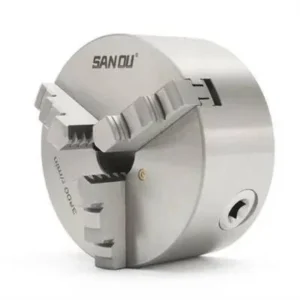 %39 Discount200x3 Sanou Lathe ChuckOriginal price was: 252.89$.154.26$Current price is: 154.26$.View
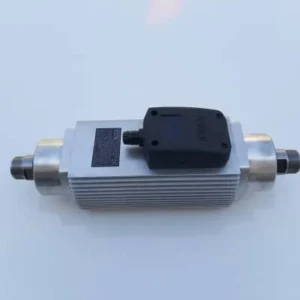 2.2 kW Double Output Spindle Motor for Door and Side Machining | Aggregate Type Motor253.38$View
 %40 Discount1.4 kW Hertz Spindle Motor ER20 18000 RPMOriginal price was: 339.90$.203.94$Current price is: 203.94$.View
Reviews
There are no reviews yet.