
No products in the cart.
%68 Discount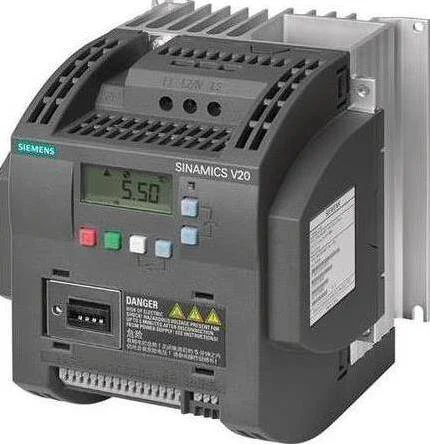







1.1 kW Siemens Sinamics V20 Variable Frequency Drive (VFD) – 220V Single Phase Input
Original price was: 410.35$.132.48$Current price is: 132.48$.
High-performance 1.1 kW (1.5 HP) variable frequency drive for precise control of three-phase asynchronous motors. Single-phase 200-240V input.
In stock
🔥 Special for Today Only %68 Discount Opportunity!📦 Category: Electronics🏷️ Supply Voltage: 220V🏷️ Power: 1.1 kW
Mermak assuranceFrom factory to end user · importer / main dealer · strong stock
ImporterMain dealer / distributorStrong stockGood priceCorporate invoice
In stock / available to order · 14-day return for standard unused products; conditions may vary for custom size/cut products.
1.1 kW Siemens Sinamics V20 Variable Frequency Drive (VFD) – 220V Single Phase Input
INDUSTRIAL AUTOMATION PARTS | SUPERIOR PERFORMANCE SERIES
Detailed Product Review
This 1.1 kW power-rated speed control device, model number Siemens Sinamics V20 6SL3210-5BB21-1UV1, is a frequency converter designed for precise control of the speed, torque, and direction of three-phase asynchronous motors in industrial automation systems. The device takes standard single-phase AC 200-240V mains voltage and produces a variable frequency and voltage three-phase AC output signal through its internal rectifier and inverter circuits. This conversion allows the motor’s synchronous speed to be altered by adjusting the voltage and frequency applied to the motor’s stator windings. Thanks to advanced control algorithms such as V/f (Voltage/Frequency) control and Flux Vector Control (FCC), stable operation is achieved both below and above the motor’s nominal speed, with high torque performance obtainable even at low speeds. This capability offers critical engineering advantages, including control of motor start-up and stop ramps, dynamic adjustment of speed according to process requirements, and reduction of stress on the mechanical system.
The device’s material construction is designed to withstand the harsh conditions of industrial environments; the IP20 protection class indicates a certain level of protection against dust and solid objects, but it is not suitable for direct water contact or excessively humid environments, thus typically requiring installation within a control panel or enclosure. Thermal management is critical for the device’s long-term and stable operation. The FSA frame size offers compact dimensions, and leaving the specified clearances is essential for adequate cooling performance, even when mounted side-by-side. For system integration, the internal RS485 port supports USS and Modbus RTU communication protocols, allowing for easy integration with PLC (Programmable Logic Controller) and HMI (Human Machine Interface) systems, providing centralized control and monitoring capabilities. This 1.1 kW drive is positioned to provide energy efficiency and process optimization in a wide range of industrial applications, including light and medium-duty conveyor belts, fans and pumps in HVAC systems, mixers, kneaders, small-scale extruders, and labeling and filling machines.
Advantages of the 1.1 kW Siemens 220 Speed Control Device
High Performance with Advanced Motor Control Algorithms: Siemens Sinamics V20 supports two primary control modes, V/f (Voltage/Frequency) control and Flux Vector Control (FCC), offering a wide performance spectrum for 1.1 kW asynchronous motors. V/f control typically provides a simple and energy-efficient solution for applications like fans and pumps that do not require constant torque, while the FCC mode allows for more precise torque generation and speed regulation by directly controlling the motor’s stator flux. This ensures more stable and efficient motor operation, especially in applications like conveyors or mixers that require high starting torque at low speeds, minimizing sudden loads on the mechanical system and improving process quality.
Operational Cost Optimization with Integrated Energy Efficiency Functions: The device is equipped with intelligent energy management features such as the integrated ECO mode and “Sleep” (Hibernation) function. ECO mode automatically reduces energy consumption by optimizing motor current when the motor is not under load or under low load conditions. This significantly reduces the current drawn by the motor and consequently the power consumed, especially in variable torque applications like pumps and fans, as the load decreases. The Hibernation function automatically puts the drive and motor into sleep mode if the motor’s load drops below a minimum level for a specified period, saving energy, and automatically wakes up when the load increases again. These mechanisms offer the potential to reduce operational energy costs by up to 60% and contribute to reducing the carbon footprint.
Ease of Installation and Maintenance with Compact Design and Quick Commissioning: The FSA frame size of the Siemens Sinamics V20 is designed to occupy minimal space in industrial control cabinets and allows for side-by-side mounting, which is a significant advantage in applications with limited space or in modernization projects. Despite its compact dimensions, it offers reliable operation without compromising thermal performance. The device’s commissioning process is greatly simplified thanks to the integrated Basic Operator Panel (BOP) and pre-defined application macros (e.g., for pump, fan, conveyor, compressor). These macros allow users to quickly set basic parameters and get the device operational within minutes. This feature significantly reduces the time and labor costs associated with installation and maintenance, optimizing the total cost of ownership and enhancing operational efficiency.
Technical Specifications and Capacity
Feature
Value/Description
Product Code
6SL3210-5BB21-1UV1
Power Output
1.1 kW / 1.5 HP
Input Phase and Voltage
1 Phase AC 200-240 V (-10% / +10%)
Output Current (Nominal)
5.6 A
Control Modes
V/f, Flux Vector Control (FCC)
Communication Ports
USS, Modbus RTU (via RS485)
Protection Class
IP20
Filter Status
No internal EMC filter (Unfiltered)
Technical Frequently Asked Questions (FAQ)
What are the technical implications of the absence of an internal EMC filter in this drive on electromagnetic compatibility (EMC) in industrial environments, and what measures should be taken in such cases?
The absence of an internal EMC filter in the Siemens Sinamics V20 model 6SL3210-5BB21-1UV1 is a factor to consider regarding electromagnetic compatibility (EMC) in industrial environments, especially where sensitive electronic devices or communication systems are present. Frequency converters use switched power electronics (IGBTs) to power the motor, and these switching operations generate high-frequency harmonics and electromagnetic interference (EMI). The lack of an internal filter can cause this noise to reflect back into the mains (conducted emissions) or radiate into the surrounding equipment (radiated emissions). This can lead to malfunctions, data corruption, or even failures in nearby sensors, PLCs, communication cables, or other sensitive electronic devices. To minimize this technical impact, measures such as installing an external EMC filter (e.g., C2 or C3 class) on the drive’s input, using shielded (screened) cable for the motor power supply, ensuring proper grounding of this shielding at both the drive and motor ends, and routing control signal cables separately from power cables, preferably using shielded control cables, should be implemented. This is critical for meeting the requirements of the EN 61800-3 standard and ensuring the overall stability of the system.
What is the technical working principle of the “Keep Running Mode” (activated via parameter P1210) in the Siemens Sinamics V20, and what are its benefits in critical applications?
The “Keep Running Mode” (activated via parameter P1210) in the Siemens Sinamics V20 is an advanced feature designed to prevent production losses by keeping the motor operational even during short-term mains voltage sags or interruptions. The technical working principle of this mode relies on the drive continuously monitoring the internal DC bus voltage. When a mains voltage drop is detected and the DC bus voltage falls below a certain threshold, the drive uses the motor’s kinetic energy to support the DC bus voltage. This occurs as the motor operates like a generator, feeding energy back to the DC bus. During this time, the drive may temporarily reduce the motor speed (kinetic buffering) or attempt to maintain the motor at a minimum speed. When the mains voltage returns to normal, the drive ramps the motor back up to the set speed. The benefits of this function in critical applications are significant: especially in regions with unstable power grids or in processes where even momentary stoppages incur high costs (e.g., continuous production lines, textile machinery, extruders), the “Keep Running Mode” allows the drive to continue operating without faulting, minimizing production interruptions and the resulting scrap. This enhances the overall reliability and availability of the system, ensuring operational continuity.
What are the fundamental technical differences between the V/f control mode and the Flux Vector Control (FCC) mode in the Sinamics V20, and what engineering criteria should be considered when selecting the correct control mode for a specific application?
The V/f (Voltage/Frequency) control mode and the Flux Vector Control (FCC) mode in the Sinamics V20 operate on different principles for controlling asynchronous motors. V/f control attempts to control the motor’s magnetic flux and thus its torque by maintaining a constant ratio between the voltage applied to the motor’s stator windings and the frequency. This method, due to its simple structure and low processing power requirement, is generally preferred for applications with variable torque, such as fans and pumps, where precise speed regulation is not critical. However, the motor’s torque-producing capability at low speeds is limited, and its response to speed changes is slower. FCC, on the other hand, allows for independent control of the motor’s stator current and the torque-producing current components. This enables direct control of the motor’s magnetic flux, providing high and stable torque output even at low speeds and a more dynamic response to speed changes. FCC offers more precise speed and torque control by tracking the motor’s slip frequency. Engineering criteria to consider when selecting the correct control mode for an application include: the application’s torque requirements (constant torque or variable torque?), the required speed regulation accuracy (what tolerance is acceptable?), the expected low-speed torque performance, the required dynamic response time, and cost constraints. For instance, FCC mode is more suitable for applications requiring constant torque and precise speed control, such as conveyor belts or mixers, while V/f control offers a sufficient and more economical solution for variable torque applications with less stringent precision requirements, like ventilation fans or circulation pumps.
Why is the correct entry of motor parameters (P0304 – P0311) critical for ensuring optimal performance and protection of a 1.1 kW asynchronous motor with a Sinamics V20 drive, and what do these parameters represent?
The correct entry of motor parameters (P0304 – P0311) is critical for ensuring optimal performance and protection of a 1.1 kW asynchronous motor with a Siemens Sinamics V20 drive because the drive learns the motor’s electrical and mechanical characteristics through these parameters and adjusts its control algorithms accordingly. Motor parameters allow the drive to accurately model the motor, detect overload conditions, provide thermal protection, and operate most efficiently. These parameters are typically obtained from the motor’s nameplate and represent: P0304 (Motor nominal voltage), P0305 (Motor nominal current), P0307 (Motor nominal power), P0308 (Motor nominal power factor), P0309 (Motor nominal frequency), P0310 (Motor nominal speed), and P0311 (Motor nominal efficiency). Incorrect entry of these values can lead the drive to operate the motor with an inaccurate model, potentially causing the motor to overheat, operate inefficiently, fail to produce its nominal torque, or even sustain permanent damage. For example, an incorrect nominal current entry can lead to the drive miscalculating the motor’s overload protection threshold. An incorrect nominal speed entry can negatively impact the accuracy and dynamic response of speed control. Correct parameter entry ensures that the drive effectively utilizes the motor protection functions (thermal model, overcurrent protection), maximizes energy efficiency, and extends the motor’s lifespan, thereby enhancing the overall reliability and performance of the system.
Mermak has 16 years of experience in industrial automation. Our products are stocked and prepared from our Ankara Uzay Sanayi factory/warehouse. Website stock quantities and prices are up-to-date. Stocked products are dispatched without production waiting. We ensure careful packaging and diligent invoice/document follow-up. We partner with reliable logistics providers, and the Mermak team monitors the shipment process. Upon request, product videos or factory viewings can be arranged via WhatsApp or other contact channels. We proudly supply industries in the United Kingdom, United States, Canada, Australia, Ireland, New Zealand, South Africa, and similar countries and international markets.
| Supply Voltage | 220V |
|---|---|
| Power | 1.1 kW |
You must be logged in to post a review.
Taksit Tablosu
Related Products
 %68 Discount0.55 kW Variable Frequency Drive - Siemens SINAMICS V20 (380V)Original price was: 601.93$.194.40$Current price is: 194.40$.View
 %42 Discount1.5 kW Servo Motor Kit with Brake 130ST-M06025 T3A-L30F-RABFOriginal price was: 1,135.91$.657.62$Current price is: 657.62$.View
 %68 Discount5.5 kW Variable Speed Drive - Siemens 380VOriginal price was: 1,342.30$.433.44$Current price is: 433.44$.View
Reviews
There are no reviews yet.