



































































Trapez Screw vs. Ball Screw: Key Differences for Industrial Applications

📑 Table of contents (Click to open)
- Trapez Screw vs. Ball Screw: Understanding the Core Differences
- Operating Principles and Technical Specifications
- Trapez Screw (Tr Screw) Operating Principle and Characteristics:
- Ball Screw (BS) Operating Principle and Characteristics:
- Key Considerations for Industrial Applications
- Choosing the Right Linear Motion System
- Conclusion
Trapez screws offer a simple, economical solution with self-locking potential, ideal for low-speed, low-precision tasks. In contrast, ball screws utilize recirculating ball bearings for high efficiency, precision, speed, and load capacity, though at a higher cost and complexity. The choice depends on your project’s specific requirements for precision, speed, load, and budget.
Practical notes for CNC router, automation and industrial motion systems.
Trapez Screw vs. Ball Screw: Understanding the Core Differences
In industrial automation and machine design, achieving linear motion is fundamental. Two primary components used for converting rotational motion into linear motion are the Trapez Screw (Tr Screw) and the Ball Screw (BS). While both serve the same basic function, their operating principles, performance characteristics, costs, and application suitability vary significantly. Understanding these distinctions is crucial for engineers and designers to select the most appropriate system for a given application.
A Trapez Screw, named for its trapezoidal thread profile, relies on direct contact between the screw’s threads and a matching nut. This direct contact results in sliding friction, making the system simpler and generally more economical. It often offers a self-locking capability under specific conditions.
Conversely, a Ball Screw is engineered for high-precision linear motion. Its key innovation is the use of recirculating ball bearings positioned between the screw and the nut. These balls roll within precisely machined grooves, transforming sliding friction into rolling friction. This dramatically reduces friction and energy loss, enabling ball screws to deliver superior efficiency, accuracy, speed, and load-carrying capacity. However, this advanced performance comes with increased complexity and a higher price point.
Operating Principles and Technical Specifications
The fundamental differences in how trapez screws and ball screws operate directly influence their technical performance.
Trapez Screw (Tr Screw) Operating Principle and Characteristics:
Operating Principle: The trapez screw utilizes the principle of sliding friction. A nut, typically made of bronze, brass, or specialized plastic, engages directly with the trapezoidal threads on the screw. As the screw rotates, the nut moves linearly along it due to this sliding contact.
- Efficiency: Due to sliding friction, efficiency is relatively low, typically ranging from 25% to 50%. A significant portion of motor power is lost as heat.
- Accuracy: Precision is generally lower due to manufacturing tolerances, wear, and inherent backlash. Backlash can increase over time with use.
- Speed and Load Capacity: High speeds and heavy loads can lead to excessive heat and wear because of friction. They are best suited for low to moderate speed and load applications.
- Backlash: A natural gap usually exists between the screw and nut threads. This can cause a slight delay or positional error during direction changes. While anti-backlash nuts can mitigate this, complete elimination is difficult.
- Self-Locking: With specific lead angles (especially on lower-lead screws), the friction can be sufficient to prevent the load from driving the nut backward when the motor stops. This can eliminate the need for an additional braking mechanism.
- Cost: Manufacturing processes are simpler, resulting in a significantly lower cost compared to ball screws.
- Maintenance: Requires regular lubrication. It is generally more tolerant of dirty environments than ball screws.

Ball Screw (BS) Operating Principle and Characteristics:
Operating Principle: A ball screw system operates using recirculating ball bearings that roll between the precisely machined helical grooves on the screw shaft and matching grooves within the nut. As the screw rotates, these balls enable the nut to move linearly with minimal friction. The balls are continuously circulated within the nut assembly.
- Efficiency: With rolling friction, efficiency is very high, often exceeding 90%. This allows for moving heavier loads with the same power input or consuming less energy.
- Accuracy: Offers high precision and repeatability. Manufacturing tolerances are extremely tight, and backlash can be virtually eliminated through preloading. This is critical for applications like CNC machines and robotics.
- Speed and Load Capacity: Low friction and high rigidity allow for operation at very high speeds and under heavy loads with consistent performance. Ideal for high-dynamic loads and continuous operation cycles.
- Backlash: Preload can be applied to minimize or eliminate backlash, ensuring precise positioning even during direction reversals.
- Self-Locking: Due to their high efficiency and low friction, ball screws are not inherently self-locking. External braking or counterbalancing mechanisms are necessary for vertical applications or when holding a load stationary is critical.
- Cost: The precision manufacturing and specialized components contribute to a significantly higher cost than trapez screws.
- Maintenance: Requires regular lubrication with specialized greases or oils. Highly sensitive to contamination, necessitating protective bellows or seals.
| Parameter | Trapez Screw | Ball Screw |
|---|---|---|
| Operating Principle | Sliding Friction | Rolling Friction (Balls) |
| Efficiency | Low (25% – 50%) | High (90%+) |
| Accuracy & Repeatability | Low / Moderate | High / Very High |
| Speed Capacity | Low / Moderate | High / Very High |
| Load Capacity | Moderate (Wear increases) | High (Longer life) |
| Backlash | Inherent, difficult to eliminate | Adjustable to near-zero with preload |
| Self-Locking | Possible with low leads | Not inherent, requires brake |
| Cost | Low | High |
| Contamination Resistance | More Tolerant | Sensitive, requires protection |

Key Considerations for Industrial Applications
- Proper Selection and Sizing: Clearly defining the application’s load, speed, precision, duty cycle, and expected lifespan is the first step in choosing the correct screw type and size. Oversizing increases cost, while undersizing leads to premature failure. Pay close attention to dynamic and static load ratings.
- Mounting and Alignment Precision: Both trapez and ball screws require precise alignment. Misalignment can lead to premature wear, increased friction, and reduced performance. Ball screws are particularly sensitive to misalignment due to their tight tolerances. Ensure the mounting surfaces of your CNC router machine or other automated equipment are perfectly parallel and rigid.
- Lubrication and Maintenance: Regular and appropriate lubrication is critical for both types, but the requirements differ. Trapez screws benefit from consistent lubrication to reduce wear. Ball screws require specific greases to maintain the integrity of the ball bearings and prevent contamination.
- Environmental Factors: For dusty or dirty environments, consider protective measures like bellows or seals, especially for ball screws. Trapez screws may offer a more robust solution in less controlled conditions, provided they are adequately lubricated.
- Cost vs. Performance: The decision often hinges on balancing initial cost against long-term performance and operational requirements. For high-precision, high-speed, or high-duty cycle applications, the investment in a ball screw is typically justified by its superior performance, efficiency, and longevity. For simpler, less demanding tasks where cost is a primary driver, a trapez screw can be a perfectly adequate solution.
Choosing the Right Linear Motion System
The selection between a trapez screw and a ball screw is not a one-size-fits-all decision. It requires a thorough analysis of the specific demands of your industrial application. For applications requiring high precision, such as in advanced industrial CNC router setups, robotics, or precision automation, ball screws are generally the preferred choice due to their accuracy, efficiency, and speed capabilities. The use of high-performance servo drives and precise motion control systems often pairs best with the capabilities of ball screws.
On the other hand, trapez screws are excellent choices for applications where cost-effectiveness is paramount, and the requirements for precision and speed are moderate. Examples include manual positioning systems, simple material handling, or applications where self-locking is a beneficial feature, such as certain types of lifting mechanisms. They are a reliable option when the primary goal is basic linear actuation without extreme performance demands.
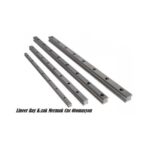
Consider the entire system: the spindle motor driving the screw, the rigidity of the machine structure, the type of linear guide rails used (e.g., linear guide rail systems), and the control system all play a role in the overall performance. A well-integrated system ensures that the chosen linear motion component can perform optimally.
Conclusion
Both trapez screws and ball screws are vital components in the realm of linear motion control for industrial machinery. Trapez screws offer an economical and straightforward solution suitable for less demanding applications, often featuring self-locking properties. Ball screws, while more expensive, provide unparalleled precision, efficiency, and speed, making them indispensable for high-performance systems like modern CNC machines. By carefully evaluating your project’s specific needs—precision, speed, load capacity, duty cycle, and budget—you can make an informed decision that optimizes performance and reliability.
For expert advice on selecting the ideal linear motion components for your specific industrial needs, including CNC routers and automation systems, contact Mermak CNC today.
Related product categories: Vidalı Mil · Genel · Bilyalı Kilit