




































































CNC Machining Surface Wave Defects: Mechanical or Electronic Issues?
📑 Table of contents (Click to open)
Practical notes for CNC router, automation and industrial motion systems.
Understanding Surface Wave Defects in CNC Machining
Surface wave defects, appearing as ripples or undulations on machined parts, significantly degrade the quality and precision of finished components. These imperfections arise from inconsistencies in the CNC machine’s axis movement or the interaction between the cutting tool and the workpiece. Identifying the precise origin of these waves is the crucial first step toward effective resolution. Often, these precision losses are not due to a single cause but result from the complex interplay between the mechanical system and the electronic control system. Mechanical issues typically stem from physical wear, backlash, vibration, or a lack of structural rigidity, while electronic problems can originate from servo motor control, feedback systems, drive settings, or controller software errors.
How CNC Machines Work and Technical Data
CNC (Computer Numerical Control) machines execute precise cutting operations through the coordinated movement of axes and a rotating spindle, guided by a pre-programmed sequence. The core principle involves the CNC controller sending commands, which are interpreted by servo drives to supply electrical current to servo motors. These motors then drive the mechanical motion systems, such as ball screws and linear guide rails. Each axis’s position is continuously monitored by feedback devices like encoders or resolvers, reporting back to the controller to maintain a closed-loop system. When surface waves occur, it indicates an anomaly at some point within this control loop.
Mechanical Causes of Surface Waves:
- Backlash: Wear in ball screws or gearboxes can lead to play in axis movement, causing wavy surfaces, especially during direction changes or contouring.
- Vibration and Resonance: When the natural frequency of the machine structure, workpiece, or tool coincides with cutting forces or motor speeds, resonance can occur, inducing vibrations that degrade cut quality. Spindle bearings, motor mounts, or inadequate workpiece clamping can also contribute.
- Lack of Rigidity: Insufficient rigidity in the machine frame, axis guides, tool holder, or clamping system causes flexing under cutting forces. These deflections lead to micro-deviations in the tool path, resulting in surface waves.
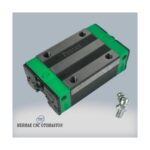
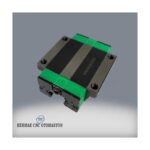
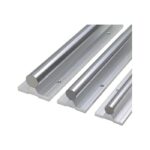
- Worn or Damaged Mechanical Components: Wear in linear guides, ball screws, couplings, spindle bearings, or motor bearings increases friction and causes irregular motion.
- Tooling and Tool Holder Issues: Poorly balanced tools, incorrect clamping, worn cutting edges, or runout in the tool holder can also lead to wavy surfaces.
Electronic Causes of Surface Waves:
- Servo Tuning Issues (Gain Tuning): Incorrect PID (Proportional-Integral-Derivative) gain settings for servo motors, not matched to the machine’s mechanics and inertia, can cause the servo system to overreact (overshoot) or oscillate (hunt), leading to waves.
- Feedback System Errors: Noise, signal loss, or inaccuracies in feedback signals from encoders or resolvers cause the controller to misinterpret motor position, leading to corrective actions that generate waves. Dirty encoder disks or loose cable connections are common culprits.
- Drive or Motor Faults: Power module failures in servo drives, control board issues, or partial faults in servo motor windings can impair proper torque generation and precise motion control.
- Electrical Noise: Electrical interference (EMI/RFI) from other machinery can affect control signals. Proper grounding and shielded cabling are essential to prevent this.
- CNC Controller Issues: Rarely, controller processing speed, programming errors, interpolation algorithm problems, or software bugs can contribute to wave formation.
| Parameter | Value/Description |
|---|---|
| Wave Type | Periodic or irregular oscillations, marks on the surface |
| Potential Mechanical Causes | Ball screw backlash, linear guide wear, coupling looseness, spindle runout, workpiece clamping rigidity, tool imbalance, resonance vibrations |
| Potential Electronic Causes | Servo gain settings (PID), encoder/resolver faults, feedback noise, servo drive/motor faults, cabling issues, electrical interference |
| Diagnostic Methods (Mechanical) | Dial indicator, laser interferometer, vibration analyzer, acoustic sensors, manual backlash check, cutting tests |
| Diagnostic Methods (Electronic) | Signal analysis with oscilloscope, servo drive diagnostic software, encoder tester, grounding check, parameter backup/comparison |
| Preventive Maintenance (Mechanical) | Regular lubrication, screw/guide inspection, coupling tightness check, spindle bearing replacement, tool holder maintenance, machine calibration |
| Preventive Maintenance (Electronic) | Cabling inspection, grounding check, servo parameter backup, regular system diagnostics, voltage checks |

Practical Considerations on the Shop Floor:
- Systematic Troubleshooting: When diagnosing issues, start with the simplest and most probable causes before moving to more complex ones. For instance, verify the condition of the tool and tool holder first, then check for mechanical backlash, and finally examine electronic parameters.
- Machine History and Maintenance Logs: Reviewing maintenance records provides valuable information on component replacements and adjustments. Understanding when the waves started and under which operations can help narrow down the problem.
- Environmental Conditions: Ambient temperature, humidity, floor vibrations, and electrical noise from other equipment can affect cutting quality. Sudden changes in environmental conditions may trigger wave formation.
- Tooling and Workpiece Clamping: Proper tool selection, cutting parameters (spindle speed, feed rate, depth of cut), and secure workpiece clamping are vital for preventing vibrations and subsequent waves. Worn or unbalanced tools are frequent causes.
- Visual and Auditory Checks: Listen for unusual noises (squeaks, clicks, hums) or observe vibrations during operation, which can indicate mechanical issues. The pattern and frequency of surface waves can also offer clues about the source.
- Parameter Backup and Comparison: Backing up and periodically comparing machine parameters, especially servo settings, is crucial for detecting unintended changes. An accidental parameter adjustment can easily lead to machining defects.
Addressing surface wave defects requires a methodical approach, often involving a combination of mechanical adjustments and electronic tuning. By systematically investigating potential causes, from the rigidity of the mechanical components to the precision of the electronic control system, you can restore optimal performance and achieve the high-quality finishes your industrial applications demand.
If you are experiencing persistent issues with surface quality on your CNC router machine, our experts are ready to assist. Request a quote on WhatsApp to discuss your specific needs and explore solutions.
Related product categories: Genel