








































































Why is My CNC Machine Cutting Circles Oval Instead of Round?
📑 Table of contents (Click to open)
Discover why your CNC machine might be cutting circles imperfectly round. This article explores common issues like mechanical backlash, axis misalignment, servo drive calibration, and tool wear, providing practical insights for industrial buyers.
Practical notes for CNC router, automation and industrial motion systems.
Understanding Oval Circle Cuts on CNC Machines
CNC (Computer Numerical Control) machines achieve circle cutting through the synchronized movement of multiple axes, typically X and Y, guided by G-code commands like G02 (clockwise) and G03 (counter-clockwise) for circular interpolation. These commands instruct the machine’s control unit to move the cutting tool along a precise circular path defined by a center point and radius. However, any deviation in this synchronized motion can result in an oval or elliptical shape instead of a perfect circle. This is a critical quality issue in industrial manufacturing, especially for high-precision components. Ovality often stems from issues in synchronized axis movement, leading to discrepancies in speed, acceleration, or positioning. Identifying and rectifying these errors is crucial for maintaining machine performance and product quality.
How CNC Machines Cut Circles & Technical Data
During a circle cut, a CNC machine utilizes G02 (clockwise) or G03 (counter-clockwise) commands for circular interpolation. These commands direct the control unit to coordinate the movement of axes (e.g., X and Y) around a specified center point (using I, J, K offsets) and radius (R). The precision of this movement relies heavily on the machine’s mechanical integrity, electronic components, and software algorithms.
Common technical factors contributing to ovality include:
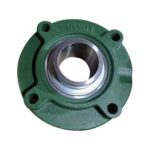
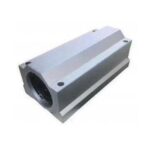
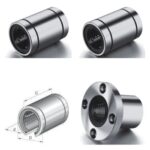
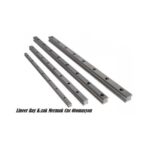
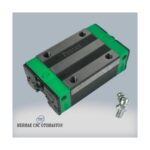
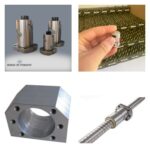
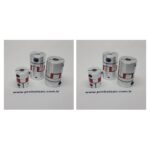
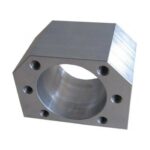
- Mechanical Backlash: Wear or looseness in ball screws, nuts, couplings, bearings, and linear guide rails creates play in the axes. This play becomes evident during direction changes, causing the tool to deviate from the intended path and resulting in flat spots or ovality. For instance, backlash in the X-axis can lead to inaccurate positioning during X-axis movements.
- Axis Perpendicularity Error: If the X and Y axes are not precisely at a 90-degree angle to each other, the resulting cut will consistently be elliptical. This can be due to initial machine setup inaccuracies or structural deformation over time. Precise measurement tools like laser interferometers can detect this.
- Servo Motor and Drive Miscalibration: Servo motors drive the axes. Incorrect PID (Proportional-Integral-Derivative) gain settings in the servo drives can cause delays (lag) or overshoots in motor response. This desynchronization during circular interpolation leads to oval cuts. If one axis responds slower than the other, the circle will elongate in that axis’s direction.
- Encoder Resolution and Feedback Issues: Encoders provide precise position feedback from servo motors and axes to the control unit. Low-resolution encoders or faulty feedback systems can lead to the control unit misinterpreting the actual axis position, causing movement errors and ovality.
- CNC Control Parameters: Internal interpolation algorithms, acceleration/deceleration ramps, backlash compensation values, and other system parameters within the control unit significantly impact cutting accuracy. Incorrectly set parameters can introduce errors during circular motion.
- Cutting Tool and Holder Issues: A worn, dull, or improperly selected cutting tool can lead to uneven cutting forces. Runout (Total Indicator Runout – TIR) in the tool holder or the tool itself can cause the tool to deviate from its nominal center, resulting in inconsistent cut diameters and an oval appearance.
- Material Properties and Workholding: Inconsistent material hardness can alter cutting resistance, causing micro-deviations in axis movement. Inadequate workholding can lead to vibrations or slippage, negatively impacting cutting precision.
| Parameter | Value/Description |
|---|---|
| Axis Backlash Tolerance | Typically below 0.02 mm; exceeding this increases ovality risk. |
| Servo Drive PID Gains | P (Proportional), I (Integral), D (Derivative) values critical for axis response time and stability. |
| Encoder Resolution | Minimum 1000 PPR (Pulses Per Revolution); 5000+ PPR for high-precision applications. |
| Cutting Tool Runout (TIR) | Maximum 0.01 mm; higher values degrade cut quality. |
| Axis Perpendicularity | Ideal 90° ± 0.005° deviation tolerance between X and Y axes. |
| Feed Rate | Optimal mm/min setting based on material type, tool diameter, and cutting depth. |
| CNC Control Interpolation Speed | Number of blocks the control unit can process per second; precision loss at high speeds. |

Practical Considerations for Industrial Operations
- Periodic Mechanical Checks and Maintenance:
Mechanical wear and looseness are primary sources of issues. Regularly inspect and clean ball screws, nuts, linear guides, bearings, and couplings. Perform backlash tests periodically and address any detected play. Looseness, especially at direction changes, directly causes ovality in circle cuts. Proper lubrication and timely replacement of worn parts are vital for maintaining mechanical precision and extending machine life.
- Axis Perpendicularity Adjustment:
Ensuring the X and Y axes are precisely perpendicular (90 degrees) is fundamental for accurate circle cutting. This alignment is typically set during installation using laser interferometers or precision squares. However, structural stresses, deformations, or impacts can alter this perpendicularity over time. If ovality is consistent and directional, re-checking and adjusting axis perpendicularity is necessary. This often requires specialized equipment and trained technicians.
- Servo Motor and Drive Optimization:
PID gain settings in servo motors and drives dictate axis dynamic response. Incorrect PID values can lead to lag or overshoot, disrupting axis synchronization during circular interpolation and causing ovality. Modern servo drives often feature auto-tuning functions, or manual tuning by an expert can optimize performance. Proper tuning ensures smooth, accurate circular movements, critical for high-quality parts. For optimal performance, consider Mermak’s range of industrial CNC routers equipped with advanced motion control systems.
- Encoder System Verification:
Verify the integrity and resolution of your encoder system. Ensure encoders are clean, securely mounted, and functioning correctly. If using older machines, consider upgrading to higher-resolution encoders for improved positional accuracy. Faulty feedback signals are a direct cause of motion errors that manifest as geometric inaccuracies like ovality.
- Cutting Tool Condition and Selection:
Always use sharp, appropriate cutting tools for the material being machined. Inspect tools for wear and chipping before each operation. Ensure the tool holder has minimal runout. Using the correct tool geometry and maintaining its sharpness prevents excessive cutting forces that can deflect the tool and distort the cut path, contributing to ovality.
- CNC Control Parameter Tuning:
Consult your CNC machine’s manual for recommended parameters related to circular interpolation, acceleration/deceleration ramps, and backlash compensation. Fine-tuning these parameters, often in conjunction with servo drive tuning, can significantly improve circular cutting accuracy. For complex geometries or high-speed cutting, advanced control parameters may need expert adjustment.
Addressing these factors systematically will help diagnose and resolve the issue of oval circle cuts, ensuring the precision and quality expected from your industrial CNC router machine. For further assistance or to explore advanced CNC solutions, contact Mermak CNC.
Need a reliable industrial CNC router machine for precise cuts? Request a quote on WhatsApp today!
