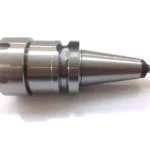


































































BT30 ER32 Tool Holder
Detailed Product Review
The BT30 ER32 Tool Holder is a critical interface component designed for high-precision, rigidity, and high-performance material removal operations in modern CNC machining centers. The BT30 taper structure ensures that the tool holder fits perfectly into the machine spindle taper according to the JIS B 6339 standard, especially in compact and medium-sized machining tools. This provides maximum contact area, thus offering a vibration-free working environment even under high axial and radial loads. This taper geometry enhances the centering accuracy of the tool relative to the spindle axis, while guaranteeing superior stability and resistance against dynamic forces that may occur during machining. The integrated ER32 collet system, in accordance with the DIN 6499 standard, offers a flexible, reliable, and high-clamping force solution for a wide range of tool diameters (typically from 2mm to 20mm). ER collets are characterized by high clamping force and low runout (TIR – Total Indicator Runout) values; these features are fundamental parameters that directly affect the machined surface quality, part geometry accuracy, and cutting tool life.
This tool holder is manufactured from high-alloy steel to withstand the demanding operating conditions required by industrial automation. The precise heat treatment of the taper shank to a hardness of 58-62 HRC (Rockwell Hardness C scale) significantly increases wear resistance while maintaining core strength, optimizing impact and fatigue resistance. The taper grinding process with AT3 or better accuracy ensures near 100% contact between the tool holder and the spindle, maximizing the tool’s centering accuracy, repeatability, and torque transmission capacity. Dynamic balancing of the product at G6.3/15000 RPM or optionally at G2.5/25000 RPM minimizes vibrations caused by centrifugal forces during high-speed machining operations. This balancing process is performed according to the ISO 1940-1 standard, offering an internationally recognized quality level, extending spindle life, reducing tool wear, and contributing to achieving mirror surface quality on machined parts. These technical specifications enable the tool holder to exhibit superior performance in applications requiring high precision and efficiency in CNC milling, mold making, aerospace, medical, and automotive sectors, serving clients in countries like the United Kingdom, United States, Canada, Australia, Ireland, and New Zealand, as well as similar international markets.
BT30 ER32 Tool Holder Advantages
High Runout Accuracy (TIR ≤ 0.005mm): The Total Indicator Runout (TIR) value of ≤ 0.005mm at the tool tip provided by this tool holder is a critical parameter directly affecting the final part quality achieved in machining processes. Low TIR ensures that each cutting edge of the tool makes equal and balanced contact with the material, minimizing microscopic undulations and marks on machined surfaces. This allows for mirror-like finishes, especially in applications requiring high surface quality such as precision mold making, optical component manufacturing, and medical implant machining. Furthermore, equal load bearing on all edges of the cutting tool extends tool life, optimizes chip formation, and reduces fluctuations in cutting forces, thereby increasing machining stability.
Advanced Dynamic Balancing (G6.3 / 15000 RPM, Optional G2.5 / 25000 RPM): Dynamic balancing of the tool holder to ISO 1940-1 standard at G6.3/15000 RPM or optionally at G2.5/25000 RPM is essential for minimizing vibrations caused by centrifugal forces during high-speed machining operations. Vibrations arising from unbalanced mass distribution can lead to excessive load on spindle bearings, premature wear of the cutting tool, deterioration of surface quality, and increased machining noise. This advanced balancing ensures stable rotation of the tool holder even at high speeds, extending the life of spindle bearings, optimizing cutting tool life, contributing to superior surface quality and geometric accuracy of machined parts, and enhancing overall machining efficiency. The G2.5 balancing class is specifically designed for ultra-high-speed and precision applications.
Optimized Material and Taper Tolerance (AT3): This tool holder is manufactured from high-alloy steel, and the heat treatment of the taper shank to a hardness of 58-62 HRC provides superior wear resistance on the surface while maintaining core toughness and impact resistance due to lower hardness in the core. This dual-phase structure ensures the tool holder is long-lasting and does not deform even under harsh cutting conditions. The taper tolerance being at AT3 or better standard guarantees maximum contact area (typically over 90%) between the tool holder and the machine spindle’s taper seat. This high contact ratio increases torque transmission capacity, prevents fretting corrosion, reduces microscopic movements and vibrations at the interface between the tool holder and the spindle, thereby significantly enhancing machining rigidity and accuracy.
Technical Specifications and Capacity
Feature
Value/Description
Taper Type
BT30 (Compliant with JIS B 6339 standard)
Collet System
ER32 (Compliant with DIN 6499 standard, 2mm-20mm tool clamping range)
Runout Accuracy (TIR)
≤ 0.005mm (Total Indicator Runout at tool tip)
Taper Tolerance Standard
AT3 or better (For maximum contact and rigidity with spindle)
Standard Balancing
G6.3 / 15000 RPM (Dynamically balanced according to ISO 1940-1)
Optional Balancing
G2.5 / 25000 RPM (For high-speed and precision demanding applications)
Material and Hardness
High-Alloy Steel, Taper Shank: 58-62 HRC
Product Barcode No
8692024009330
Technical Frequently Asked Questions (FAQ)
What is the primary impact of the BT30 taper structure on machining performance, and to which industrial standards is it manufactured?
The BT30 taper structure is an interface standard that ensures the tool holder is connected to the CNC machining center spindle with high precision. This taper is designed in accordance with the JIS B 6339 standard and creates a large contact area between the spindle seat and the tool holder, offering superior rigidity and torque transmission capacity. The high contact area allows for uniform distribution of axial and radial loads generated during machining, minimizing vibrations and increasing the tool’s centering accuracy. This situation maximizes the stability of the cutting tool, improves surface quality, extends tool life, and guarantees the geometric accuracy of machined parts, especially in high-speed and precision material removal operations. The BT30 taper is optimized for high performance and efficiency in compact and medium-sized machining tools.
Can you technically explain how the ER32 collet system ensures tool clamping accuracy and flexibility?
The ER32 collet system is a versatile and high-precision tool clamping mechanism designed according to the DIN 6499 standard. When the collet nut is tightened, its conical outer surface is pushed into the internal taper of the tool holder, causing the inner diameter of the collet to constrict and grip the cutting tool with high clamping force. ER32 collets typically offer flexibility across a wide range of tool diameters, from 2mm to 20mm, allowing the use of a single tool holder for different tool sizes. The slits on the collet ensure uniform deformation of the collet during clamping and guarantee axial centering of the tool. This design allows for low Total Indicator Runout (TIR) values, such as ≤ 0.005mm at the tool tip, thereby increasing machining accuracy, extending cutting tool life, and optimizing machined surface quality. Additionally, the collet’s self-releasing feature facilitates tool changes and enhances operational efficiency.
What do the dynamic balancing levels of the tool holder (G6.3/15000 RPM and G2.5/25000 RPM) mean, and what are their effects on machining processes?
Dynamic balancing is the process of optimizing the mass distribution of a rotating component (in this case, the tool holder) to minimize centrifugal force-induced vibrations that may occur at a specific operating speed, according to the ISO 1940-1 standard. The G-class (e.g., G6.3 or G2.5) indicates the permissible residual unbalance and thus the vibration level; a lower G value means higher balancing precision. G6.3/15000 RPM indicates that the tool holder is balanced to remain within a certain vibration tolerance while operating at 15000 revolutions per minute. The optional G2.5/25000 RPM offers an even tighter vibration tolerance at higher speeds, such as 25000 RPM. These balancing levels extend the life of spindle bearings in high-speed machining operations, reduce cutting tool wear, improve machined surface quality, lower machining noise, and enhance overall machine stability. G2.5 balancing is critical for high-precision and ultra-high-speed applications, as even the slightest imbalances can have destructive effects at high RPMs.
How do the material selection and heat treatment (58-62 HRC hardness) of the tool holder affect its durability and performance?
This BT30 ER32 Tool Holder is manufactured from high-alloy steel, a material choice that offers excellent mechanical properties such as high strength, toughness, and fatigue resistance. The precise heat treatment applied to the taper shank, particularly through surface hardening methods like carburizing, achieves a hardness of 58-62 HRC (Rockwell Hardness C scale). This hardness value maximizes the wear resistance of the surfaces where the tool holder contacts the spindle, thus ensuring the preservation of taper accuracy and clamping precision even with prolonged use. Simultaneously, the heat treatment ensures that the core of the tool holder remains tougher and more ductile. This differentiated hardness profile allows the tool holder to be resistant to surface wear while also being able to absorb impact loads and dynamic stresses generated during machining. Consequently, the combination of optimized material and heat treatment significantly extends the operational life of the tool holder, reduces the risk of deformation, and guarantees consistent and reliable performance in demanding industrial environments.