
No products in the cart.
%36 Discount

60×60 Sigma Profile 10 Channel
Original price was: 46.07$.29.54$Current price is: 29.54$.
High-strength aluminum extrusion profile for industrial automation, machine frames, and modular construction projects.
In stock
🔥 Special for Today Only %36 Discount Opportunity!📦 Category: 10 Channel Sigma Profiles🏷️ Dimensions: 60x60🏷️ Slot Size: 10 Slots🏷️ Profile Size: 60x60
Mermak assuranceFrom factory to end user · importer / main dealer · strong stock
ImporterMain dealer / distributorStrong stockGood priceCorporate invoice
In stock / available to order · 14-day return for standard unused products; conditions may vary for custom size/cut products.
60X60 Sigma Profile 10 Channel
INDUSTRIAL AUTOMATION PARTS | SUPERIOR PERFORMANCE SERIES
Detailed Product Review
The 60×60 Sigma Profile 10 Channel is a high-strength aluminum extrusion profile designed for industrial automation systems, machine frames, and modular construction projects. The 60mm by 60mm square cross-section is optimized to provide superior structural integrity, especially in applications requiring high bending moment and torsional rigidity. Its internal geometry is designed to maximize the moment of inertia while minimizing weight, offering minimal deformation and vibration damping capacity even under dynamic loads. The 10mm wide T-channels on all four surfaces ensure perfect compatibility with standard M10 T-nuts and associated fasteners, allowing for versatile mounting options and rapid system integration. This design enables engineers to easily construct complex structures using bolted connections without the need for welding or special machining, and to modify them as needed, thereby ensuring time and cost efficiency in prototyping and production processes.
The material composition of the profile typically consists of a high-performance aluminum alloy such as EN AW-6063 T6. This alloy, achieved through controlled proportions of silicon and magnesium, possesses excellent extrudability and high mechanical properties after heat treatment. The T6 heat treatment significantly increases the material’s yield and tensile strength through precipitation hardening, enhancing the profile’s resistance to permanent deformation even under heavy static and dynamic loads. The anodized surface treatment (anodization) creates a controlled electrochemical oxidation process on the aluminum surface, forming a micron-level, hard, and porous aluminum oxide layer. This layer enhances the profile’s wear resistance and acts as a superior barrier against chemical corrosion, environmental factors, and UV radiation. Furthermore, the anodized finish makes the profile electrically insulating, offering an additional advantage in specific applications. These features make the profile a reliable structural component for a wide range of industrial applications, including robotic cells, linear motion systems, testing equipment, ergonomic workstations, and machine enclosures.
Advantages of 60X60 Sigma Profile 10 Channel
Optimal Strength-to-Weight Ratio and Structural Rigidity: This profile combines the high yield and tensile strength properties of a specially selected industrial aluminum alloy (e.g., 6063-T6) with an optimized hollow cross-sectional geometry. This combination maximizes the bending and torsional rigidity per unit weight while minimizing the overall mass of the system. The low mass reduces inertial forces, particularly in robotic and linear motion systems, enabling higher dynamic performance, lower energy consumption, and faster acceleration/deceleration capabilities. Additionally, the high rigidity enhances vibration damping in applications requiring precise positioning and maintains structural integrity with minimal deflection even under static loads.
Enhanced Modularity and Reconfigurability: The integrated 10mm wide T-channels on all four surfaces of the profile offer a universal interface for industrial-standard M10 T-nuts, corner connectors, hinges, casters, and other accessories. This standardized interface allows for quick and flexible assembly using bolted connections, without the need for welding or specialized machining. This modular structure enables design engineers to accelerate prototyping processes, easily expand or reconfigure existing systems, and rapidly adapt to production line changes or new product requirements. This feature also simplifies maintenance, repair, and upgrade operations throughout the system’s lifecycle.
Superior Environmental Resistance and Long-Lasting Performance: The anodized coating (anodization) applied to the profile’s surface significantly enhances its resistance to environmental factors by electrochemically thickening and hardening the natural oxide layer of the aluminum. This micron-thick aluminum oxide layer exhibits high resistance to scratches, abrasion, UV radiation, and many industrial chemicals (mild acids, bases, solvents). Especially in industrial environments that are humid, dusty, exposed to chemical vapors, or experience variable temperatures, this corrosion resistance ensures the profile maintains its structural integrity and aesthetic appearance for many years. This reduces maintenance costs and increases the overall operational reliability of the system, providing uninterrupted performance even in harsh conditions.
Technical Specifications and Capacity
Feature
Value/Description
Profile Cross-Section
60 mm x 60 mm (Nominal Outer Dimensions)
Channel Width
10 mm (T-nut and fastener compatibility)
Weight per Meter (Average)
2.482 Kg/Meter (±5% tolerance)
Material
Industrial Aluminum Alloy (e.g., EN AW-6063 T6)
Surface Treatment
Anodized Coating (Anodized) and Heat Treatment (T6 Temper)
Standard Production Length
6 Meters (Can be cut to customer request)
Technical Frequently Asked Questions (FAQ)
How should the structural performance of 60×60 Sigma Profile systems be evaluated under static and dynamic loads?
The structural performance of the 60×60 Sigma Profile is primarily determined by its cross-sectional moment of inertia (I) and section modulus (Z) values, which directly influence its bending and torsional rigidity. Under static loads, the profile’s maximum load-bearing capacity is related to the yield strength (σy) of the aluminum alloy used and the section modulus (Z) (σ = M/Z). Under dynamic loads, fatigue strength, vibration damping capacity, and resonance frequencies are critical. The hollow structure of the profile helps reduce vibration amplitude, while the correct selection and torquing of fasteners directly impact the system’s overall rigidity and fatigue life. In systems with high speeds or repetitive movements, stress concentrations at connection points and bolt preloads must be carefully calculated and, if necessary, verified using Finite Element Analysis (FEA). The profile’s low mass minimizes inertial forces in dynamic systems, allowing for higher speed and acceleration capabilities.
Can you provide detailed information about the chemical and mechanical resistance of the anodized coating in industrial environments?
Anodized coating is a hard, porous aluminum oxide (Al2O3) layer, typically 5 to 25 microns thick, created on the aluminum surface through an electrochemical process. This layer enhances aluminum’s natural passivation property. In terms of chemical resistance, anodized coating shows high resistance to many industrial chemicals (e.g., oils, greases, mild detergents, some solvents) with a pH range of 4.0 to 9.0. However, strong acids (pH < 4) can dissolve this oxide layer. Mechanically, the anodized layer is much harder than aluminum itself (approx. 60-80 HV), with a Vickers hardness ranging from 200-400 HV. This increases the profile's surface resistance to scratches, abrasion, and impacts. However, the coating's flexibility is limited, so there is a risk of cracking or peeling if exposed to extreme deformation or sharp impacts. The porous nature of the coating can be further enhanced for corrosion resistance by sealing it with additional treatments (e.g., hot water or nickel acetate).
What are the critical engineering parameters to consider during the assembly of 60×60 Sigma Profile systems, and how should fasteners be selected?
Critical engineering parameters for assembling Sigma profile systems include bolt quality, torque value, fastener type, and profile cutting tolerances. When selecting fasteners, bolts with appropriate strength classes (e.g., grade 8.8 or 10.9) should be chosen based on the type and magnitude of the applied load (tensile, shear, bending). The correct torque value for bolts used with M10 T-nuts provides preload, preventing loosening and extending fatigue life; excessive torque can lead to thread stripping or profile deformation. The geometry of fasteners (e.g., corner connectors, angle brackets) should be selected to optimize load transfer and minimize stress concentrations. Profile cutting tolerances directly affect angular alignment and flatness during assembly; better than ±0.2 mm cutting tolerances may be required for precision applications. Additionally, since the coefficient of thermal expansion for aluminum is about twice that of steel, expansion joints or flexible fasteners should be considered for large structures or systems exposed to wide temperature variations.
How do the mechanical properties and heat treatment processes of the aluminum alloy used in the profile’s production affect the final product performance?
The EN AW-6063 T6 aluminum alloy, commonly used in the production of 60×60 Sigma Profiles, contains silicon (0.2-0.6%) and magnesium (0.45-0.9%). These elements precipitate as Mg2Si phases during heat treatment (solution treatment and aging), increasing the material’s hardness and strength. The T6 heat treatment ensures the alloy reaches optimal mechanical properties: typically a tensile strength of 215 MPa, a yield strength of 170 MPa, and an elongation of 8-10%. These properties determine the profile’s resistance to permanent deformation under high loads (yield strength) and the amount of energy it can absorb before fracture (elongation). The extrusion process ensures the profile has a homogeneous material structure and precise dimensional tolerances throughout its cross-section. This precision is essential for meeting geometric tolerances such as flatness, parallelism, and perpendicularity, which are critical in linear motion systems and robotic applications. Proper heat treatment also positively affects the material’s grain structure, optimizing its fatigue life.
Mermak has 16 years of experience in the industry. Our products are manufactured in the Ankara Uzay Sanayi factory and warehouse. Website stock quantities and prices are up-to-date. Stocked products are dispatched directly from our warehouse without production delays. We ensure careful packaging, meticulous invoice and document handling, and reliable logistics partnerships. The Mermak team actively monitors the shipment process. Upon request, product videos and factory tours can be arranged via WhatsApp or other contact channels. We proudly supply our products to numerous countries including the United Kingdom, United States, Canada, Australia, Ireland, New Zealand, and South Africa, alongside similar countries and international markets.
| Dimensions | 60x60 |
|---|---|
| Slot Size | 10 Slots |
| Profile Size | 60x60 |
You must be logged in to post a review.
Taksit Tablosu
Related Products
 %48 Discount45x90 Sigma Profile 10 Channel Ultra Lightweight TypeOriginal price was: 68.83$.35.57$Current price is: 35.57$.View
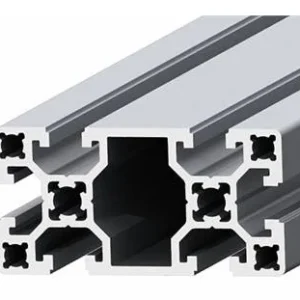 %35 Discount45x90 Sigma Profile 10 Channel Heavy DutyOriginal price was: 60.70$.39.67$Current price is: 39.67$.View
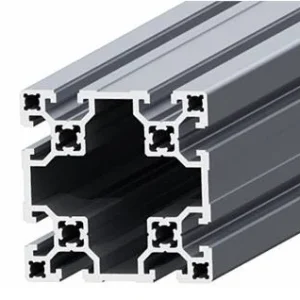 %35 Discount80x80 Sigma Profile | 10 Channel | Light DutyOriginal price was: 56.60$.37.00$Current price is: 37.00$.View
Reviews
There are no reviews yet.