
No products in the cart.
%49 Discount


Mach3 Wireless Handwheel CNC Router Remote Control
Original price was: 256.97$.132.30$Current price is: 132.30$.
Enhance your CNC operations with the Mach3 Wireless Handwheel, offering precise control and freedom of movement up to 40 meters.
Out of stock
🔥 Special for Today Only %49 Discount Opportunity!📦 Category: CNC Control Panels
Mermak assuranceFrom factory to end user · importer / main dealer · strong stock
ImporterMain dealer / distributorStrong stockGood priceCorporate invoice
Contact us for stock information · 14-day return for standard unused products; conditions may vary for custom size/cut products.
Mach3 Wireless Handwheel CNC Router Remote Control
INDUSTRIAL AUTOMATION PARTS | SUPERIOR PERFORMANCE SERIES
Detailed Product Review
The Mach3 Wireless Handwheel is a high-performance Manual Pulse Generator (MPG) unit designed for CNC routers and machining centers. It enables wireless manual positioning, tool resetting, and fine-tuning operations. This device offers operators the freedom to move up to 40 meters away from the machine without obstructions, allowing them to observe the workpiece from different angles, precisely adjust the distance between the tool and workpiece, and remotely control G-code steps. Equipped with an integrated 100 PPR (Pulse Per Revolution) optical encoder, it allows for micro-adjustments beyond millimeter precision in axis movements, which is a critical advantage in mold making, prototyping, and precision machining processes requiring high surface quality.
Constructed from a combination of PC (Polycarbonate) and ABS (Acrylonitrile Butadiene Styrene) plastics, this wireless handwheel is built for long-lasting and reliable performance in industrial environments. This material choice offers superior impact resistance, chemical durability, and thermal stability. Additionally, a silicone protective sleeve covers the device’s exterior, providing an extra layer of durability against drops and environmental factors, minimizing operational downtime. System integration is based on full compatibility with Mach3 CNC control software, and its plug-and-play USB receiver ensures a quick and seamless setup process. The product is widely used in CNC milling, turning, and multi-axis machining centers across the metalworking, woodworking, and plastics industries. It can also meet manual control needs in specialized automation and robotics applications, such as calibrating large-scale 3D printers, precise positioning of laser cutting machines, and manual fine-tuning of robotic arms.
Mach3 Wireless Handwheel CNC Router Remote Control Advantages
Wireless Communication Freedom and Operational Safety: The Mach3 Wireless Handwheel provides uninterrupted and stable wireless communication up to 40 meters using 64-channel frequency hopping technology (FHSS) in the 433 MHz ISM band. This technology exhibits high resistance to electromagnetic interference (EMI) and radio frequency interference (RFI) commonly encountered in industrial environments, maximizing data integrity and control reliability. It offers operators complete freedom of movement around the machine, allowing them to observe the machining process from various angles, perform tool resets, and control the workpiece from a safe distance. This enhances work safety, especially on large CNC machines or during hazardous machining processes (e.g., high-speed cutting, chip splashing, coolant spraying), and creates ergonomic working conditions, reducing operator fatigue during prolonged operations.
High-Resolution Axis Control and Repeatability: The device is equipped with a 100 PPR (Pulse Per Revolution) resolution manual pulse generator. This high resolution allows for ultra-fine adjustments in each axis movement; each full turn of the handwheel sends 100 distinct pulses to the CNC control system, enabling incremental movements with precision beyond the hundredth of a millimeter (micron level). This feature is crucial for processing complex surfaces in mold making, creating precise geometries in prototyping, ensuring absolute accuracy in tool setting, and in finishing operations requiring high surface quality. The high PPR value helps minimize backlash effects and increases the repeatability of axis movements, guaranteeing consistent dimensions and tolerances between parts even in mass production.
Advanced Functionality and Macro Programming Capability: The Mach3 Wireless Handwheel offers standard 4-axis (X, Y, Z, A) control capability, with the WHB04B-6 model expandable to control up to 6 axes. The 16 programmable buttons on the device provide operators with flexibility to customize workflows and automate repetitive tasks. Ten of these buttons are dedicated to custom macro functions that can be defined within the Mach3 control software. Operators can assign complex machining operations, such as G-code sequences, M-code commands, tool change routines, custom fixture offsets, spindle start/stop, or coolant on/off, to these macro buttons. This programmability simplifies steps requiring manual intervention, significantly reduces setup times, minimizes operator errors, and enhances overall production efficiency, ensuring operational fluidity even in complex machining projects.
Technical Specifications and Capacity
Feature
Value/Description
Model
WHB04B-4 (4 Axis), WHB04B-6 (6 Axis optional)
Axis Control
4 Axis (X, Y, Z, A), supports up to 6 axes (with WHB04B-6)
Wireless Communication Frequency
433 MHz ISM Band (Industrial, Scientific, and Medical Band)
Wireless Communication Distance
Up to 40 meters (in an unobstructed environment)
Encoder Resolution
100 PPR (Pulse Per Revolution) manual pulse generator
Number of Buttons
16 programmable buttons (10 for macro functions)
Compatible Software
Mach3 CNC Control Software
Power Supply
2 x AA alkaline batteries
Technical Frequently Asked Questions (FAQ)
How does the Mach3 Wireless Handwheel’s 64-channel frequency hopping technology ensure communication reliability against electromagnetic interference (EMI/RFI) in industrial environments?
The Mach3 Wireless Handwheel utilizes 64-channel Frequency Hopping Spread Spectrum (FHSS) technology operating in the 433 MHz ISM band. This technology allows the device to rapidly switch between different, randomly selected frequency channels hundreds of times per second, rather than transmitting on a single fixed frequency. Electromagnetic interference generated by motors, inverters, welding machines, and other electronic devices in industrial settings can easily disrupt communication in traditional fixed-frequency wireless systems. FHSS enables the device to maintain uninterrupted data transmission by quickly hopping to another clear channel, even if interference is concentrated on a specific frequency channel. This dynamic channel selection and continuous frequency change provide high resistance to interference, ensuring that commands are reliably transmitted during critical CNC operations and that operator control remains stable. Consequently, the risks of data loss and control interruptions are minimized.
What are the specific effects of the 100 PPR (Pulse Per Revolution) encoder resolution on the precision and surface quality of machining operations performed with the Mach3 Wireless Handwheel?
The 100 PPR encoder resolution directly increases the precision of incremental movement commands sent to the CNC control system by generating 100 distinct pulses for each full rotation of the Mach3 Wireless Handwheel. This high resolution allows the operator to move axes in micron-level increments (typically 0.01 mm or finer), which is critical in applications such as mold making, precision part manufacturing, and prototyping. Compared to lower-resolution encoders, 100 PPR provides higher accuracy in operations like tool setting, edge finding, and datum determination, thereby reducing machining errors and scrap rates. Furthermore, it allows for smoother and more continuous control of the toolpath during finishing passes, contributing to lower surface roughness values (Ra) on machined surfaces. This directly impacts the aesthetic and functional quality of the final product and is indispensable in applications requiring high surface quality, such as optical molds or aerodynamic parts.
Technically, how is the integration process and typical configuration steps performed for the Mach3 Wireless Handwheel into an existing Mach3 CNC system?
The integration of the Mach3 Wireless Handwheel into an existing Mach3 CNC system is typically achieved via a plug-and-play USB receiver and involves a few key technical steps. First, the handwheel’s USB receiver is plugged into a USB port on the computer where the Mach3 control software is installed. The system usually recognizes and installs the necessary drivers automatically. Next, a specific plugin file must be copied into Mach3’s “Plugins” folder to ensure full compatibility and operation with Mach3. This plugin converts the handwheel’s hardware signals into commands that the Mach3 software can understand. Once Mach3 is launched, the relevant plugin needs to be enabled and configured under the “Config” menu, then “Plugins.” During configuration, axis assignments (X, Y, Z, A), step sizes (e.g., 0.001mm, 0.01mm, 0.1mm), and the programmable buttons (including macro buttons) are mapped to specific G-codes, M-codes, or custom script functions within Mach3. Upon completion of these steps, axis movements, speed adjustments, and macro commands from the handwheel are seamlessly transmitted to the Mach3 control system.
What are the effects of the Mach3 Wireless Handwheel’s power management and battery life on operational continuity, and what precautions should be taken during battery replacement?
The Mach3 Wireless Handwheel operates on 2 AA alkaline batteries, and power management is a critical factor for operational continuity. The device features like automatic sleep mode after a period of inactivity to enhance energy efficiency, which extends battery life. The integrated LCD screen provides real-time feedback with a battery level indicator, informing the operator when batteries need replacement. Low battery levels can lead to weakened wireless communication signals, delays in command transmission, or sudden disconnections, negatively impacting machining accuracy and causing operational interruptions. Therefore, battery level warnings should be heeded, and batteries should preferably be replaced at the end of an operational cycle or during a planned maintenance interval, rather than waiting for them to deplete completely. When replacing batteries, it is important to use the same type of new alkaline batteries for both to maintain the device’s optimal performance and wireless communication stability. The use of rechargeable batteries is also possible, but care must be taken to ensure the device operates within its specified voltage range, as the voltage characteristics and discharge curves of rechargeable batteries may differ from those of alkaline batteries.
You must be logged in to post a review.
Taksit Tablosu
Related Products
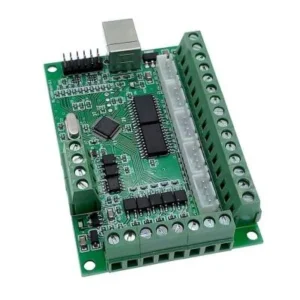 %53 Discount5 Axis CNC USB Control Board Mach3 Card GreenOriginal price was: 90.00$.42.00$Current price is: 42.00$.View
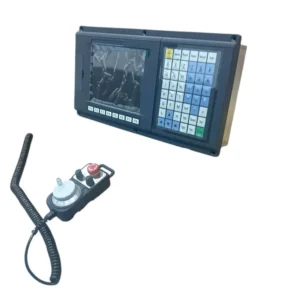 %43 Discount3 Axis CNC Milling Control Unit Panel + Handwheel SetOriginal price was: 1,965.60$.1,119.18$Current price is: 1,119.18$.View
 %43 Discount2 Axis CNC Lathe Control Unit Panel + Handwheel Set 990TDca-2Original price was: 1,512.00$.860.90$Current price is: 860.90$.View
Reviews
There are no reviews yet.