




































































Why is My Drill Bit Making Holes Larger Than Its Diameter?
📑 Table of contents (Click to open)
Practical notes for CNC router, automation and industrial motion systems.
Understanding Why Drill Bits Create Oversized Holes
In industrial automation and precision manufacturing, drill bits creating holes larger than their nominal diameter is a critical quality issue. This problem extends beyond simple dimensional errors, leading to assembly mismatches, loose fasteners, weakened structural integrity, and increased scrap rates. The question, “Why is my drill bit making holes larger than its diameter?” points to a complex interplay of mechanical, thermal, and operational factors. Ideally, a drilled hole’s diameter should closely match the drill bit’s nominal diameter within specified tolerances. However, various factors can disrupt this ideal, causing the hole to exceed the intended size. This deviation, even if minor, can be unacceptable for high-precision applications. This article delves into the fundamental reasons behind this issue, the underlying principles, and the preventative measures required in industrial settings.
Operating Principles and Technical Data
A drill bit functions by cutting material through a combination of rotational and feed movements. The drill bit’s cutting lips and chisel edge remove material to create the hole. When a hole becomes oversized, it signifies a disruption in this cutting mechanism. The primary technical causes include:
Drill Bit Geometry and Condition
- Unequal Cutting Lip Lengths: If the two main cutting lips of a drill bit are not of equal length or angle, the bit can wander off-center. The longer lip cuts more material, causing the drill bit to oscillate around its axis and cut a wider path than its nominal diameter. This is often due to improper grinding or manufacturing defects.
- Worn or Dull Cutting Edges: Over time, cutting edges wear down or become dull. A dull bit tends to push material rather than cut it, generating excess heat and causing the drill bit to drift sideways, leading to oversized holes. Wear on the corners directly increases the hole diameter.
- Incorrect Point Angle and Clearance Angle: An inappropriate point angle for the material can hinder chip evacuation or misdirect cutting forces. An incorrect clearance angle can either weaken the cutting edge (excessive clearance) or cause rubbing against the material behind the cutting edge (insufficient clearance), both increasing vibration and wear, contributing to larger holes.
- Web Thickness: The web is the central part of the drill bit. An excessively thick web creates a larger chisel edge, requiring higher axial force. This can increase the drill bit’s tendency to wander at the hole’s entrance.

Machine, Fixture, and Tool Rigidity
- Spindle Runout: Excessive runout in the machine spindle prevents the drill bit from rotating perfectly on its axis. This causes the bit to trace a larger circle than its diameter. For high-precision applications, spindle runout should be less than 0.01 mm.
- Insufficient Tool Holder Rigidity: Improper seating of the drill bit in its tool holder or a lack of rigidity in the tool holder itself can lead to vibration and bit wander during drilling. Long drill bits or extended tool lengths exacerbate this issue by reducing overall rigidity.
- Workpiece Clamping Rigidity: If the workpiece is not securely fastened to the machine table, it can vibrate or shift under drilling forces. This instability prevents the drill bit from maintaining its position, resulting in oversized holes.

Cutting Parameters
- Excessive Feed Rate: A feed rate that is too high can cause the drill bit to push material rather than cut it cleanly. This leads to bit wander and oversized holes, and can also negatively impact chip formation and evacuation.
- Incorrect Spindle Speed: An inappropriate spindle speed for the material and drill bit can result in excessive heat, rapid tool wear, or poor cutting performance. In either case, drill bit stability can be compromised, affecting hole diameter.
- Cutting Speed: Cutting speed (a combination of spindle speed and diameter) directly impacts tool life and chip formation. An incorrect cutting speed can cause excessive vibration or premature tool wear.

Other Factors
- Inadequate Cooling and Lubrication: Insufficient coolant flow leads to excessive heat buildup at the cutting zone. High temperatures can weaken the drill bit’s cutting edges and cause workpiece expansion. It also hinders chip removal.
- Poor Chip Evacuation: Chips accumulating in the drill bit’s flutes or not being evacuated efficiently increase friction, generate heat, and disrupt drill bit stability. Trapped chips can force the bit to wander within the hole.
- Material Properties: The hardness, abrasiveness, ductility, and machinability of the workpiece material significantly influence drill bit performance and the final hole size. Certain materials, especially hard or gummy ones, can cause the drill bit to wander or wear more quickly.
- Pilot Hole Usage: If a pilot hole is used, its accuracy in diameter, position, and concentricity is crucial for the final hole’s accuracy. An incorrect pilot hole can guide the main drill bit off-center.
| Parameter | Value/Description |
|---|---|
| Hole Diameter Tolerance | Can exceed nominal drill bit diameter by 0.05% to 0.5%. |
| Cutting Lip Length Difference | A difference exceeding 0.02 mm can cause hole enlargement. |
| Spindle Runout | For precision applications, should be less than 0.01 mm. |
| Feed Rate | Increasing by more than 20% above recommended values increases the risk of diameter growth. |
| Coolant Flow | Must reach the cutting zone continuously and at adequate pressure (min. 5 bar). |
| Chip Evacuation | Should be free and continuous; chip jamming must be prevented. |
| Drill Bit Wear | Wear exceeding 0.1 mm on cutting corners can enlarge the hole. |

Preventative Measures and Solutions
To ensure accurate hole diameters, a systematic approach is necessary:
- Tool Inspection and Maintenance: Regularly inspect drill bits for wear, chipping, and proper geometry. Ensure they are sharpened correctly with appropriate angles and balanced lip lengths. Use high-quality drill bits suited for the specific material.
- Optimize Cutting Parameters: Consult machining handbooks or manufacturer recommendations for appropriate spindle speeds and feed rates based on the material, drill bit diameter, and machine capabilities. Start with conservative parameters and adjust as needed.
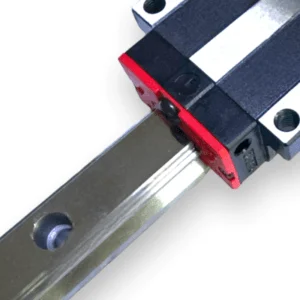
- Enhance Machine Rigidity: Minimize spindle runout through regular maintenance. Use rigid tool holders and ensure drill bits are securely seated. For demanding applications, consider machines with higher rigidity, such as industrial CNC routers with robust motion control systems featuring servo drives and linear guide rails.
- Secure Workpiece Clamping: Employ appropriate workholding solutions, such as vacuum tables or robust clamping fixtures, to prevent workpiece movement during drilling.
- Ensure Proper Lubrication and Cooling: Use adequate coolant flow and pressure to manage heat and flush chips effectively. Consider high-pressure coolant systems for deep holes or difficult-to-machine materials.
- Monitor Chip Formation: Observe chip formation and evacuation. If chips are packing or not clearing properly, adjust feed rate, spindle speed, or consider specialized drill bits with improved chip evacuation features.
- Use Quality Fixturing: For repetitive tasks, invest in precise fixtures that ensure consistent part positioning and alignment.
Conclusion
Oversized holes drilled by a CNC router machine or any drilling equipment are typically not caused by a single factor but a combination of issues related to the drill bit itself, the machine’s condition, cutting parameters, and operational practices. By systematically addressing drill bit geometry, machine rigidity, cutting parameters, and auxiliary factors like cooling and chip evacuation, manufacturers can significantly improve hole accuracy and reduce scrap. Investing in well-maintained machinery, quality tooling, and precise motion control systems, including reliable servo drives and linear guide rails, is crucial for achieving consistent, high-quality results in industrial drilling operations.
If you are experiencing issues with hole accuracy or require precision drilling solutions, Mermak CNC offers a range of industrial CNC machines designed for high performance and reliability. Request a quote on WhatsApp today to discuss your specific needs.
Related product categories: Genel · Turuncu Makine Ayağı · Büyük CNC Router
