
No products in the cart.

FH RM25 FA 25 mm Linear Carriage
18.54$
High-performance linear guide component for industrial automation, offering precision, rigidity, and high load capacity.
In stock
📦 Category: 25 mm Linear Guides and Bearings
Mermak assuranceFrom factory to end user · importer / main dealer · strong stock
ImporterMain dealer / distributorStrong stockGood priceCorporate invoice
In stock / available to order · 14-day return for standard unused products; conditions may vary for custom size/cut products.
FH RM25 FA 25 mm Linear Carriage
INDUSTRIAL AUTOMATION PARTS | SUPERIOR PERFORMANCE SERIES
Detailed Product Review
The FH RM25 FA 25 mm Linear Carriage is a ball-type linear guide component designed to meet the requirements of precision, rigidity, and high load capacity for linear motion in industrial automation applications. This system consists of a carriage block moving on a rail and steel balls circulating on precision-ground bearing surfaces within the block. The arrangement of the balls in four rows, typically at a 45-degree contact angle, provides equal load distribution in both radial and lateral directions, enhancing omnidirectional load capacity and torsional rigidity. The ball recirculation channels within the carriage block ensure that the balls are continuously returned to the load-carrying zone, creating a continuous and smooth motion cycle. This engineering approach offers sub-micron positioning accuracy and repeatability while ensuring stable operation with minimal deflection even under dynamic loads. The application of preloading eliminates system play, increasing rigidity and damping vibration, making it a critical performance factor in high-speed and precision applications.
The product’s material structure is optimized through precision heat treatment processes of high-quality alloy steels, ensuring superior surface hardness, wear resistance, and fatigue life for both the rail and the carriage block. Special anti-corrosion coatings guarantee long-term operational reliability even in harsh industrial environments exposed to moisture, dust, or chemical vapors. The 25 mm rail width is a key geometric parameter directly affecting the system’s overall rigidity and load-carrying capacity. The flanged (FA) type carriage design offers a wide mounting surface, allowing the carriage block to be attached more robustly and rigidly to the main machine structure, which increases torsional resistance, especially in applications where high moment loads or vibrations are expected. Integrated lubrication channels and easily accessible lubrication points simplify maintenance processes while minimizing friction and wear by maintaining a continuous oil film between the ball and rail surfaces. These features make the FH RM25 FA series an ideal component for high-performance industrial automation systems such as CNC machining centers, precision measuring instruments, robotic arms, automated assembly lines, and laser cutting machines.
FH RM25 FA 25 mm Linear Carriage Advantages
High Positioning Accuracy and Repeatability: The FH RM25 FA linear carriage offers micron-level positioning accuracy thanks to its precision-ground rail surfaces, uniform ball diameters, and optimized ball recirculation mechanisms. This is critical in applications requiring high precision, such as mold making, optical equipment manufacturing, and the semiconductor industry. The system ensures consistent quality and minimized error rates in production processes with its repeatability feature, the ability to return to the same point multiple times, which enhances operational reliability in situations with tight production tolerances.
Superior Dynamic and Static Load Capacity: The four-row ball arrangement and the flanged (FA) carriage block geometry provide the FH RM25 FA series with high load-carrying capacity in both radial and lateral directions. The wide contact area of the balls and optimized load distribution ensure stability when handling heavy workpieces, stability under high cutting forces, and resistance to sudden shock loads. The flanged design widens the carriage block’s mounting surface, distributing stresses from moment loads over a larger area, thereby significantly increasing the system’s torsional rigidity, which contributes to the overall stability of the machine structure.
Optimized Friction Coefficient and Thermal Stability: FH RM25 FA linear carriages feature a low friction coefficient (0.002 – 0.005) due to precision surface finishing techniques and optimized ball bearing geometries. This low friction minimizes heat generation during motion, reducing precision losses due to thermal expansion and maintaining the system’s thermal stability even during high-speed operations. Reduced friction also means less energy is required from the drive system, increasing operational energy efficiency and extending the life of drive motors. Integrated lubrication points support this advantage by maintaining a continuous oil film on the friction surfaces, ensuring long-term, maintenance-free operation.
Technical Specifications and Capacity
FeatureValue/Description
ModelFH RM25 FA
Rail Width25 mm
Load TypeFlanged Type (FA) – Optimized for wide mounting surface and high torsional rigidity.
Ball Row4 Rows – Optimizes load distribution for high load capacity and precision.
Dynamic Load Capacity (C)25.5 kN – Represents the maximum sustainable load capacity over a specified life (typically 50 km).
Static Load Capacity (C0)45.0 kN – Indicates the maximum static load the linear carriage can withstand without permanent deformation.
Friction Coefficient0.002 – 0.005 (Depending on lubrication) – Minimizes energy loss and heat generation during motion.
Maximum Speed5 m/s – Offers suitable performance for high-speed automation applications.
Accuracy ClassH (High) – Provides top-level performance in positioning and motion accuracy.
Operating Temperature-20°C to +80°C – Ensures reliable operation in a wide range of industrial environments.
Technical Frequently Asked Questions (FAQ)
What does the “H” accuracy class in the FH RM25 FA linear carriage mean in terms of manufacturing tolerances?
The “H” (High) accuracy class refers to the strict geometric tolerances applied during the manufacturing of the linear carriage and rail. This means the deviation limits set for the rail’s flatness, parallelism, and the carriage block’s motion accuracy on the rail are very narrow. For instance, the parallelism tolerance of the rail relative to its mounting surface is typically limited to a few microns (e.g., ±5 µm) over a length of 1000 mm. Furthermore, the clearance or preload between the carriage block and the rail is precisely controlled within this classification. These tight tolerances ensure the system operates with high repeatability, low runout, and minimal friction, enabling sub-micron accuracy levels crucial for precision machining, measurement, and positioning applications.
How should the appropriate lubricant selection and lubrication frequency be determined for the integrated lubrication points?
The selection of the appropriate lubricant for integrated lubrication points depends on parameters such as operating temperature, load conditions, speed, and environmental factors. Generally, high-viscosity industrial greases with EP (Extreme Pressure) additives or synthetic oils are preferred. Greases offer better sealing and long-term lubrication, while oils may be suitable for lower friction and high-speed applications. Lubrication frequency should be determined based on operational conditions like the distance traveled, load, and speed of the linear carriage. As a general rule, lubrication is recommended every 100-200 km for systems operating below 10% of their dynamic load capacity, while this frequency may increase for higher loads or speeds. Periodic checks and, if necessary, lubrication top-ups, based on the lubricant manufacturer’s recommendations and the actual operating conditions of the system, are essential for optimizing the lifespan and performance of the linear carriage.
What is the contribution of the flanged (FA) type design in the FH RM25 FA model to torsional rigidity, and in which applications does this provide an advantage?
The flanged (FA) type design increases the mounting surface area of the linear carriage block, expanding the connection area between the carriage and the main machine structure. This wider mounting surface allows moment loads (especially torsional moments) acting on the carriage block to be distributed over a larger area, reducing stress on the mounting bolts. Consequently, the deformation resistance within the carriage block itself and the rigidity at the connection point increase. This offers a critical advantage in applications with high eccentric loads or sudden direction changes, such as robotic arms, portal systems carrying large workpieces, or CNC milling machines where high cutting forces occur. Increased torsional rigidity improves the system’s vibration damping capacity, maintains positioning accuracy, and minimizes deflections that directly affect machining quality.
How should the dynamic load capacity (C) and static load capacity (C0) values be interpreted in terms of the linear carriage’s expected life and application design?
Dynamic load capacity (C) refers to the maximum equivalent load that the linear carriage can continuously withstand over a specified operating life (typically 50 km or 100 km) without developing fatigue damage. This value is used in life calculations, especially for continuously moving applications. As the application load decreases below the C value, the expected life of the linear carriage increases. Static load capacity (C0), on the other hand, indicates the maximum static load the linear carriage can withstand without permanent plastic deformation (e.g., indentation on ball raceways). The C0 value is critical, especially in situations involving shock loads, vibrating stops, or prolonged exposure to static loads. In application design, when calculating life for dynamic loads, the C value should be used, while for static or overload conditions, the C0 value should be considered along with safety factors. Both values are fundamental engineering parameters for determining whether the linear carriage meets the application requirements.
Mermak has 16 years of experience in industrial automation components. Our products are stocked and prepared from our Ankara Uzay Sanayi factory/warehouse. We ensure up-to-date stock quantities and prices on our website. Stocked products are dispatched directly from our warehouse, eliminating production waiting times. We provide careful packaging, meticulous invoice and document follow-up, and utilize reliable logistics partners. The Mermak team closely monitors the shipment process. Upon request, product videos and factory tours are available via WhatsApp or other contact channels. We proudly supply to numerous countries including the United Kingdom, United States, Canada, Australia, Ireland, New Zealand, and South Africa, alongside similar countries and international markets.
| Dimensions |
|---|
You must be logged in to post a review.
Taksit Tablosu
Related Products
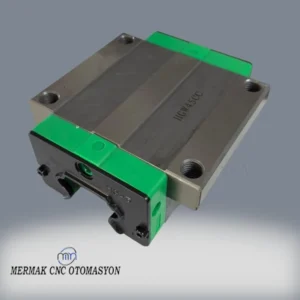 %51 DiscountHGW 45 CC Wide Linear Carriage Green Hiwin CompatibleOriginal price was: 124.08$.60.60$Current price is: 60.60$.View
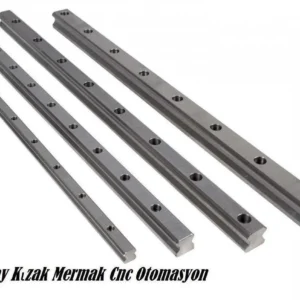 %38 Discount25 mm Linear Slide Rail StandardOriginal price was: 32.11$.20.04$Current price is: 20.04$.View
 %48 DiscountUCF 205 Pillow Block BearingOriginal price was: 4.93$.2.54$Current price is: 2.54$.View
Reviews
There are no reviews yet.